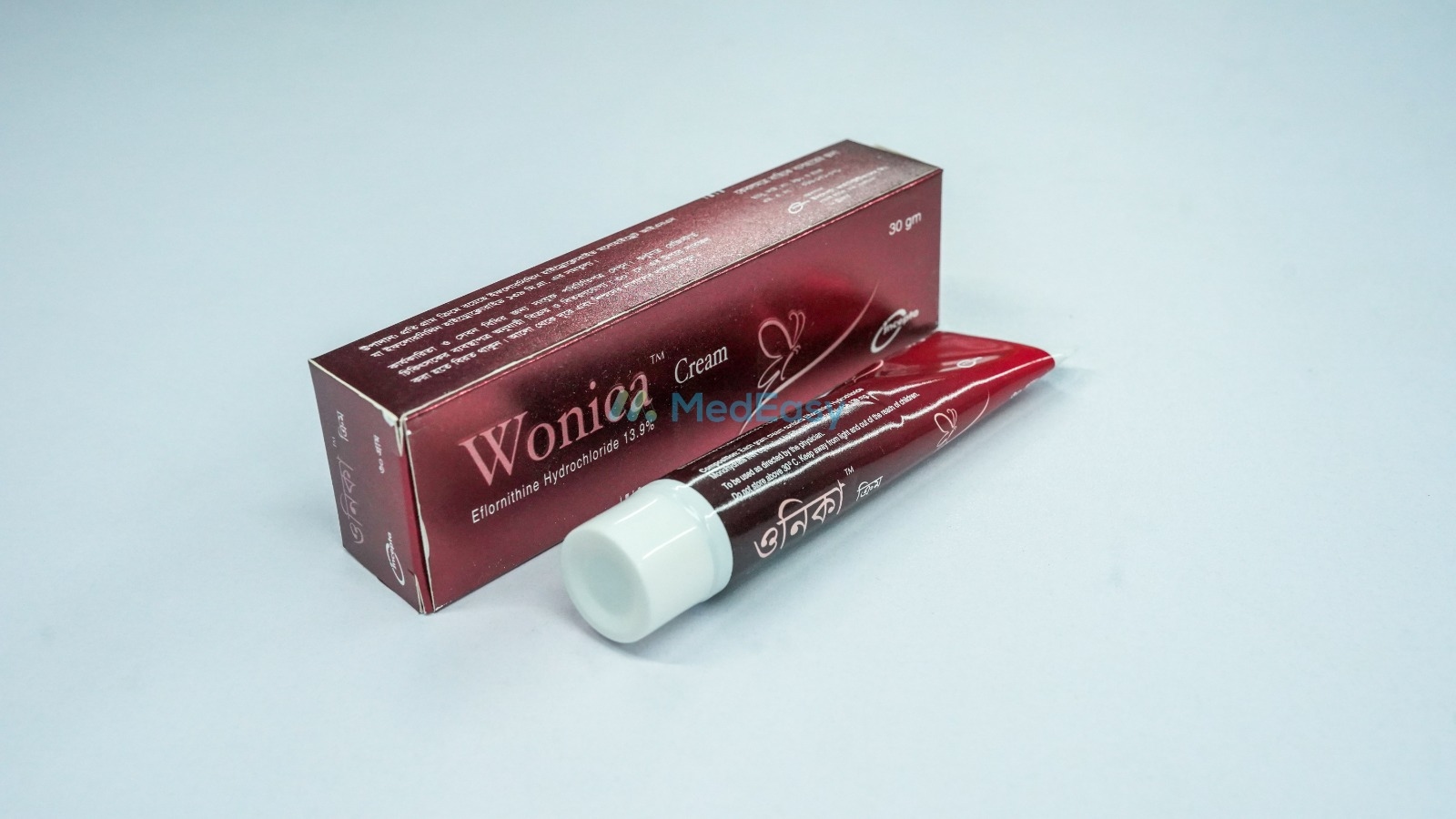
Generic medicine

Eflornithine Hydrochloride: Brands, Price & Uses in Bangladesh

Eflornithine Hydrochloride is an ornithine decarboxylase inhibitor with two medically distinct and unrelated approved uses and more.

Forms:Cream

About Eflornithine Hydrochloride

Indications of Eflornithine Hydrochloride

Eflornithine Hydrochloride is an ornithine decarboxylase inhibitor with two medically distinct and unrelated approved uses, depending on the formulation used:

Established / approved indications

  • Reduction of unwanted facial hair (topical cream) - approved for reducing the growth of unwanted hair on the face and adjacent areas under the chin in women. It is a cosmetic adjunct, not a hair-removal or depilatory product, and does not cure excess hair growth.
  • Human African trypanosomiasis / sleeping sickness (intravenous infusion) - approved for treatment of the meningoencephalitic (central nervous system) stage of infection caused by Trypanosoma brucei gambiense (West African sleeping sickness), typically used as part of combination therapy with nifurtimox (nifurtimox-eflornithine combination therapy, NECT) per WHO treatment guidelines, or as monotherapy where combination therapy is unavailable. The intravenous form is not effective against East African trypanosomiasis (T. b. rhodesiense).

These two uses require entirely different formulations, strengths, and settings of care, and are never interchangeable.

Dosage & Administration of Eflornithine Hydrochloride

Topical (unwanted facial hair)

Apply a thin layer of Eflornithine Hydrochloride cream to the affected facial areas and adjacent involved areas under the chin, twice daily, at least 8 hours apart. Rub in thoroughly. Do not wash the treated area for at least 4 hours after application. Continue usual hair-removal methods (e.g., shaving, plucking) as needed; improvement is usually seen within 4-8 weeks. If no improvement is seen after 6 months of use, discontinue and reassess with a physician.

Intravenous (African trypanosomiasis, meningoencephalitic stage), specialist/hospital use only

RegimenAdult dosePediatric doseDuration
Combination therapy (with oral nifurtimox), WHO-preferred (NECT)200 mg/kg IV every 12 hoursSame weight-based dose as adults7 days IV infusion + 10 days oral nifurtimox
Monotherapy (when combination unavailable)100 mg/kg IV every 6 hoursSame weight-based dose as adults14 days

Each dose is administered as a slow intravenous infusion (over approximately 45-60 minutes) by trained personnel in a specialized treatment facility, with dose reduction required in renal impairment (see Use in Special Populations). Eflornithine Hydrochloride given intravenously must be used only under direct medical/specialist supervision; the full prescribed course must be completed exactly as directed and never stopped early, extended, skipped, or shared with another person without medical advice.

Side Effects of Eflornithine Hydrochloride

Topical use

  • Common: stinging, burning, tingling, or tautness of the skin; acne; redness; folliculitis (ingrown hairs/bumps); dry skin; itching.
  • Less common: rash, transient skin discoloration.

Intravenous use

  • Bone marrow suppression (anemia, leukopenia, thrombocytopenia) - common and potentially serious, requires regular blood count monitoring.
  • Seizures - reported, particularly with higher doses or renal impairment.
  • Gastrointestinal: diarrhea, abdominal pain, nausea, vomiting.
  • Reversible hearing impairment, alopecia (hair loss), and fever have also been reported.

Contraindications of Eflornithine Hydrochloride

Eflornithine Hydrochloride is contraindicated in patients with known hypersensitivity to eflornithine hydrochloride or any component of the formulation.

Frequently Asked Questions about Eflornithine Hydrochloride

What is Eflornithine Hydrochloride used for?

Eflornithine Hydrochloride has two unrelated uses depending on formulation: a topical cream used to reduce the growth of unwanted facial hair in women, and an intravenous infusion used in hospitals to treat African trypanosomiasis (sleeping sickness) affecting the brain and spinal cord.

Will topical Eflornithine Hydrochloride permanently remove my facial hair?

No. Eflornithine Hydrochloride cream slows the rate of hair regrowth; it is not a depilatory and does not remove existing hair. You may need to continue your usual hair-removal method alongside it, and visible improvement can take 4-8 weeks.

How is intravenous Eflornithine Hydrochloride given, and can I take it at home?

No. Intravenous Eflornithine Hydrochloride for trypanosomiasis must be given only in a hospital or specialized treatment center, as a slow infusion under close medical and hematologic (blood count) monitoring, because of the risk of serious side effects such as bone marrow suppression and seizures.

What are the main risks of intravenous Eflornithine Hydrochloride?

The main risks are bone marrow suppression (which can cause anemia, low white blood cells, or low platelets) and seizures. Regular blood tests are required during treatment, and the dose must be adjusted if kidney function is reduced.

Can I use topical Eflornithine Hydrochloride during pregnancy or while breastfeeding?

Because it is an elective cosmetic treatment, topical Eflornithine Hydrochloride is best avoided during pregnancy and breastfeeding unless a physician advises otherwise, since it should be used in pregnancy only if clearly needed. Always consult a physician before use in these situations.

What should I do if too much Eflornithine Hydrochloride is used or an overdose is suspected?

Seek immediate medical attention or contact emergency services/poison control right away. Do not attempt to treat a suspected overdose, especially of the intravenous form, at home.

Disclaimer

The information provided is accurate to the best of our knowledge, but it does not replace professional medical advice. We cannot guarantee its completeness or accuracy, and the absence of specific information about a drug should not be taken as an endorsement. We are not responsible for any consequences arising from this information, so please consult a healthcare professional for any concerns or questions.

DoctorBlogArticles