10% Off
Genevir0.5 mg
General Pharmaceuticals Ltd.
৳43.33
Add to cart
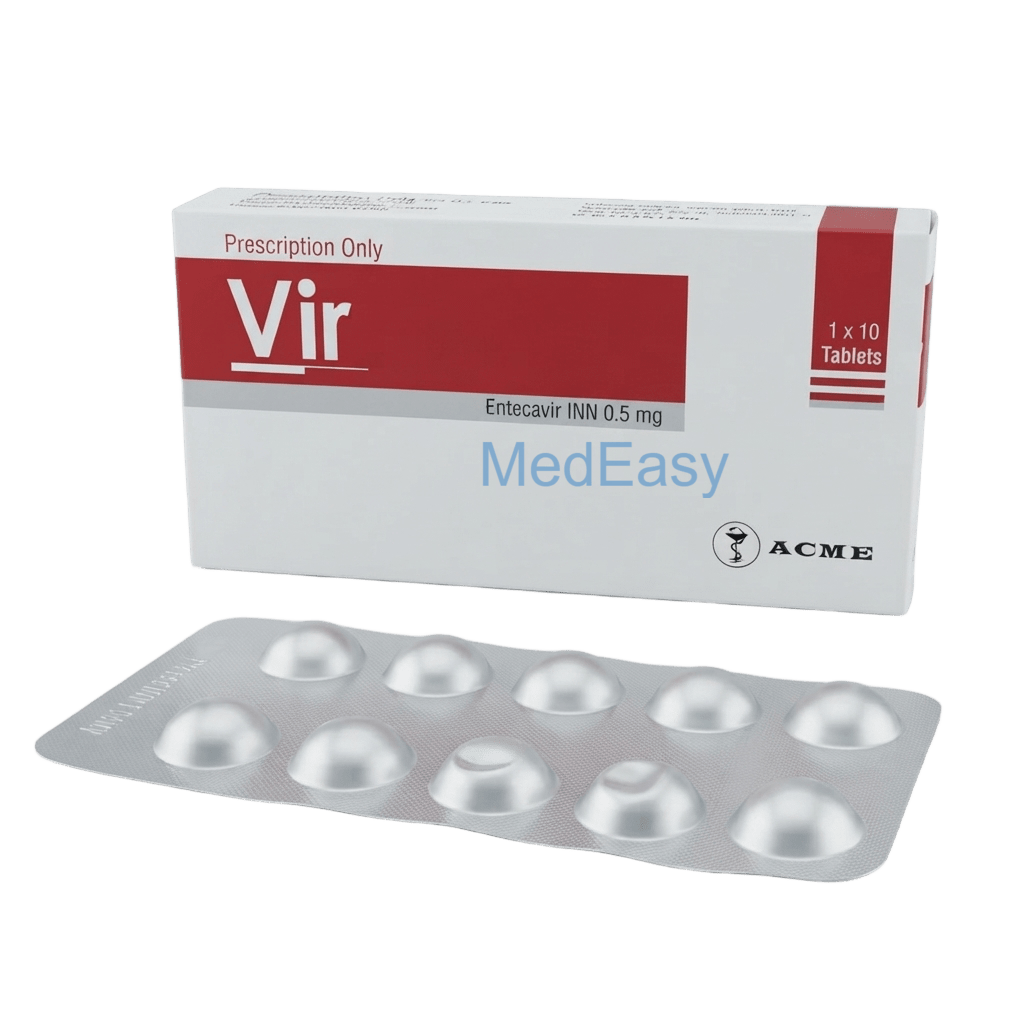
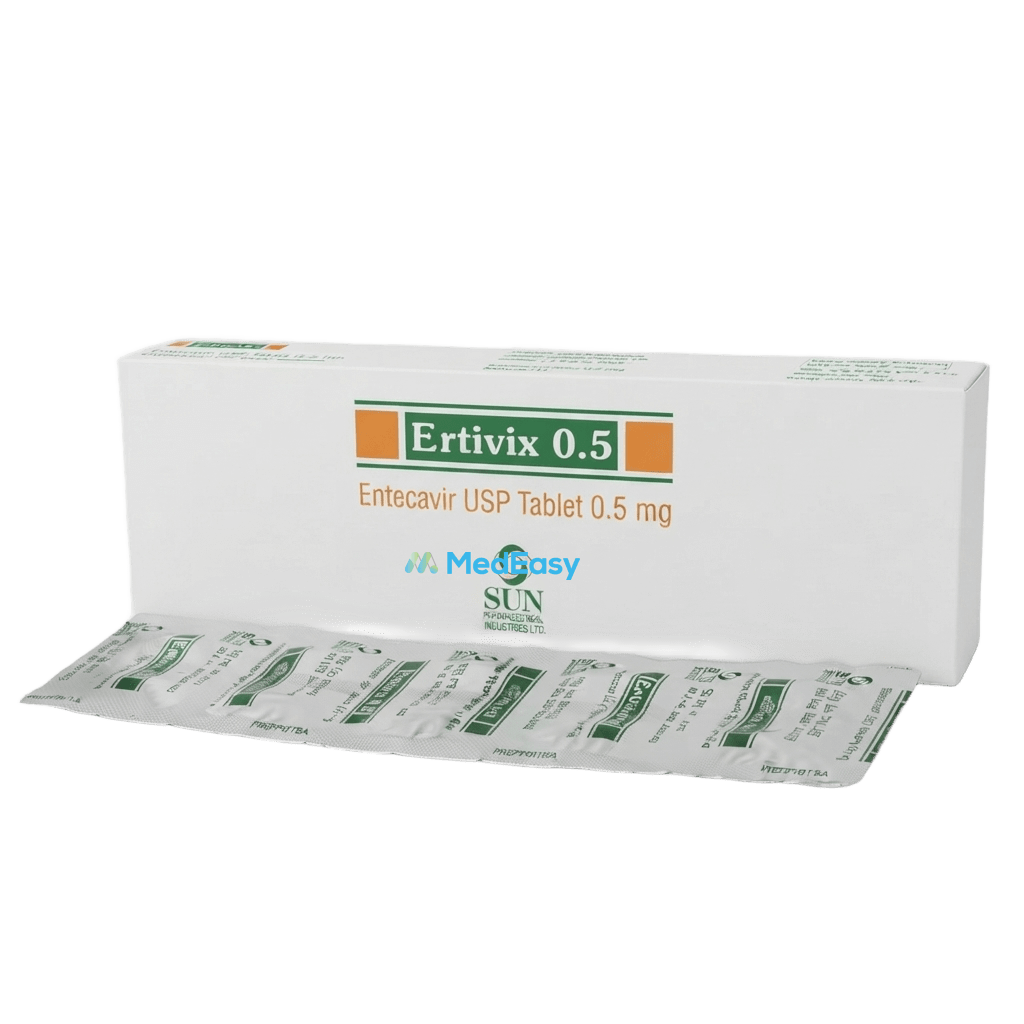
Entecavir is a nucleoside analog antiviral indicated for the treatment of chronic hepatitis B virus (HBV) infection.
Entecavir is a nucleoside analog antiviral indicated for the treatment of chronic hepatitis B virus (HBV) infection.
Entecavir is not indicated for, and is not effective against, HIV infection. It is not a treatment for hepatitis C or hepatitis D. Patients being started on Entecavir should be tested for HIV infection before treatment begins, because Entecavir monotherapy in a patient with unrecognised or untreated HIV/HBV co-infection may lead to the development of HIV resistance.
Entecavir is taken once daily, by mouth, on an empty stomach (at least 2 hours before or 2 hours after a meal). The dose depends on prior treatment history, hepatic status, and renal function.
| Indication / Patient group | Recommended adult dose |
|---|---|
| Nucleoside-treatment-naive, compensated liver disease | 0.5 mg once daily |
| Lamivudine-refractory or lamivudine/telbivudine-resistant HBV | 1 mg once daily |
| Decompensated liver disease (any treatment history) | 1 mg once daily |
| Creatinine clearance (CrCl) | Usual dose (0.5 mg dose group) | Lamivudine-refractory/decompensated (1 mg dose group) |
|---|---|---|
| ≥50 mL/min | 0.5 mg every 24 hours | 1 mg every 24 hours |
| 30 to <50 mL/min | 0.25 mg every 24 hours or 0.5 mg every 48 hours | 0.5 mg every 24 hours |
| 10 to <30 mL/min | 0.15 mg every 24 hours or 0.5 mg every 72 hours | 0.3 mg every 24 hours or 1 mg every 72 hours |
| <10 mL/min, haemodialysis or CAPD | 0.05 mg every 24 hours or 0.5 mg every 7 days | 0.1 mg every 24 hours or 1 mg every 7 days |
For haemodialysis patients, Entecavir should be given after the dialysis session.
Weight-based dosing using the oral solution (0.05 mg/mL) is used for nucleoside-naive pediatric patients weighing less than 30 kg; patients weighing ≥30 kg may receive a 0.5 mg tablet once daily. Lamivudine-experienced pediatric patients require a higher weight-based dose. See Use in Special Populations for details. Safety and efficacy have not been established in children under 2 years of age.
No dose adjustment of Entecavir is required for patients with hepatic impairment who have not previously received a nucleoside analogue and who do not have decompensated liver disease; decompensated liver disease requires the 1 mg once-daily dose as above.
Entecavir should be continued for as long as the prescribing physician advises. Do not stop Entecavir without medical guidance - stopping abruptly can trigger a severe flare of hepatitis B (see Precautions and Warnings).
Most patients tolerate Entecavir well. The following adverse effects have been reported:
| Frequency | Effects |
|---|---|
| Common | Headache, fatigue, dizziness, nausea, insomnia, diarrhoea |
| Less common | Vomiting, dyspepsia, elevated liver enzymes, rash |
| Rare but serious | Lactic acidosis and severe hepatomegaly with steatosis (see boxed warning), acute exacerbation of hepatitis B on stopping therapy (see boxed warning), pancreatitis, severe allergic reaction |
Seek prompt medical attention for unusual muscle pain, difficulty breathing, unexplained fatigue with abdominal discomfort, or signs of an allergic reaction while taking Entecavir.
Entecavir is contraindicated in patients with a known hypersensitivity to Entecavir or to any component of the formulation.
Disclaimer
The information provided is accurate to the best of our knowledge, but it does not replace professional medical advice. We cannot guarantee its completeness or accuracy, and the absence of specific information about a drug should not be taken as an endorsement. We are not responsible for any consequences arising from this information, so please consult a healthcare professional for any concerns or questions.