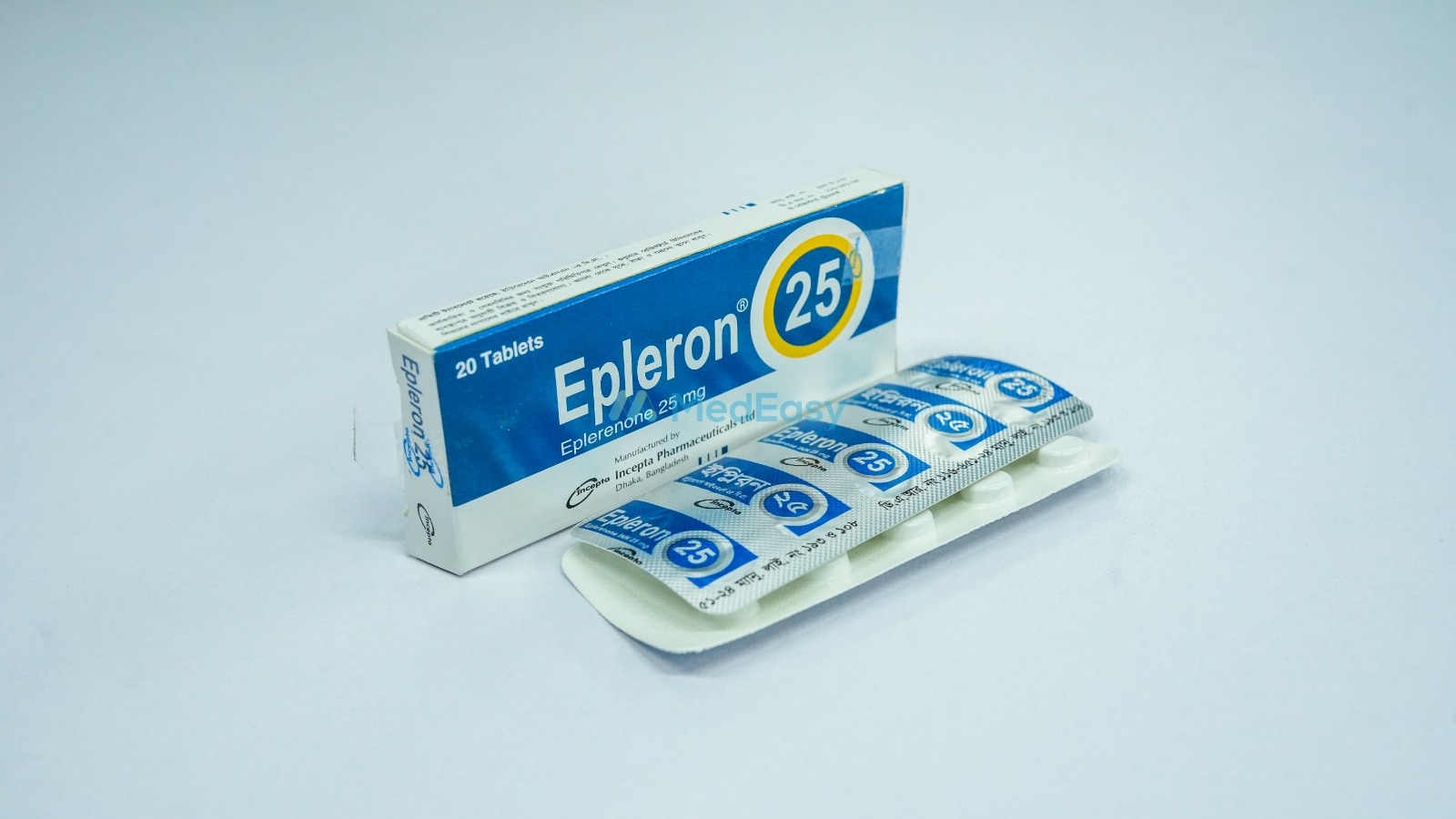
Generic medicine

Eplerenone: Brands, Price & Uses in Bangladesh

Eplerenone is a selective aldosterone (mineralocorticoid) receptor antagonist with the following evidence-based indications: Established/FDA-approved uses Post-myocardial infarction heart failure:…

Forms:Tablet

About Eplerenone

Indications of Eplerenone

Eplerenone is a selective aldosterone (mineralocorticoid) receptor antagonist with the following evidence-based indications:

Established/FDA-approved uses

  • Post-myocardial infarction heart failure: to improve survival of stable adult patients with symptomatic heart failure with reduced left ventricular ejection fraction (LVEF) after an acute myocardial infarction, used together with standard therapy including beta-blockers.
  • Chronic heart failure (NYHA class II) with reduced ejection fraction: to reduce the risk of hospitalization for heart failure and cardiovascular death in adult patients with mild (NYHA class II) symptoms and left ventricular systolic dysfunction, added to standard therapy.
  • Hypertension: to lower blood pressure, alone or in combination with other antihypertensive agents. Lowering blood pressure reduces the risk of fatal and non-fatal cardiovascular events, primarily strokes and myocardial infarctions.

Eplerenone is not indicated as a substitute for beta-blockers, ACE inhibitors/ARBs, or other guideline-directed heart failure therapies; it is used as an add-on agent within a broader treatment regimen, not as monotherapy for heart failure.

Dosage & Administration of Eplerenone

IndicationTypical Adult Dosing
Post-MI heart failureInitiate at 25 mg once daily; titrate to the target dose of 50 mg once daily within 4 weeks as tolerated, based on serum potassium level.
Chronic heart failure (NYHA class II)Initiate at 25 mg once daily; titrate to 50 mg once daily within 4 weeks as tolerated, based on serum potassium. If creatinine clearance is 30-49 mL/min, initiate at 25 mg every other day and titrate cautiously up to 25 mg once daily based on serum potassium.
HypertensionStarting dose 50 mg once daily; if blood pressure response is inadequate after about 4 weeks, dose may be increased to 50 mg twice daily (maximum 100 mg/day). Patients also taking a moderate CYP3A4 inhibitor should not exceed 25 mg once daily.

Renal impairment: Eplerenone is contraindicated in severe renal impairment (creatinine clearance ≤30 mL/min). Dose limitations and more frequent potassium monitoring apply at lower creatinine clearance values, particularly in hypertension where additional creatinine-based thresholds apply (see Contraindications).

Hepatic impairment: No dose adjustment is required in mild hepatic impairment. In moderate hepatic impairment, exposure to Eplerenone is increased (AUC approximately 42% higher); use with caution and monitor serum potassium closely. Eplerenone has not been studied in severe hepatic impairment.

Serum potassium should be checked before starting Eplerenone, within the first week, at one month, and periodically thereafter, especially after any dose change or the addition of an interacting drug.

Eplerenone tablets may be taken with or without food and should be swallowed whole.

Side Effects of Eplerenone

In patients treated for heart failure, the most commonly reported adverse effects of Eplerenone are related to its potassium-sparing action:

  • Hyperkalemia (more common than with placebo, and the most clinically significant adverse effect)
  • Increased serum creatinine
  • Dizziness
  • Diarrhea
  • Fatigue

In patients treated for hypertension, adverse effect rates are generally similar to placebo, but the following have been reported more often than with placebo:

  • Gynecomastia (breast enlargement/tenderness in men) — less frequent than with spironolactone due to lower antiandrogenic activity, but still reported
  • Abnormal vaginal bleeding in women

Uncommon but serious effects reported post-marketing include angioedema and hypersensitivity skin rash. Patients should seek prompt medical attention for symptoms of hyperkalemia (muscle weakness, irregular heartbeat, tingling) or signs of an allergic reaction while taking Eplerenone.

Contraindications of Eplerenone

Eplerenone is contraindicated in:

  • Known hypersensitivity to Eplerenone or any component of the formulation.
  • Serum potassium greater than 5.5 mEq/L at the time of treatment initiation.
  • Severe renal impairment (creatinine clearance ≤30 mL/min).
  • Concurrent use of strong CYP3A4 inhibitors (e.g., ketoconazole, itraconazole, clarithromycin, ritonavir, nelfinavir), due to markedly increased Eplerenone levels and hyperkalemia risk.
  • For the hypertension indication specifically, additional contraindications apply per approved labeling: type 2 diabetes mellitus with microalbuminuria; serum creatinine greater than 2.0 mg/dL in males or greater than 1.8 mg/dL in females, or creatinine clearance less than 50 mL/min; and concurrent use of potassium supplements or other potassium-sparing diuretics.

This is not an exhaustive list of situations requiring caution; see Precautions and Warnings for conditions requiring dose adjustment or closer monitoring rather than absolute avoidance.

Frequently Asked Questions about Eplerenone

What is Eplerenone used for?

Eplerenone is used to improve survival after a heart attack complicated by heart failure, to reduce hospitalization and cardiovascular death in adults with mild chronic heart failure, and to treat high blood pressure. It is used together with other heart failure or blood pressure medicines, not as a replacement for them.

Can I take Eplerenone with other blood pressure or heart medicines?

Often yes, but combining Eplerenone with ACE inhibitors, ARBs, potassium supplements, or NSAIDs increases the risk of high potassium levels (hyperkalemia), and combining it with strong CYP3A4 inhibitors (such as ketoconazole or clarithromycin) is not allowed. Always tell your physician about every medicine and supplement you take before and during treatment with Eplerenone.

How is Eplerenone different from spironolactone?

Both are aldosterone receptor antagonists, but Eplerenone is more selective and has much less effect on androgen and progesterone receptors. This means Eplerenone is less likely than spironolactone to cause breast enlargement/tenderness in men or menstrual irregularities in women, though it still requires the same careful monitoring of blood potassium.

What monitoring do I need while taking Eplerenone?

Your physician will check your blood potassium and kidney function before starting Eplerenone, again within the first week, at one month, and periodically afterward, especially after any dose change. Report symptoms such as muscle weakness, irregular heartbeat, or tingling promptly, as these can be signs of high potassium.

Is Eplerenone safe during pregnancy or breastfeeding?

Eplerenone should be used during pregnancy only if clearly needed and if the benefit justifies the potential risk to the baby, since human data are limited. It is not known whether Eplerenone passes into breast milk in humans, so breastfeeding while taking Eplerenone should be discussed with your physician, who can weigh the risks and benefits for you and your infant.

What should I do if I suspect an overdose of Eplerenone?

An overdose of Eplerenone can cause low blood pressure or dangerously high potassium levels. Seek immediate emergency medical attention or contact a poison control center right away if overdose is suspected; do not attempt to manage it at home.

Disclaimer

The information provided is accurate to the best of our knowledge, but it does not replace professional medical advice. We cannot guarantee its completeness or accuracy, and the absence of specific information about a drug should not be taken as an endorsement. We are not responsible for any consequences arising from this information, so please consult a healthcare professional for any concerns or questions.

DoctorBlogArticles