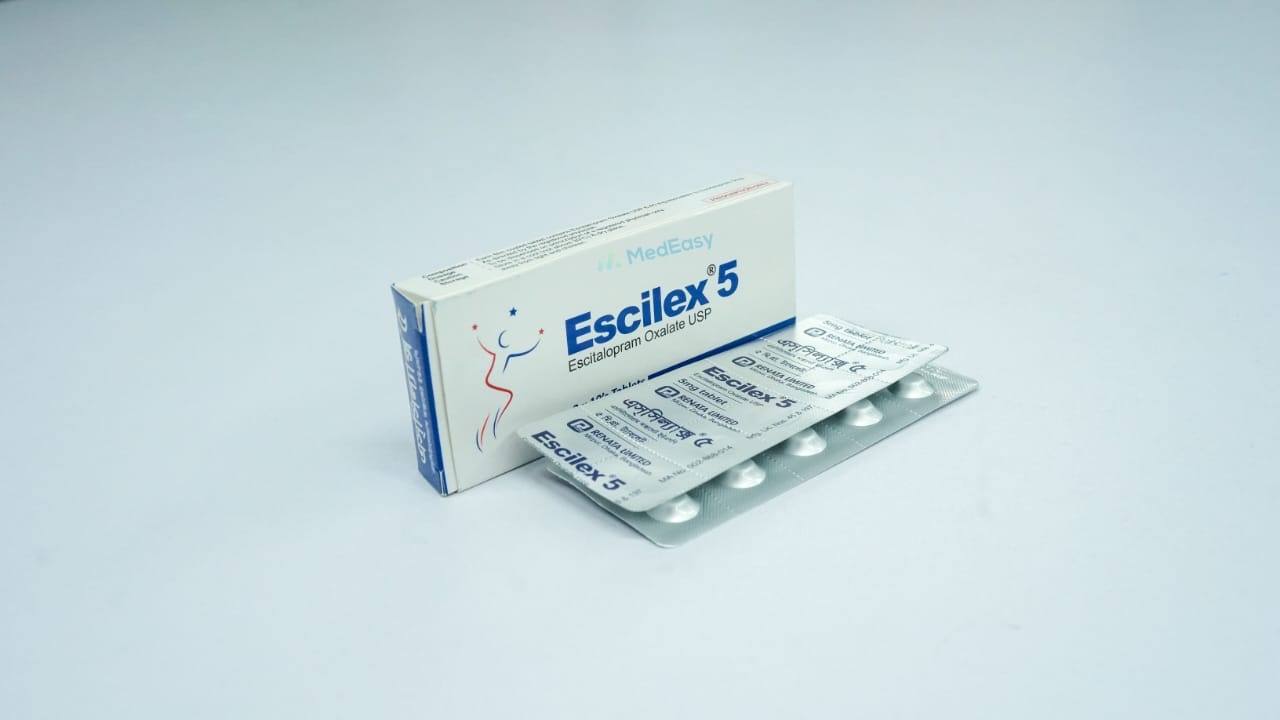
Generic medicine

Escitalopram Oxalate: Brands, Price & Uses in Bangladesh

Escitalopram oxalate is a selective serotonin reuptake inhibitor (SSRI) used for the following indications: Established / FDA-approved uses Major Depressive Disorder (MDD) in adults and more.

Forms:Tablet

About Escitalopram Oxalate

Indications of Escitalopram Oxalate

Escitalopram oxalate is a selective serotonin reuptake inhibitor (SSRI) used for the following indications:

Established / FDA-approved uses

  • Major Depressive Disorder (MDD) in adults, and in adolescents aged 12–17 years, for acute and maintenance treatment.
  • Generalized Anxiety Disorder (GAD) in adults.

Guideline-supported / commonly used off-label uses

  • Panic disorder, with or without agoraphobia.
  • Obsessive-compulsive disorder (OCD).
  • Social anxiety disorder (social phobia).
  • Post-traumatic stress disorder (PTSD).
  • Premenstrual dysphoric disorder (PMDD).

Off-label uses should only be undertaken on the advice and supervision of a qualified physician.

Dosage & Administration of Escitalopram Oxalate

Adult dosing

IndicationStarting doseUsual/maximum dose
Major Depressive Disorder10 mg once dailyMay increase to 20 mg once daily after a minimum of 1 week
Generalized Anxiety Disorder10 mg once dailyMay increase to 20 mg once daily after a minimum of 1 week

Adolescent dosing (12–17 years, MDD)

Starting dose 10 mg once daily; may be increased to 20 mg once daily after a minimum of 3 weeks, based on clinical response and tolerability.

Elderly and CYP2C19 poor metabolizers

Recommended dose is 10 mg once daily; doses above 10 mg/day are generally not recommended due to an increased risk of dose-dependent QTc prolongation (see Precautions and Warnings).

Hepatic impairment

10 mg once daily is recommended for patients with hepatic impairment.

Renal impairment

No dosage adjustment is generally needed in mild to moderate renal impairment; use with caution in severe renal impairment due to limited data.

Administration

Escitalopram oxalate may be taken with or without food, at approximately the same time each day, usually in the morning or evening. Tablets should be swallowed whole with water; do not stop treatment abruptly (see Precautions and Warnings regarding discontinuation).

Side Effects of Escitalopram Oxalate

Side effects reported with Escitalopram oxalate are generally dose-related and most common during the first weeks of treatment.

Common side effects

  • Nausea
  • Insomnia or somnolence
  • Dry mouth
  • Increased sweating
  • Fatigue, dizziness
  • Diarrhea or constipation
  • Decreased libido, delayed ejaculation, and other sexual dysfunction

Serious side effects (seek prompt medical attention)

  • Serotonin syndrome (agitation, hallucinations, rapid heart rate, fever, muscle rigidity, loss of coordination).
  • Hyponatremia/SIADH, particularly in elderly patients.
  • QT interval prolongation and abnormal heart rhythm.
  • Activation of mania or hypomania.
  • Abnormal bleeding.
  • Angle-closure glaucoma.
  • Increased risk of suicidal thoughts and behavior, particularly in children, adolescents, and young adults (see Precautions and Warnings).

Contraindications of Escitalopram Oxalate

Escitalopram oxalate is contraindicated in the following situations:

  • Known hypersensitivity to escitalopram, citalopram, or any excipient of the formulation.
  • Concomitant use with, or use within 14 days of discontinuing, a monoamine oxidase inhibitor (MAOI), due to the risk of serious, potentially fatal serotonin syndrome.
  • Concomitant use with pimozide, due to the risk of additive QT interval prolongation and serious cardiac arrhythmia.
  • Patients with known congenital long QT syndrome, due to the risk of dose-dependent QTc prolongation and torsades de pointes.

Frequently Asked Questions about Escitalopram Oxalate

What is Escitalopram oxalate used for?

Escitalopram oxalate is a selective serotonin reuptake inhibitor (SSRI) primarily used to treat major depressive disorder and generalized anxiety disorder in adults, and major depressive disorder in adolescents aged 12–17. It is also sometimes used off-label for panic disorder, OCD, social anxiety, PTSD, and PMDD under medical supervision.

How long does it take for Escitalopram oxalate to work?

Some improvement in anxiety symptoms may be noticed within 1–2 weeks, but the full antidepressant effect of Escitalopram oxalate usually takes 4–6 weeks of consistent daily use. Do not stop taking it early even if you do not feel an immediate difference; discuss with your physician if there is no improvement after this period.

Can I stop taking Escitalopram oxalate suddenly?

No. Stopping Escitalopram oxalate abruptly can cause discontinuation symptoms such as dizziness, sensory disturbances, sleep problems, and agitation. The dose should be gradually tapered down under a physician's guidance rather than stopped suddenly.

Is Escitalopram oxalate safe during pregnancy or breastfeeding?

Escitalopram oxalate should only be used during pregnancy or while breastfeeding if a physician determines the potential benefit outweighs the potential risk to the baby, since SSRIs including Escitalopram oxalate have been associated with neonatal complications when used late in pregnancy, and the drug passes into breast milk. Always consult your physician before use in these situations.

What should I avoid while taking Escitalopram oxalate?

Avoid taking Escitalopram oxalate together with monoamine oxidase inhibitors (MAOIs) or pimozide, as these combinations are contraindicated due to risks of serotonin syndrome and dangerous heart rhythm changes respectively. Use caution with other serotonergic medicines, NSAIDs/blood thinners (bleeding risk), and alcohol, and inform your doctor of all medicines you take.

What are the warning signs of a serious reaction to Escitalopram oxalate?

Seek immediate medical attention if you experience symptoms of serotonin syndrome (agitation, rapid heartbeat, fever, muscle rigidity), signs of an irregular or fast heartbeat (which can indicate QT prolongation), unusual bleeding, or any new or worsening suicidal thoughts, especially in the first few months of treatment or after a dose change.

Disclaimer

The information provided is accurate to the best of our knowledge, but it does not replace professional medical advice. We cannot guarantee its completeness or accuracy, and the absence of specific information about a drug should not be taken as an endorsement. We are not responsible for any consequences arising from this information, so please consult a healthcare professional for any concerns or questions.

DoctorBlogArticles