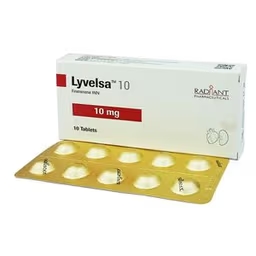
Generic medicine

Finerenone: Brands, Price & Uses in Bangladesh

Finerenone is a nonsteroidal, selective mineralocorticoid receptor antagonist (MRA) with an established and more.

Forms:Tablet

About Finerenone

Indications of Finerenone

Finerenone is a nonsteroidal, selective mineralocorticoid receptor antagonist (MRA) with an established, guideline-supported indication:

  • Chronic kidney disease (CKD) associated with type 2 diabetes mellitus: Finerenone is indicated to reduce the risk of sustained decline in estimated glomerular filtration rate (eGFR), end-stage kidney disease, cardiovascular death, non-fatal myocardial infarction, and hospitalization for heart failure in adults with CKD associated with type 2 diabetes.

Finerenone is typically used as an add-on to standard-of-care therapy, including a maximally tolerated dose of an ACE inhibitor or ARB, and in patients with type 2 diabetes who are receiving appropriate glycemic control measures. It is not a substitute for these background therapies.

Dosage & Administration of Finerenone

Chronic Kidney Disease Associated with Type 2 Diabetes (Adults)

StepGuidance
Before startingMeasure serum potassium and eGFR. Do not initiate Finerenone if serum potassium is greater than 5.0 mEq/L.
Starting dose10 mg once daily if eGFR is 25 to less than 60 mL/min/1.73 m²; 20 mg once daily if eGFR is 60 mL/min/1.73 m² or greater.
Dose titrationMeasure serum potassium 4 weeks after starting or restarting Finerenone or after any dose adjustment. If potassium is within normal range and eGFR has not declined by more than 30% from baseline, increase the dose to the target of 20 mg once daily (if currently on 10 mg).
MaintenanceContinue at the maximum tolerated dose (up to 20 mg once daily), monitoring potassium periodically thereafter.

Administration: Tablets are taken orally, once daily, with or without food, and swallowed whole. For patients unable to swallow tablets whole, the tablet may be crushed and mixed with water or soft foods such as applesauce immediately before administration; do not chew or crush unless preparing it this way.

See Precautions and Warnings for potassium-based dose adjustment and interruption criteria.

Side Effects of Finerenone

The most common and clinically important adverse effect of Finerenone is hyperkalemia. Other adverse effects reported in clinical trials include:

  • Hyperkalemia (elevated blood potassium) — the most frequent adverse reaction; see Precautions and Warnings for monitoring guidance.
  • Hypotension (low blood pressure), particularly in patients also on antihypertensive therapy.
  • Hyponatremia (low blood sodium).

Less common effects may include mild gastrointestinal upset. Patients should promptly report symptoms such as muscle weakness, irregular heartbeat, dizziness, or fainting, which may indicate hyperkalemia or hypotension.

Contraindications of Finerenone

Finerenone is contraindicated in patients with:

  • Known hypersensitivity to Finerenone or any component of the formulation.
  • Concurrent use with strong CYP3A4 inhibitors (e.g., itraconazole, ketoconazole, ritonavir, nelfinavir, cobicistat, clarithromycin), due to markedly increased Finerenone exposure and hyperkalemia risk.
  • Adrenal insufficiency.

Frequently Asked Questions about Finerenone

What is Finerenone used for?

Finerenone is used in adults with chronic kidney disease associated with type 2 diabetes to reduce the risk of worsening kidney function, kidney failure, cardiovascular death, heart attack, and hospitalization for heart failure. It is usually added to existing treatment with an ACE inhibitor or ARB and standard diabetes care.

How should I take Finerenone?

Finerenone is taken by mouth once daily, with or without food, at around the same time each day. Swallow the tablet whole with water, or if you cannot swallow tablets, it may be crushed and mixed with water or applesauce right before taking it. Do not stop or change your dose without talking to your physician.

What is the biggest risk with Finerenone?

The most important risk is hyperkalemia (high blood potassium), which can be serious and, in rare cases, cause dangerous heart rhythm problems. Your doctor will check your blood potassium and kidney function before starting Finerenone, about 4 weeks after starting or changing the dose, and periodically afterward. Contact your doctor immediately if you notice muscle weakness, tingling, irregular heartbeat, or palpitations.

Can I take Finerenone with other medicines?

Finerenone must not be combined with strong CYP3A4 inhibitors such as itraconazole, ketoconazole, ritonavir, or clarithromycin, as this markedly raises Finerenone levels and hyperkalemia risk. Avoid grapefruit juice. Combining Finerenone with other potassium-raising medicines (such as ACE inhibitors, ARBs, potassium-sparing diuretics, or potassium supplements) increases hyperkalemia risk and requires closer monitoring. Always tell your doctor about all medicines and supplements you take.

Is Finerenone safe during pregnancy or breastfeeding?

Data on Finerenone use in pregnancy are limited, so it should be used only if clearly needed and your doctor determines the potential benefit outweighs potential risk to the baby. Breastfeeding is not recommended during treatment with Finerenone and for about one day after the last dose. Discuss your specific situation with your physician.

What should I do if I miss a dose or take too much Finerenone?

If you miss a dose, simply take your next dose at the regular scheduled time; do not double up. If you or someone else has taken more Finerenone than prescribed, seek immediate medical attention or contact a poison control center, since overdose can cause dangerous hyperkalemia or low blood pressure that requires medical management.

Disclaimer

The information provided is accurate to the best of our knowledge, but it does not replace professional medical advice. We cannot guarantee its completeness or accuracy, and the absence of specific information about a drug should not be taken as an endorsement. We are not responsible for any consequences arising from this information, so please consult a healthcare professional for any concerns or questions.

DoctorBlogArticles