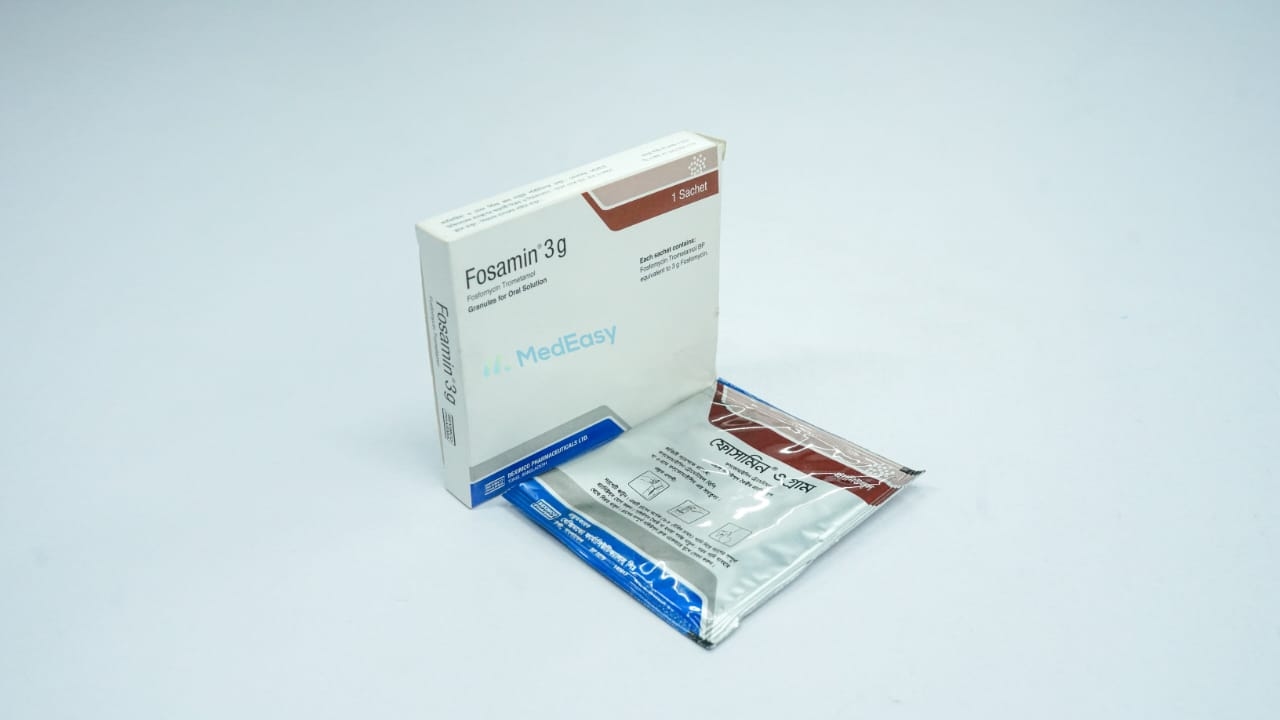
Generic medicine

Fosfomycin: Brands, Price & Uses in Bangladesh

Fosfomycin is a broad-spectrum, bactericidal antibiotic belonging to the phosphonic acid derivative class.

Forms:Oral Powder

About Fosfomycin

Indications of Fosfomycin

Fosfomycin is a broad-spectrum, bactericidal antibiotic belonging to the phosphonic acid derivative class. Its clinical use varies by evidence strength:

Established / Approved Use

  • Uncomplicated urinary tract infection (acute cystitis) in women caused by susceptible Escherichia coli or Enterococcus faecalis — this is the primary FDA-approved indication for the oral (tromethamine) formulation, given as a single dose.

Guideline-Supported / Specialist Use

  • An intravenous form (fosfomycin disodium/injection) is used in hospital settings for complicated urinary tract infections, including cases caused by multidrug-resistant organisms, under specialist supervision.
  • Used as part of combination therapy for selected multidrug-resistant Gram-negative or Gram-positive infections (e.g., resistant E. coli, Pseudomonas aeruginosa, or MRSA) when guided by culture and sensitivity results.

Off-Label Use

  • Repeated-dose oral regimens (e.g., every 3 days for 3 doses) are sometimes used off-label for UTI prophylaxis or in men, though this is not an FDA-approved regimen and should only be done under medical supervision.

Fosfomycin is not indicated for pyelonephritis, perinephric abscess, or systemic/bloodstream infections when used as the single-dose oral formulation.

Dosage & Administration of Fosfomycin

IndicationPopulationTypical Dose
Uncomplicated urinary tract infection (acute cystitis)Women aged 18 years and olderOne 3 g sachet of Fosfomycin (as fosfomycin tromethamine) dissolved in 3-4 oz (about 90-120 mL) of water, taken as a single dose
Complicated UTI / resistant infections (hospital use, injectable form)Adults, specialist-directedDose and frequency individualized by the treating physician based on renal function and culture sensitivity; not for self-administration
UTI prophylaxis (off-label)Adults, as directedRepeated single doses (e.g., every 3 days for 3 doses) only under physician guidance

Renal Impairment

In patients with reduced kidney function, urinary concentrations of Fosfomycin are lower and may not be adequate to clear infection; efficacy is reduced with worsening renal function (see Contraindications for severe impairment).

Antibiotic stewardship: Take Fosfomycin exactly as prescribed by your physician; do not stop, extend, skip doses, or share this medicine with others without medical advice, even though it is often given as a single dose.

Side Effects of Fosfomycin

Because Fosfomycin for cystitis is usually given as a single dose, side effects are generally mild and self-limited.

Common (reported in more than 1% of patients)

  • Diarrhea
  • Nausea
  • Headache
  • Vaginitis
  • Rhinitis

Rare but Serious

  • Clostridioides difficile-associated diarrhea/colitis (can occur with any antibiotic, including after a single dose)
  • Angioedema or other hypersensitivity/allergic reactions
  • Aplastic anemia, hepatic necrosis, and optic neuritis (rare post-marketing reports)

Seek medical attention promptly for signs of severe allergic reaction (swelling of face/throat, difficulty breathing) or for severe or persistent diarrhea.

Contraindications of Fosfomycin

  • Known hypersensitivity to Fosfomycin or any component of the formulation.
  • Severe renal impairment (creatinine clearance below approximately 10 mL/min) or patients on hemodialysis, because adequate urinary drug concentrations required for efficacy cannot be achieved.

Frequently Asked Questions about Fosfomycin

What is Fosfomycin used for?

Fosfomycin is an antibiotic most commonly used to treat uncomplicated urinary tract infections (bladder infections/cystitis) in women, typically given as a single oral dose.

How do I take Fosfomycin?

Dissolve the entire contents of one sachet of Fosfomycin in 3-4 ounces of water (not hot water) and drink it right away, usually as a single one-time dose. Do not take it in dry/powder form.

Can I take Fosfomycin if I am pregnant?

Fosfomycin should be used during pregnancy only if clearly needed and if your physician determines the benefit outweighs any potential risk to the baby; always consult your doctor before use in pregnancy.

What are the common side effects of Fosfomycin?

The most common side effects of Fosfomycin are diarrhea, nausea, headache, vaginitis, and rhinitis. These are usually mild since the medicine is typically taken as a single dose. Seek medical care if you develop severe or persistent diarrhea or signs of an allergic reaction.

Is one dose of Fosfomycin really enough to treat my infection?

Yes, for uncomplicated cystitis, a single 3 g dose of Fosfomycin achieves high concentrations in the urine that last more than 48 hours, which is usually sufficient. If your symptoms do not improve within 2-3 days, contact your physician instead of repeating the dose yourself.

Who should not take Fosfomycin?

Avoid Fosfomycin if you have a known allergy to it, or if you have severe kidney impairment or are on hemodialysis, since the medicine will not reach adequate concentrations in the urine to work properly. Always take Fosfomycin exactly as prescribed and never share it with others.

Disclaimer

The information provided is accurate to the best of our knowledge, but it does not replace professional medical advice. We cannot guarantee its completeness or accuracy, and the absence of specific information about a drug should not be taken as an endorsement. We are not responsible for any consequences arising from this information, so please consult a healthcare professional for any concerns or questions.

DoctorBlogArticles