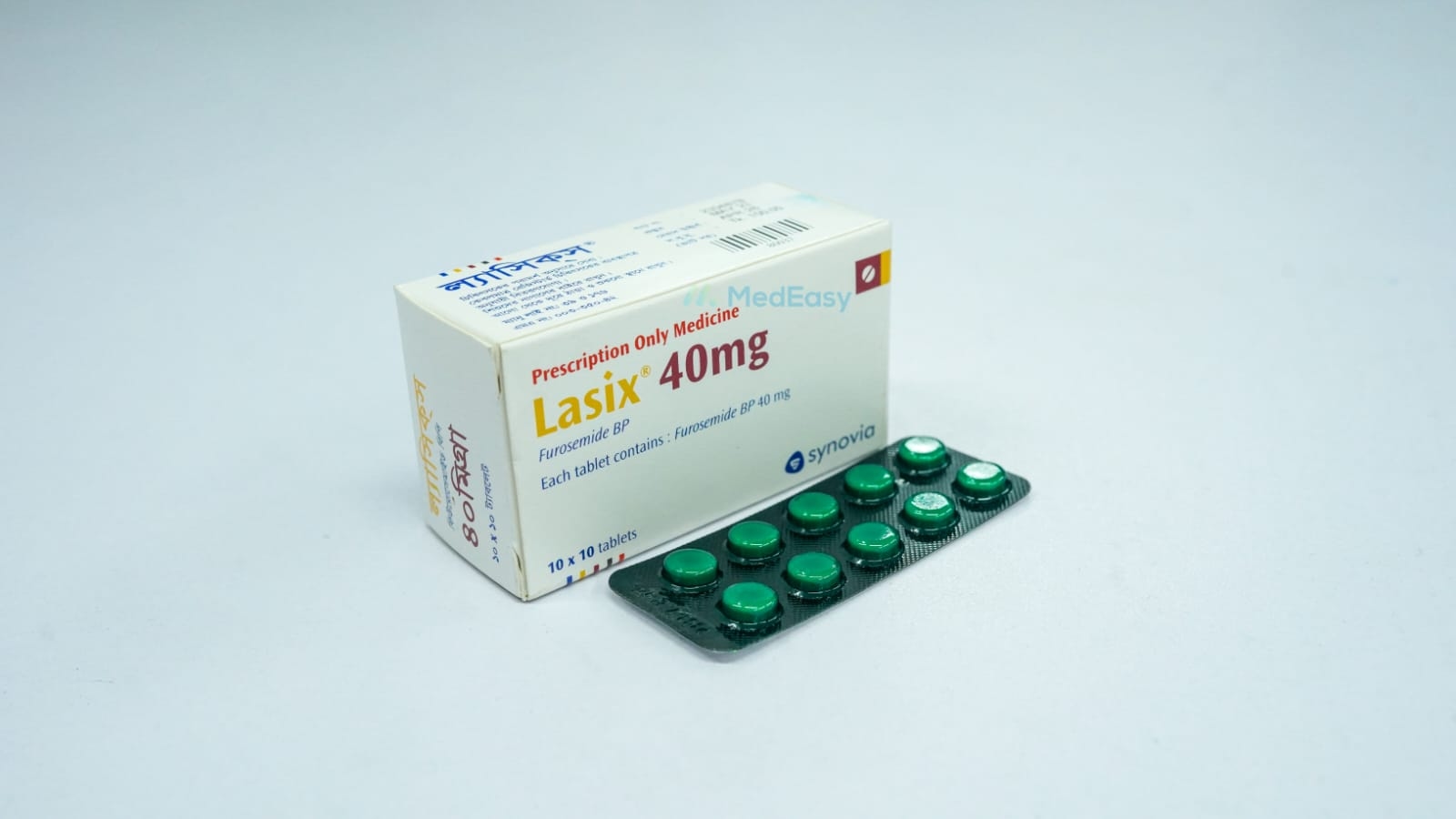
Generic medicine

Furosemide: Brands, Price & Uses in Bangladesh

Furosemide is a loop diuretic ("water pill") with FDA-approved and guideline-supported uses across several conditions: Established / FDA-approved uses Edema associated with congestive heart failure and more.

Forms:TabletSyrupIM/IV Injection

About Furosemide

Indications of Furosemide

Furosemide is a loop diuretic ("water pill") with FDA-approved and guideline-supported uses across several conditions:

Established / FDA-approved uses

  • Edema associated with congestive heart failure, hepatic cirrhosis (liver disease), and renal disease, including the nephrotic syndrome.
  • Acute pulmonary edema (fluid in the lungs), where intravenous Furosemide is used for rapid symptom relief.
  • Hypertension (high blood pressure) — Furosemide may be used alone, but is more commonly used as part of combination therapy with other antihypertensive agents, especially in patients who also have edema or reduced kidney function.

Other / adjunct uses

  • Adjunct management of hypertensive emergencies (hypertensive crisis) alongside other agents.
  • Adjunctive use in acute hypercalcemia (after adequate volume replacement), typically as part of hospital-based management.

The specific dose and form (tablet, oral solution, or injection) depend on the indication and severity — see Dosage and Administration.

Dosage & Administration of Furosemide

Dosing of Furosemide is individualized according to indication, severity, and patient response, using the lowest effective dose. General guidance is summarized below; see Dosage for indication-specific details.

  • Furosemide may be given orally (tablet or solution) or by intravenous/intramuscular injection when rapid onset is needed or oral therapy is not feasible (e.g., acute pulmonary edema, hospitalized patients).
  • Doses are typically titrated upward at intervals of 6–8 hours until the desired diuretic response is achieved.
  • When switching between oral and parenteral routes, dose adjustment may be needed because oral bioavailability is variable (roughly 50–70%).
  • Renal and hepatic impairment: no fixed dose-reduction table exists, but doses are generally started low and titrated carefully with close monitoring of renal function and electrolytes; patients with severe renal impairment may require higher individual doses to achieve an adequate diuretic response, under close medical supervision.

Side Effects of Furosemide

Side effects of Furosemide are generally dose-related and most often reflect its diuretic and electrolyte-depleting action.

Common

  • Electrolyte disturbances: hypokalemia (low potassium), hyponatremia (low sodium), hypomagnesemia, hypochloremic alkalosis
  • Dehydration and volume depletion, dizziness, headache
  • Hypotension (low blood pressure), particularly postural (dizziness on standing)
  • Increased blood glucose (hyperglycemia) and increased uric acid (hyperuricemia), which may precipitate gout
  • Nausea, vomiting, diarrhea, constipation

Less common but serious

  • Ototoxicity (tinnitus, hearing loss — usually reversible), especially with rapid IV administration, high doses, or severe renal impairment
  • Severe skin reactions (Stevens-Johnson syndrome, toxic epidermal necrolysis) — rare
  • Blood disorders (aplastic anemia, thrombocytopenia, leukopenia) — rare
  • Pancreatitis, jaundice, hepatic encephalopathy in susceptible patients
  • Interstitial nephritis, vasculitis

Contraindications of Furosemide

Furosemide is contraindicated in:

  • Patients with known hypersensitivity to Furosemide or to sulfonamide-derivative drugs.
  • Anuria (absence of urine production) or complete kidney failure not responding to Furosemide.
  • Patients in a state of severe electrolyte and fluid depletion, or in hepatic coma/pre-comatose states associated with severe liver cirrhosis, until the underlying condition is corrected.

Frequently Asked Questions about Furosemide

What is Furosemide used for?

Furosemide is a loop diuretic ("water pill") used to treat fluid retention (edema) caused by heart failure, liver disease (cirrhosis), and kidney disease, including nephrotic syndrome. It is also used, often together with other medicines, to treat high blood pressure (hypertension).

How should I take Furosemide?

Take Furosemide exactly as prescribed by your physician, usually once or twice daily, generally in the morning to avoid needing to urinate at night. It can be taken with or without food. Do not change your dose or stop Furosemide without consulting your doctor, as this can affect fluid balance and blood pressure control.

What are the common side effects of Furosemide?

Common side effects of Furosemide include increased urination, dizziness, low blood pressure (especially on standing up), electrolyte disturbances (such as low potassium or sodium), dehydration, headache, and increased blood sugar or uric acid levels. Contact your doctor if you experience severe dizziness, muscle cramps, irregular heartbeat, ringing in the ears, or hearing changes.

Can Furosemide be used during pregnancy or breastfeeding?

Furosemide should be used during pregnancy only if clearly needed, since animal studies suggest possible risk and adequate human studies are lacking; a physician must weigh the potential benefit against potential risk to the fetus. Furosemide also passes into breast milk and may reduce milk production, so it should be used during breastfeeding only under medical supervision. Always consult your doctor before using Furosemide if you are pregnant or breastfeeding.

Who should not take Furosemide?

Furosemide should not be used by people with a known allergy to Furosemide or to sulfonamide-derivative medicines, patients with anuria (no urine production), or those with severe electrolyte depletion or hepatic pre-coma/coma associated with severe liver cirrhosis, until that condition is corrected. Always inform your doctor of your full medical history before starting Furosemide.

What should I do if I miss a dose or take too much Furosemide?

If you miss a dose of Furosemide, take it as soon as you remember, but skip it if it is almost time for your next dose — do not double the dose. If you or someone else has taken too much Furosemide and shows symptoms such as severe thirst, weakness, dizziness, or very low urine output, seek immediate medical attention or contact emergency services/a poison control center right away.

Disclaimer

The information provided is accurate to the best of our knowledge, but it does not replace professional medical advice. We cannot guarantee its completeness or accuracy, and the absence of specific information about a drug should not be taken as an endorsement. We are not responsible for any consequences arising from this information, so please consult a healthcare professional for any concerns or questions.
DoctorBlogArticles
