10% Off
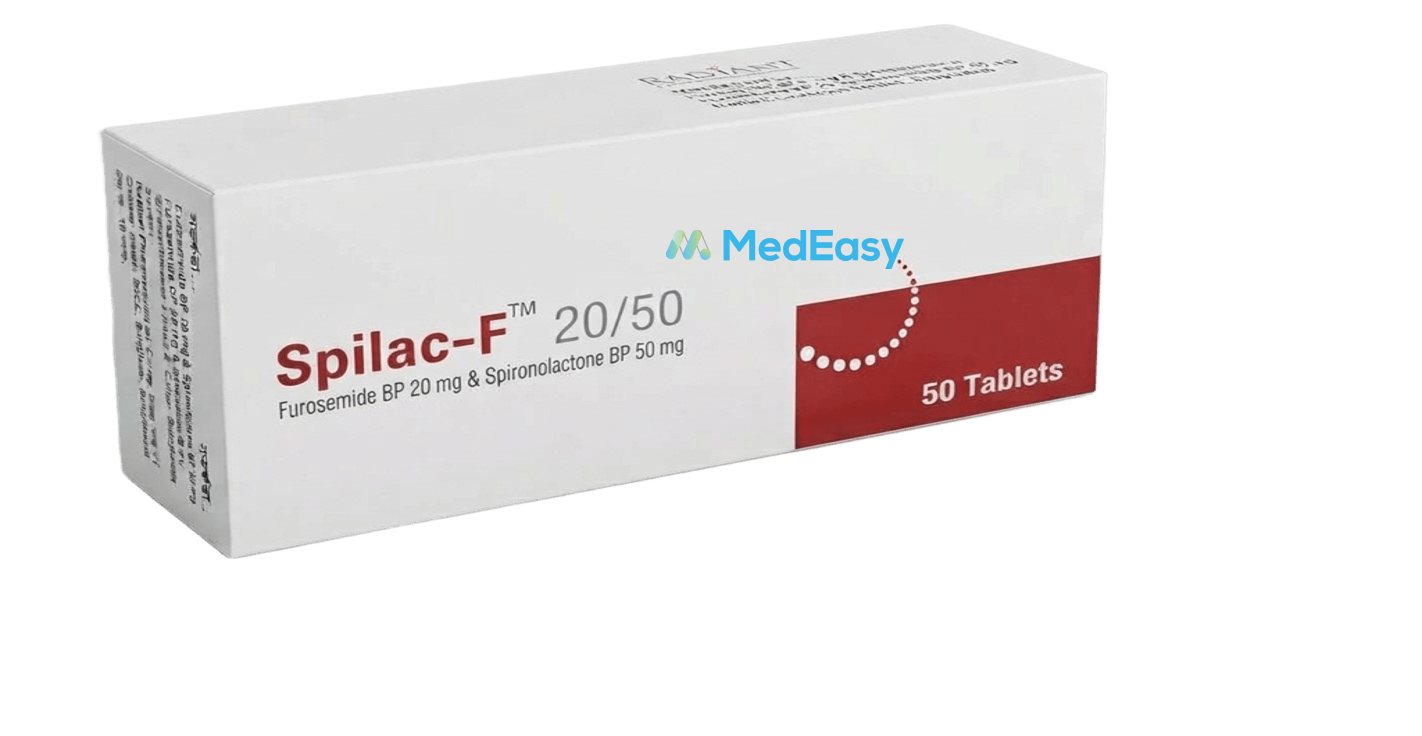
Frusiton40 mg+50 m
Globe Pharmaceuticals Ltd.
৳72.00
Add to cart
Edema Associated with Congestive Heart Failure (Established) Furosemide + Spironolactone is an established combination for managing fluid retention (edema) in chronic congestive heart failure.
Furosemide + Spironolactone is an established combination for managing fluid retention (edema) in chronic congestive heart failure. The loop diuretic component produces a strong natriuretic and diuretic effect, while the potassium-sparing component offsets the potassium loss that furosemide alone would cause.
Furosemide + Spironolactone is established for edema and ascites due to hepatic cirrhosis, a setting in which secondary hyperaldosteronism is common; the spironolactone component addresses this mechanism directly while the furosemide component adds potent fluid removal.
Furosemide + Spironolactone may be used for edema associated with nephrotic syndrome, combining diuretic efficacy with a reduced risk of drug-induced hypokalemia.
Furosemide + Spironolactone is indicated for resistant edema linked to secondary hyperaldosteronism, a state in which the potassium-sparing, aldosterone-blocking action of the spironolactone component is particularly useful.
The spironolactone component of Furosemide + Spironolactone is used in the management of primary hyperaldosteronism, both before surgery and for long-term maintenance therapy when surgery is not performed.
Furosemide + Spironolactone may be used as an adjunct treatment for essential hypertension when a combined diuretic effect with potassium conservation is clinically appropriate, generally after simpler regimens have been considered.
Dosage of Furosemide + Spironolactone is individualized by a healthcare professional according to the indication being treated, the patient's response, and their kidney function and electrolyte status. Furosemide + Spironolactone is generally taken once daily, preferably in the morning, and treatment is usually started at a lower dose that is adjusted gradually.
Headache, dizziness, drowsiness, gastrointestinal upset (nausea, vomiting, diarrhea, cramping), muscle cramps, orthostatic (postural) lightheadedness, and menstrual irregularities or breast tenderness/enlargement (gynecomastia) related to the spironolactone component, which is usually reversible on stopping treatment.
Signs of hyperkalemia (muscle weakness, irregular heartbeat, tingling) — see Precautions for full details. Signs of significant dehydration or electrolyte disturbance (severe thirst, confusion, reduced urination, very low blood pressure) — see Precautions for full details. Also seek prompt medical attention for: hearing changes or ringing in the ears (ototoxicity), irregular heartbeat, severe or persistent dizziness/fainting, unusual bleeding or bruising, signs of severe skin reaction (blistering, peeling skin, widespread rash — rarely including Stevens-Johnson syndrome), yellowing of the skin or eyes (jaundice), and signs of blood disorders such as unusual fatigue, fever, or frequent infections.
Furosemide + Spironolactone is contraindicated in the following situations:
Disclaimer
The information provided is accurate to the best of our knowledge, but it does not replace professional medical advice. We cannot guarantee its completeness or accuracy, and the absence of specific information about a drug should not be taken as an endorsement. We are not responsible for any consequences arising from this information, so please consult a healthcare professional for any concerns or questions.