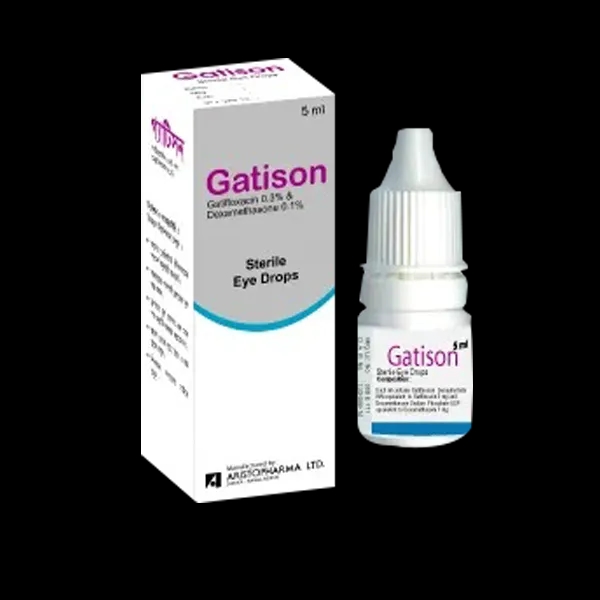
Generic medicine

Gatifloxacin + Dexamethasone: Brands, Price & Uses in Bangladesh

Gatifloxacin + Dexamethasone is an ophthalmic (eye) combination of a fluoroquinolone antibiotic and a corticosteroid and more.

Forms:Ophthalmic Solution

About Gatifloxacin + Dexamethasone

Indications of Gatifloxacin + Dexamethasone

Gatifloxacin + Dexamethasone is an ophthalmic (eye) combination of a fluoroquinolone antibiotic and a corticosteroid, indicated for the treatment of steroid-responsive ocular inflammatory conditions where a bacterial infection or risk of bacterial infection is present or suspected.

Established/Guideline-Supported Uses

  • Blepharitis, blepharoconjunctivitis, conjunctivitis, keratitis, and keratoconjunctivitis with bacterial involvement and associated inflammation
  • Anterior uveitis-related conditions such as iritis, iridocyclitis, and cyclitis where infection risk coexists with inflammation
  • Scleritis and episcleritis with suspected bacterial component
  • Corneal injury from chemical, radiation, or thermal burns, or penetration of foreign bodies, where bacterial infection risk is present
  • Post-operative ocular inflammation following ophthalmic surgery, where infection prophylaxis alongside inflammation control is desired

Adjunct Use

May be used as an adjunct alongside systemic therapy in more severe inflammatory or infective ocular conditions, at the treating ophthalmologist's discretion.

This combination is intended only for conditions in which both an antibiotic and a corticosteroid are appropriate together; it should not be used for purely inflammatory conditions without infection risk, or for infections without significant inflammation, where a single-agent product is preferred.

Dosage & Administration of Gatifloxacin + Dexamethasone

Adults

Instill 1-2 drops of Gatifloxacin + Dexamethasone into the conjunctival sac of the affected eye(s) 3 to 4 times daily, or as directed by the ophthalmologist. In more severe infections, dosing may initially be more frequent, tapering as clinical improvement occurs.

Administration Instructions

  • Wash hands before use; avoid touching the dropper tip to the eye, eyelid, or any other surface to prevent contamination
  • Tilt the head back, pull down the lower eyelid to form a small pocket, and instill the prescribed number of drops
  • Close the eye gently for 1-2 minutes after instillation; applying light pressure at the inner corner of the eye (punctal occlusion) can reduce systemic absorption
  • If using with other eye drops, space administration by at least 5-10 minutes
  • Discard the bottle per the labeled duration after first opening (commonly 4 weeks), even if solution remains

Duration of Treatment

Treatment duration should be individualized by the prescribing ophthalmologist based on clinical response, generally not exceeding 7-10 days without re-evaluation, since prolonged corticosteroid use increases the risk of intraocular pressure elevation and other steroid-related ocular complications.

Complete the full course of Gatifloxacin + Dexamethasone exactly as prescribed by your physician; do not stop, extend, skip doses, or share this medicine with others without medical advice, even if symptoms improve early, to reduce the risk of incomplete treatment of infection and antibiotic resistance.

Side Effects of Gatifloxacin + Dexamethasone

Common Side Effects

  • Eye irritation, stinging, or burning on instillation
  • Redness (conjunctival hyperemia)
  • Itching
  • Chemosis (conjunctival swelling)
  • Dry eye sensation
  • Eyelid swelling
  • Blurred or reduced visual acuity (transient)
  • Foreign body sensation

Less Common but Significant Side Effects

  • Elevated intraocular pressure/glaucoma (with prolonged use) - see Precautions
  • Posterior subcapsular cataract formation (with prolonged use)
  • Delayed corneal or wound healing
  • Secondary ocular infection (fungal or viral) due to suppression of the host inflammatory/immune response
  • Hypersensitivity reactions (eyelid swelling, itching, rash)

Contraindications of Gatifloxacin + Dexamethasone

Gatifloxacin + Dexamethasone is contraindicated in:

  • Known hypersensitivity to gatifloxacin, other fluoroquinolone antibiotics, dexamethasone, or any component of the formulation
  • Most viral diseases of the cornea and conjunctiva, including epithelial herpes simplex keratitis (dendritic keratitis), vaccinia, and varicella
  • Mycobacterial infection of the eye
  • Fungal diseases of ocular structures

These conditions are absolute contraindications because the corticosteroid component may mask, delay diagnosis of, or worsen these infections when the underlying pathogen is not adequately covered by the antibiotic component.

Frequently Asked Questions about Gatifloxacin + Dexamethasone

What is Gatifloxacin + Dexamethasone used for?

Gatifloxacin + Dexamethasone is an eye drop used to treat bacterial eye infections that are accompanied by significant inflammation, such as certain forms of conjunctivitis, blepharitis, keratitis, and post-operative inflammation, where both antibiotic and anti-inflammatory action are needed together.

How should I use Gatifloxacin + Dexamethasone eye drops?

Typically, 1-2 drops are instilled into the affected eye 3-4 times daily, or as directed by your ophthalmologist. Wash your hands first, avoid touching the dropper tip to the eye, and complete the full prescribed course even if your symptoms improve early - do not stop, extend, skip doses, or share this medicine with others without medical advice.

Can I use Gatifloxacin + Dexamethasone for a long time?

No, prolonged use (generally beyond 7-10 days) is not recommended without ophthalmologist supervision, because extended corticosteroid exposure can raise eye pressure (glaucoma risk), cause cataracts, delay wound healing, and permit secondary fungal or viral infections. Your doctor may need to check your eye pressure if longer treatment is required.

Is Gatifloxacin + Dexamethasone safe during pregnancy or breastfeeding?

There is limited data on use of Gatifloxacin + Dexamethasone in pregnant or breastfeeding women. It should be used during pregnancy only if the potential benefit justifies the potential risk to the fetus, and with caution during breastfeeding. Always consult your physician before use in these situations.

Who should not use Gatifloxacin + Dexamethasone?

This medicine should not be used by people with known hypersensitivity to gatifloxacin, other fluoroquinolones, or dexamethasone; those with most viral eye infections such as herpes simplex keratitis, vaccinia, or varicella; those with mycobacterial (e.g., tuberculous) eye infections; or those with fungal eye infections, because the steroid component can worsen these conditions.

What should I do if I accidentally use too much Gatifloxacin + Dexamethasone or swallow it?

If excessive amounts are instilled in the eye or the medicine is accidentally swallowed, seek immediate medical attention or contact a poison control center or emergency services; do not attempt to treat an overdose at home.

Disclaimer

The information provided is accurate to the best of our knowledge, but it does not replace professional medical advice. We cannot guarantee its completeness or accuracy, and the absence of specific information about a drug should not be taken as an endorsement. We are not responsible for any consequences arising from this information, so please consult a healthcare professional for any concerns or questions.

DoctorBlogArticles