
5% Off
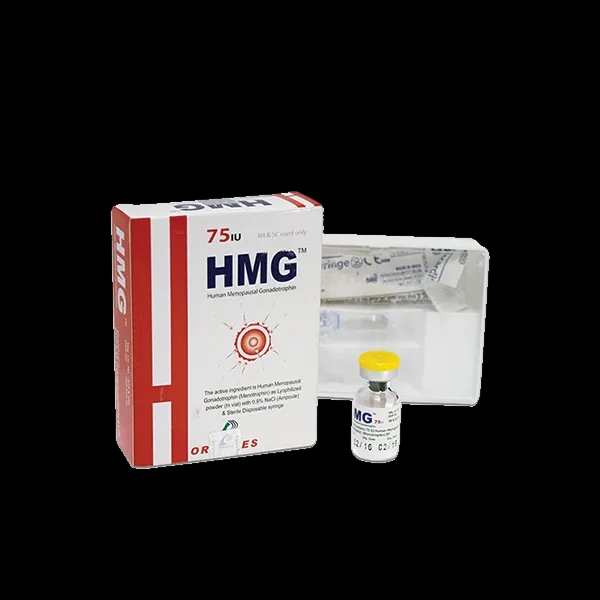
HMG75 IU/vial
Popular Pharmaceuticals Ltd.
৳874.00
Add to cart
Human Menopausal Gonadotrophin is a purified preparation of follicle-stimulating hormone (FSH) and luteinizing hormone (LH) activity, extracted from the urine of postmenopausal women and more.
Human Menopausal Gonadotrophin is a purified preparation of follicle-stimulating hormone (FSH) and luteinizing hormone (LH) activity, extracted from the urine of postmenopausal women, used in the management of infertility. Its approved and evidence-supported uses include:
Human Menopausal Gonadotrophin is used only under the close supervision of a fertility specialist or reproductive endocrinologist with access to ultrasound and hormone-monitoring facilities; it is not intended for self-directed use.
Dosing of Human Menopausal Gonadotrophin must always be individualized by a fertility specialist based on ovarian or testicular response, using the lowest effective dose to minimize the risk of ovarian hyperstimulation syndrome (OHSS) and multiple pregnancy.
| Indication | Typical Starting Dose | Adjustment |
|---|---|---|
| Ovulation induction (anovulatory women) | 75-150 IU intramuscularly or subcutaneously once daily, starting early in the cycle | Adjusted at intervals of several days according to ultrasound follicle tracking and serum estradiol; hCG trigger given once adequate follicular development is confirmed |
| Controlled ovarian stimulation for IVF/ART | 150-225 IU once daily, started early in the treatment cycle, often with a GnRH agonist/antagonist protocol | Adjusted according to ovarian response; hCG trigger given when follicular maturity criteria are met, followed by oocyte retrieval 34-36 hours later |
| Spermatogenesis induction (male hypogonadotropic hypogonadism) | hCG pretreatment alone for several months first; then Human Menopausal Gonadotrophin 75-150 IU 2-3 times weekly with continued hCG | Continued for a minimum of 3-4 months; a measurable response in sperm count may take up to 12 months or longer to appear |
See Duration of Treatment and Use in Special Populations for further detail. All treatment cycles require monitoring with transvaginal ultrasound and serum estradiol (women) or serum testosterone and semen analysis (men).
The most common side effects reported with Human Menopausal Gonadotrophin include:
A more serious but less common risk is ovarian hyperstimulation syndrome (OHSS) — see Precautions and Warnings for full detail. Uncommon effects include hypersensitivity reactions (including anaphylaxis) and thromboembolic events.
Human Menopausal Gonadotrophin is contraindicated in:
Disclaimer
The information provided is accurate to the best of our knowledge, but it does not replace professional medical advice. We cannot guarantee its completeness or accuracy, and the absence of specific information about a drug should not be taken as an endorsement. We are not responsible for any consequences arising from this information, so please consult a healthcare professional for any concerns or questions.
