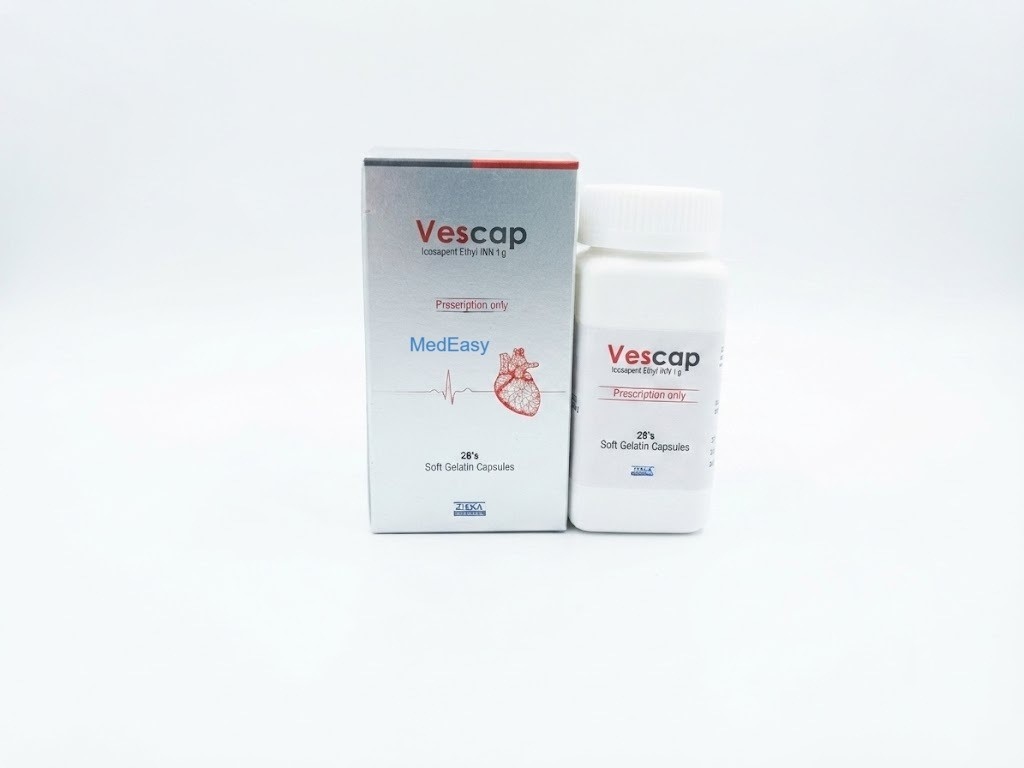
Generic medicine

Icosapent Ethyl: Brands, Price & Uses in Bangladesh

Icosapent Ethyl is a highly purified ethyl ester of eicosapentaenoic acid (EPA) used in the management of triglyceride disorders and cardiovascular risk reduction.

Forms:Capsule

About Icosapent Ethyl

Indications of Icosapent Ethyl

Icosapent Ethyl is a highly purified ethyl ester of eicosapentaenoic acid (EPA) used in the management of triglyceride disorders and cardiovascular risk reduction. Its approved and evidence-based uses are classified below by strength of evidence.

Established / Approved Uses

  • Cardiovascular risk reduction (adjunct therapy): Icosapent Ethyl is indicated as an adjunct to maximally tolerated statin therapy to reduce the risk of myocardial infarction, stroke, coronary revascularization, and hospitalization for unstable angina in adults with elevated triglyceride levels (≥150 mg/dL) who have established cardiovascular disease, or diabetes mellitus with two or more additional cardiovascular risk factors.
  • Severe hypertriglyceridemia: Icosapent Ethyl is indicated as an adjunct to diet to reduce triglyceride levels in adult patients with severe hypertriglyceridemia (triglycerides ≥500 mg/dL).

Important Notes

  • Icosapent Ethyl must always be used together with dietary modification and, where indicated, maximally tolerated statin therapy — it is not a substitute for these measures.
  • Icosapent Ethyl is not indicated for weight loss, general cardiovascular prevention in the absence of the specific risk factors above, or as a first-line lipid-lowering agent.

Dosage & Administration of Icosapent Ethyl

Adult Dose

IndicationDose
Cardiovascular risk reduction (adjunct to statin)4 grams by mouth per day, taken as 2 grams twice daily with food
Severe hypertriglyceridemia (adjunct to diet)4 grams by mouth per day, taken as 2 grams twice daily with food

The 4 gram total daily dose may be given as two 1 gram capsules twice daily, or four 0.5 gram capsules twice daily, always taken with food.

Pediatric Dose

Safety and efficacy of Icosapent Ethyl have not been established in pediatric patients; it is not recommended for use in this population.

Renal Impairment

No specific dose adjustment has been established for renal impairment; formal dedicated renal-impairment studies are limited, so use with routine clinical monitoring.

Hepatic Impairment

Icosapent Ethyl has not been specifically studied in patients with severe hepatic impairment; use with caution and clinical judgment in this group (see Precautions).

Side Effects of Icosapent Ethyl

The most commonly reported side effects of Icosapent Ethyl in clinical trials include:

  • Musculoskeletal pain
  • Peripheral edema (swelling, usually of the legs/ankles)
  • Constipation
  • Gout
  • Atrial fibrillation or atrial flutter (see Precautions)
  • Arthralgia (joint pain)
  • Oropharyngeal pain
  • Bleeding events (see Precautions)

Patients should seek prompt medical attention for palpitations, irregular heartbeat, unusual bruising or bleeding, or any severe or persistent adverse effect while taking Icosapent Ethyl.

Contraindications of Icosapent Ethyl

Icosapent Ethyl is contraindicated in patients with known hypersensitivity (including anaphylactic reactions) to Icosapent Ethyl or to any of its capsule components.

Frequently Asked Questions about Icosapent Ethyl

What is Icosapent Ethyl used for?

Icosapent Ethyl is used as an add-on to maximally tolerated statin therapy to reduce cardiovascular risk (such as heart attack and stroke) in adults with high triglycerides and either established heart disease or diabetes with additional risk factors. It is also used, together with diet, to lower triglyceride levels in adults with severe hypertriglyceridemia (triglycerides ≥500 mg/dL).

How should I take Icosapent Ethyl?

Icosapent Ethyl is usually taken as a total of 4 grams per day, split into two doses of 2 grams each, taken with food. Swallow the capsules whole; do not crush, break, or chew them.

Can Icosapent Ethyl cause an irregular heartbeat?

Yes. Icosapent Ethyl has been associated with an increased risk of atrial fibrillation or atrial flutter, especially in people with a prior history of these heart rhythm problems. Tell your doctor right away if you notice palpitations, an irregular heartbeat, or shortness of breath while taking Icosapent Ethyl.

Does Icosapent Ethyl increase bleeding risk?

Icosapent Ethyl can increase the risk of bleeding, particularly if you are also taking blood thinners or antiplatelet medicines such as warfarin, aspirin, or clopidogrel. Watch for unusual bruising or bleeding and inform your doctor if this occurs.

Is Icosapent Ethyl safe during pregnancy or breastfeeding?

Information on Icosapent Ethyl use during pregnancy and breastfeeding is limited. It should be used in pregnancy only if clearly needed and if the benefit outweighs the potential risk to the baby, and a doctor should be consulted before use while breastfeeding.

What should I do if I miss a dose or take too much Icosapent Ethyl?

If you miss a dose, take it as soon as you remember unless it is close to the next dose. If you suspect you have taken too much Icosapent Ethyl, seek immediate medical attention or contact a poison control center; do not attempt to treat an overdose at home.

Disclaimer

The information provided is accurate to the best of our knowledge, but it does not replace professional medical advice. We cannot guarantee its completeness or accuracy, and the absence of specific information about a drug should not be taken as an endorsement. We are not responsible for any consequences arising from this information, so please consult a healthcare professional for any concerns or questions.

DoctorBlogArticles