Generic medicine

Insulin Glargine USP: Brands, Price & Uses in Bangladesh

Insulin Glargine USP is a long-acting (basal) insulin analog indicated to improve glycemic control in adults and pediatric patients with the following: Type 1 diabetes mellitus (established and more.

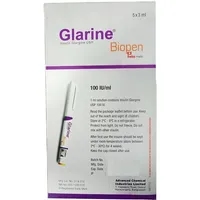
Forms:Biopen

About Insulin Glargine USP

Indications of Insulin Glargine USP

Insulin Glargine USP is a long-acting (basal) insulin analog indicated to improve glycemic control in adults and pediatric patients with the following:

  • Type 1 diabetes mellitus (established, FDA-approved use) - as part of a regimen that includes a rapid- or short-acting insulin for mealtime coverage.
  • Type 2 diabetes mellitus (established, FDA-approved use) - either alone or in combination with oral antidiabetic agents or other insulins, when basal insulin therapy is required.

Insulin Glargine USP is not indicated for the treatment of diabetic ketoacidosis; an intravenous, rapid-acting insulin is preferred in that setting.

Dosage & Administration of Insulin Glargine USP

General Principles

The dose of Insulin Glargine USP must be individualized based on the patient's metabolic needs, blood glucose monitoring results, and glycemic control goals, under physician supervision.

IndicationDosing Guidance
Type 1 diabetes mellitus (adults and children)Given once daily, at the same time each day, as part of a basal-bolus regimen with a mealtime rapid/short-acting insulin. Approximately one-third to one-half of the total daily insulin requirement is often provided as basal insulin; dose is titrated individually.
Type 2 diabetes mellitus (insulin-naive)A common starting dose is approximately 0.2 units/kg or 10 units subcutaneously once daily, then titrated based on blood glucose response.
Switching from another basal insulinDose conversion and titration should be individualized and supervised by a physician; more frequent glucose monitoring is recommended during transition.

Injected subcutaneously into the abdomen, thigh, or upper arm, with rotation of injection sites. Insulin Glargine USP must not be administered intravenously or via an insulin infusion pump, and must not be diluted or mixed with any other insulin or solution, as this alters its time-action profile and may cause unpredictable precipitation.

Side Effects of Insulin Glargine USP

The most common and clinically significant adverse effect of Insulin Glargine USP is hypoglycemia, which may be serious and, in severe cases, life-threatening. Other reported adverse effects include:

  • Injection site reactions (redness, swelling, itching)
  • Lipodystrophy (lipohypertrophy or lipoatrophy) at repeated injection sites
  • Weight gain
  • Peripheral edema, particularly when combined with thiazolidinediones
  • Allergic reactions, including rare cases of generalized hypersensitivity (rash, angioedema, bronchospasm, hypotension, anaphylaxis)
  • Pruritus

Contraindications of Insulin Glargine USP

Insulin Glargine USP is contraindicated in:

  • Patients with known hypersensitivity to insulin glargine or any of its excipients.
  • During episodes of hypoglycemia.

Frequently Asked Questions about Insulin Glargine USP

What is Insulin Glargine USP used for?

Insulin Glargine USP is a long-acting basal insulin used to control blood sugar levels in adults and children with type 1 diabetes mellitus, and in adults with type 2 diabetes mellitus, as part of an overall diabetes management plan.

How often should Insulin Glargine USP be injected?

Insulin Glargine USP is typically injected once daily, at the same time each day, under the skin (subcutaneously) into the abdomen, thigh, or upper arm, with rotation of injection sites to reduce the risk of skin changes.

What is the biggest risk with Insulin Glargine USP?

The most common and serious risk is hypoglycemia (low blood sugar), which can cause sweating, shakiness, confusion, and, if severe, loss of consciousness or seizures; patients should always carry a fast-acting source of sugar and know how to recognize and treat low blood sugar.

Can Insulin Glargine USP be mixed with other insulins?

No. Insulin Glargine USP should never be diluted or mixed with any other insulin or solution in the same syringe, as this changes its slow-release action and can make blood sugar control unpredictable.

Is Insulin Glargine USP safe during pregnancy?

Insulin therapy, including Insulin Glargine USP, is a preferred option for controlling blood sugar during pregnancy when medically needed, since poor glucose control poses risks to both mother and baby; however, it should only be used under close physician supervision, as insulin dose needs often change during pregnancy.

Can Insulin Glargine USP be used to treat diabetic ketoacidosis?

No. Insulin Glargine USP is not intended for treating diabetic ketoacidosis; intravenous short-acting (regular) insulin is required for that emergency condition, and patients should seek immediate medical care if this is suspected.

Disclaimer

The information provided is accurate to the best of our knowledge, but it does not replace professional medical advice. We cannot guarantee its completeness or accuracy, and the absence of specific information about a drug should not be taken as an endorsement. We are not responsible for any consequences arising from this information, so please consult a healthcare professional for any concerns or questions.

DoctorBlogArticles