
10% Off
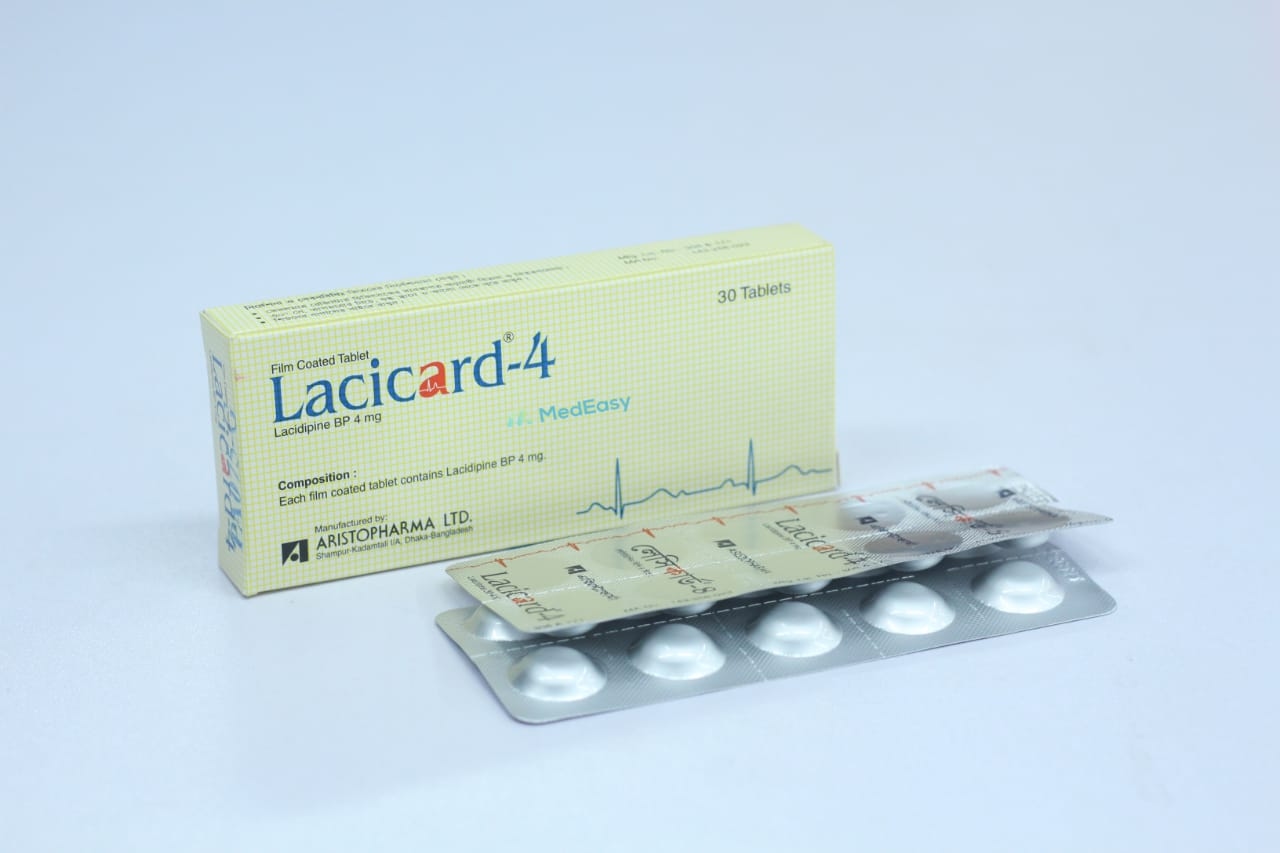
Lacicard4 mg
Aristopharma Ltd.
৳54.00
Add to cart
Lacidipine is a long-acting dihydropyridine calcium channel blocker indicated for the treatment of hypertension.
Lacidipine is a long-acting dihydropyridine calcium channel blocker indicated for the treatment of hypertension.
Lacidipine has not been shown to provide additional benefit for secondary prevention after myocardial infarction and is not indicated for this purpose. The safety and efficacy of Lacidipine in hypertensive emergencies (malignant hypertension) have not been established, and it should not be used for that indication.
| Step | Dose of Lacidipine | Notes |
|---|---|---|
| Starting dose | 2 mg once daily | Taken preferably in the morning |
| Titration | Increase to 4 mg once daily after 3–4 weeks if needed | Based on blood pressure response |
| Maximum dose | 6 mg once daily | Doses of Lacidipine above 6 mg daily provide no additional antihypertensive benefit |
The safety and efficacy of Lacidipine have not been established in children; Lacidipine is therefore not recommended for use in the pediatric population.
No dosage adjustment of Lacidipine is generally required in renal impairment, since Lacidipine and its metabolites are not significantly cleared by the kidney; caution is still advised in severe renal disease.
Because Lacidipine is extensively metabolized by the liver, plasma concentrations of Lacidipine are increased in hepatic impairment. A lower starting dose and careful monitoring are recommended, with dose adjustment as needed; Lacidipine should be used with particular caution in severe hepatic impairment (see Precautions and Warnings).
No specific dose adjustment of Lacidipine is generally required in elderly patients, but treatment should be initiated at the lowest dose with monitoring of blood pressure response.
Side effects of Lacidipine are generally dose-related and reflect its vasodilatory action.
| Frequency | Side Effects |
|---|---|
| Common | Headache, dizziness, flushing, palpitations, peripheral (ankle) edema, tachycardia |
| Less Common | Syncope, worsening of angina, gastrointestinal discomfort, rash, gingival hyperplasia (with prolonged use) |
| Rare | Tremor, muscle cramps, urticaria, angioedema |
| Very Rare | Depression, elevated liver enzymes (alkaline phosphatase) |
Peripheral edema with Lacidipine is a recognized class effect of dihydropyridine calcium channel blockers and is dose-dependent; it is caused by arteriolar dilation rather than fluid overload and typically does not respond to diuretics.
Lacidipine is contraindicated in patients with:
Disclaimer
The information provided is accurate to the best of our knowledge, but it does not replace professional medical advice. We cannot guarantee its completeness or accuracy, and the absence of specific information about a drug should not be taken as an endorsement. We are not responsible for any consequences arising from this information, so please consult a healthcare professional for any concerns or questions.

