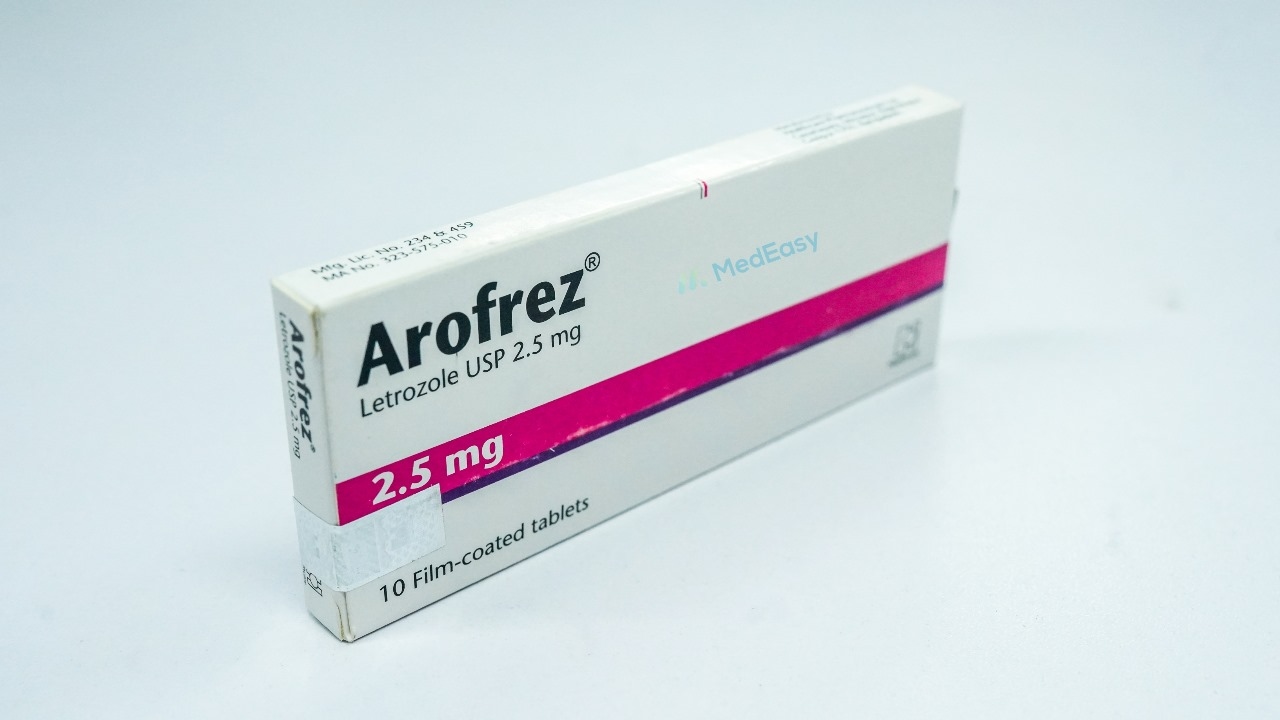
Generic medicine

Letrozole: Brands, Price & Uses in Bangladesh

Letrozole is a nonsteroidal aromatase inhibitor with established and guideline-supported uses classified below by strength of evidence.

Forms:Tablet

About Letrozole

Indications of Letrozole

Letrozole is a nonsteroidal aromatase inhibitor with established and guideline-supported uses classified below by strength of evidence.

FDA-approved / established indications (postmenopausal women only)

  • Adjuvant treatment of hormone receptor (HR)-positive early breast cancer in postmenopausal women.
  • Extended adjuvant treatment of HR-positive early breast cancer following completion of approximately 5 years of standard adjuvant tamoxifen therapy.
  • First-line treatment of HR-positive, or hormone receptor unknown, locally advanced or metastatic breast cancer in postmenopausal women.
  • Second-line treatment of advanced breast cancer in postmenopausal women with disease progression following prior antiestrogen therapy.

Guideline-supported off-label use

  • Ovulation induction in women with anovulatory infertility (for example, polycystic ovary syndrome, PCOS). Major reproductive medicine guidelines (e.g., ASRM/ACOG) support Letrozole as a first-line ovulation-induction agent in appropriate candidates; this use is off-label with respect to the original oncology approval and must be supervised by a fertility specialist. In this context Letrozole is intentionally used in premenopausal, reproductive-age women, unlike the breast cancer indication above.

Letrozole is not indicated and is not effective for breast cancer in premenopausal women, because its mechanism of estrogen suppression depends on the postmenopausal hormonal state.

Dosage & Administration of Letrozole

Dosing is determined by the treating physician per indication; typical regimens are:

IndicationTypical DoseDuration
Adjuvant treatment, early breast cancer2.5 mg orally once dailyApproximately 5 years, as directed by the oncologist
Extended adjuvant treatment (after tamoxifen)2.5 mg orally once dailyAs determined by the oncologist
Advanced or metastatic breast cancer2.5 mg orally once dailyUntil disease progression or unacceptable toxicity
Ovulation induction (off-label, fertility specialist-supervised)Commonly 2.5-7.5 mg orally once daily, starting around cycle day 3-5, for 5 daysPer treatment cycle, as directed and monitored by the fertility specialist (e.g. with ultrasound follicle tracking)
Severe hepatic impairment (cirrhosis)2.5 mg orally every other dayAs directed by physician

No dose adjustment is required for elderly patients or for renal impairment when creatinine clearance exceeds 10 mL/min. Letrozole may be taken with or without food, preferably at the same time each day.

Side Effects of Letrozole

Adverse effects of Letrozole vary somewhat by indication but commonly include:

Very common (often treatment-limiting)

  • Hot flashes / flushing
  • Arthralgia (joint pain and stiffness) — one of the most common and sometimes treatment-limiting effects; patients should report persistent or worsening joint symptoms
  • Fatigue, asthenia
  • Night sweats, headache, nausea

Common, requiring monitoring

  • Bone loss / decreased bone mineral density with long-term use, increasing fracture and osteoporosis risk (see Precautions and Warnings)
  • Hypercholesterolemia (elevated blood cholesterol)
  • Peripheral edema, weight changes, mood changes including depression
  • Hair thinning (alopecia)

Less common / rare

  • Cardiovascular ischemic events (in patients with pre-existing risk factors)
  • Carpal tunnel syndrome, blurred vision
  • Rash, urinary tract infection
  • When used for ovulation induction: multiple pregnancy (lower rate than with clomiphene) and, rarely, ovarian hyperstimulation

Contraindications of Letrozole

Letrozole is contraindicated in:

  • Known hypersensitivity to Letrozole or any component of the formulation.
  • Pregnancy — Letrozole can cause fetal harm (see Pregnancy and Lactation).

Important distinction regarding menopausal status: for the breast cancer indication, Letrozole is contraindicated / not indicated in premenopausal women, because its mechanism of action (suppressing peripheral aromatization) requires the postmenopausal hormonal state to be effective and its benefit has not been demonstrated in premenopausal patients. This is separate from the guideline-supported fertility indication, in which Letrozole is deliberately used in premenopausal women for ovulation induction under specialist supervision, provided the patient is not already pregnant.

Frequently Asked Questions about Letrozole

What is Letrozole used for?

Letrozole is primarily used to treat hormone receptor-positive breast cancer in postmenopausal women, as adjuvant, extended adjuvant, or first/second-line therapy for advanced disease. It is also used off-label, under fertility-specialist supervision, to help induce ovulation in women with conditions such as polycystic ovary syndrome (PCOS).

Can Letrozole be used during pregnancy?

No. Letrozole is contraindicated during pregnancy because it can cause fetal harm, including congenital malformations, based on animal studies. Women who could become pregnant should confirm they are not pregnant before starting Letrozole and use effective non-hormonal contraception during and after treatment as advised by their physician.

Why can Letrozole be used in premenopausal women for fertility but not for breast cancer?

For breast cancer, Letrozole works by suppressing estrogen produced from peripheral conversion of androgens, a mechanism that depends on the postmenopausal state, so it is not effective (and is contraindicated) for breast cancer in premenopausal women. For ovulation induction, doctors deliberately use the same estrogen-lowering effect in premenopausal women to trigger increased FSH and follicle development; this is an entirely different, physician-supervised clinical use, given only before pregnancy is achieved.

What are the most common side effects of Letrozole?

The most common side effects of Letrozole are hot flashes and joint pain/stiffness (arthralgia), which can sometimes be significant enough to affect treatment. Fatigue, nausea, headache, and night sweats are also common. With long-term use, Letrozole can cause bone density loss (raising osteoporosis and fracture risk) and elevated cholesterol, so bone health and cholesterol should be monitored periodically.

Does Letrozole affect bone health?

Yes. Letrozole lowers estrogen, and long-term use is associated with decreased bone mineral density and an increased risk of osteoporosis and fractures. Physicians typically monitor bone density during treatment and may recommend calcium, vitamin D, or bone-protective therapy.

What should I do if I take too much Letrozole (overdose)?

If an overdose of Letrozole is suspected, seek immediate medical attention or contact emergency services / a poison control center right away. Do not try to treat an overdose at home; treatment is supportive and should be managed by medical professionals.

Disclaimer

The information provided is accurate to the best of our knowledge, but it does not replace professional medical advice. We cannot guarantee its completeness or accuracy, and the absence of specific information about a drug should not be taken as an endorsement. We are not responsible for any consequences arising from this information, so please consult a healthcare professional for any concerns or questions.

DoctorBlogArticles