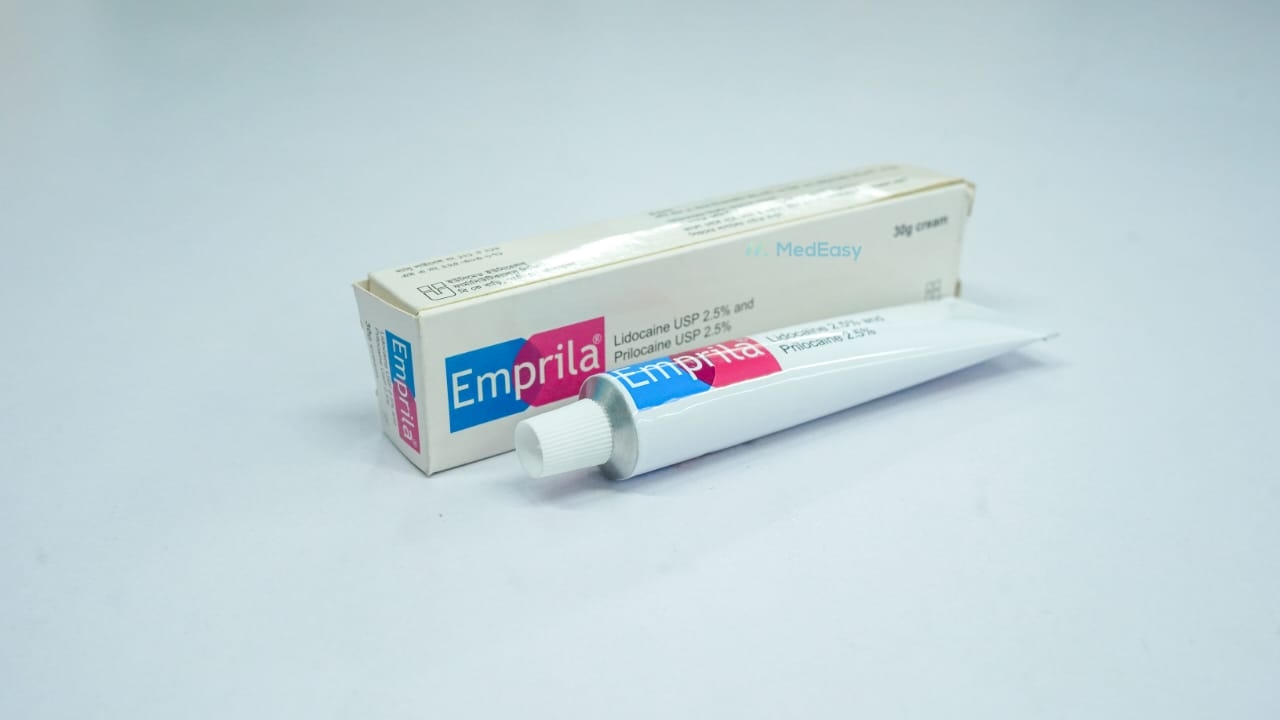
Generic medicine

Lidocaine + Prilocaine: Brands, Price & Uses in Bangladesh

Lidocaine + Prilocaine cream is a topical eutectic mixture of two amide-type local anesthetics used to produce local numbness (dermal analgesia) of intact skin and, in some labeled formulations and more.

Forms:Cream

About Lidocaine + Prilocaine

Indications of Lidocaine + Prilocaine

Lidocaine + Prilocaine cream is a topical eutectic mixture of two amide-type local anesthetics used to produce local numbness (dermal analgesia) of intact skin and, in some labeled formulations, certain mucous membranes before minor procedures.

Established / approved uses

  • Topical anesthesia of normal intact skin before needle procedures such as venipuncture, intravenous cannulation, and injections
  • Topical anesthesia of intact skin before minor dermatologic procedures such as shave biopsy, curettage, or laser hair removal
  • Anesthesia of adult male and female genital mucous membranes before minor procedures (e.g., prior to local infiltration anesthesia), in formulations labeled for this use

Adjunct use

  • Used as pretreatment to reduce the pain of subsequent needle-based infiltration anesthesia

Lidocaine + Prilocaine is not indicated for application to the eyes, middle ear, open wounds, mucous membranes beyond the labeled formulation and area, or for use as an injectable anesthetic.

Dosage & Administration of Lidocaine + Prilocaine

The amount and duration of application of Lidocaine + Prilocaine depends on the procedure, the site, and the patient's age. Use the smallest area and shortest duration consistent with effective anesthesia, especially in infants and young children.

UseTypical application
Intact skin before venipuncture/IV cannulation (adults and children)Apply a thick layer of cream to intact skin, cover with an occlusive dressing, and leave in place for at least 1 hour (up to a labeled maximum, commonly around 4-5 hours) before the procedure
Intact skin before minor dermatologic proceduresApply thick layer under occlusion for 1-2 hours depending on the procedure, per product labeling
Adult genital mucous membranes (labeled formulations only)Apply a thicker layer without occlusion for approximately 5-10 minutes before superficial procedures, or per product-specific instructions for minor infiltration pretreatment

Maximum application area/amount and maximum duration are age- and weight-dependent, and are notably restricted in infants and young children to reduce the risk of methemoglobinemia and systemic absorption (see Use in Special Populations and Pediatric Uses). The treated area should not exceed the labeled maximum, and the dressing/cream should be removed promptly at the end of the recommended application time.

Side Effects of Lidocaine + Prilocaine

Side effects of Lidocaine + Prilocaine are usually local and mild, but systemic effects can occur, particularly with use over larger areas, for longer than recommended, or on broken skin.

Local effects (common)

  • Transient paleness (blanching), redness, swelling, or altered temperature sensation at the application site
  • Mild itching or a warm/burning sensation on removal of the dressing

Less common / systemic effects

  • Contact dermatitis or allergic skin reaction at the application site
  • Dizziness, drowsiness, or perioral numbness with excessive systemic absorption
  • Methemoglobinemia (see Precautions and Warnings), presenting as bluish discoloration of the skin/lips (cyanosis), fatigue, or shortness of breath — requires prompt medical attention

Contraindications of Lidocaine + Prilocaine

Lidocaine + Prilocaine is contraindicated in:

  • Known hypersensitivity to lidocaine, prilocaine, any other amide-type local anesthetic, or any excipient of the cream.
  • Patients with congenital or idiopathic methemoglobinemia.

Frequently Asked Questions about Lidocaine + Prilocaine

What is Lidocaine + Prilocaine cream used for?

Lidocaine + Prilocaine is a topical anesthetic cream applied to intact skin to numb the area before procedures such as blood draws, IV line placement, injections, or minor skin procedures. Some formulations are also labeled for numbing genital skin before minor procedures.

How long before a procedure should Lidocaine + Prilocaine be applied?

Lidocaine + Prilocaine is usually applied as a thick layer under an occlusive dressing at least 1 hour before a skin procedure, with the exact time (and any maximum limit) depending on the procedure and the product label. Follow your healthcare provider's or the package instructions exactly, and do not leave it on longer than recommended.

Is Lidocaine + Prilocaine safe for babies and young children?

Lidocaine + Prilocaine can be used in infants and children for procedures such as vaccinations or blood draws, but the area treated and the time it is left on must be smaller/shorter than in adults, because young infants are more likely to develop a condition called methemoglobinemia. Always follow your pediatrician's specific instructions and never use it on premature or very young infants without medical advice.

What are the signs of a serious reaction to Lidocaine + Prilocaine?

Watch for bluish discoloration of the skin or lips, unusual tiredness, or shortness of breath after using Lidocaine + Prilocaine, as these can be signs of methemoglobinemia, a rare but serious blood disorder linked to the prilocaine component. Seek medical attention immediately if these occur.

Can Lidocaine + Prilocaine be used during pregnancy or breastfeeding?

Lidocaine + Prilocaine should be used during pregnancy or while breastfeeding only if clearly needed, after consulting a physician, since a small amount can be absorbed into the bloodstream and into breast milk. Avoid applying it to or near the breast area if you are breastfeeding.

Can Lidocaine + Prilocaine be applied to broken skin, wounds, or near the eyes?

No. Lidocaine + Prilocaine is intended for intact (unbroken) skin, or for mucous membranes only where specifically labeled. Applying it to broken skin, open wounds, or near the eyes increases absorption and the risk of side effects, including eye irritation if accidental contact occurs.

Disclaimer

The information provided is accurate to the best of our knowledge, but it does not replace professional medical advice. We cannot guarantee its completeness or accuracy, and the absence of specific information about a drug should not be taken as an endorsement. We are not responsible for any consequences arising from this information, so please consult a healthcare professional for any concerns or questions.

DoctorBlogArticles