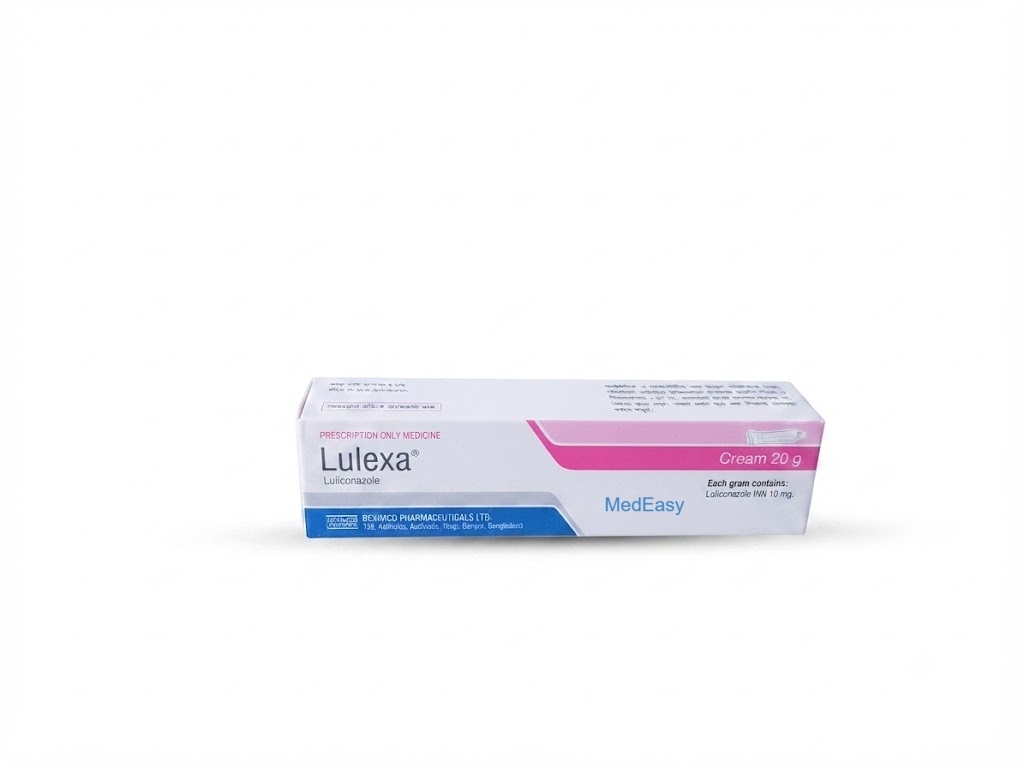
7% Off
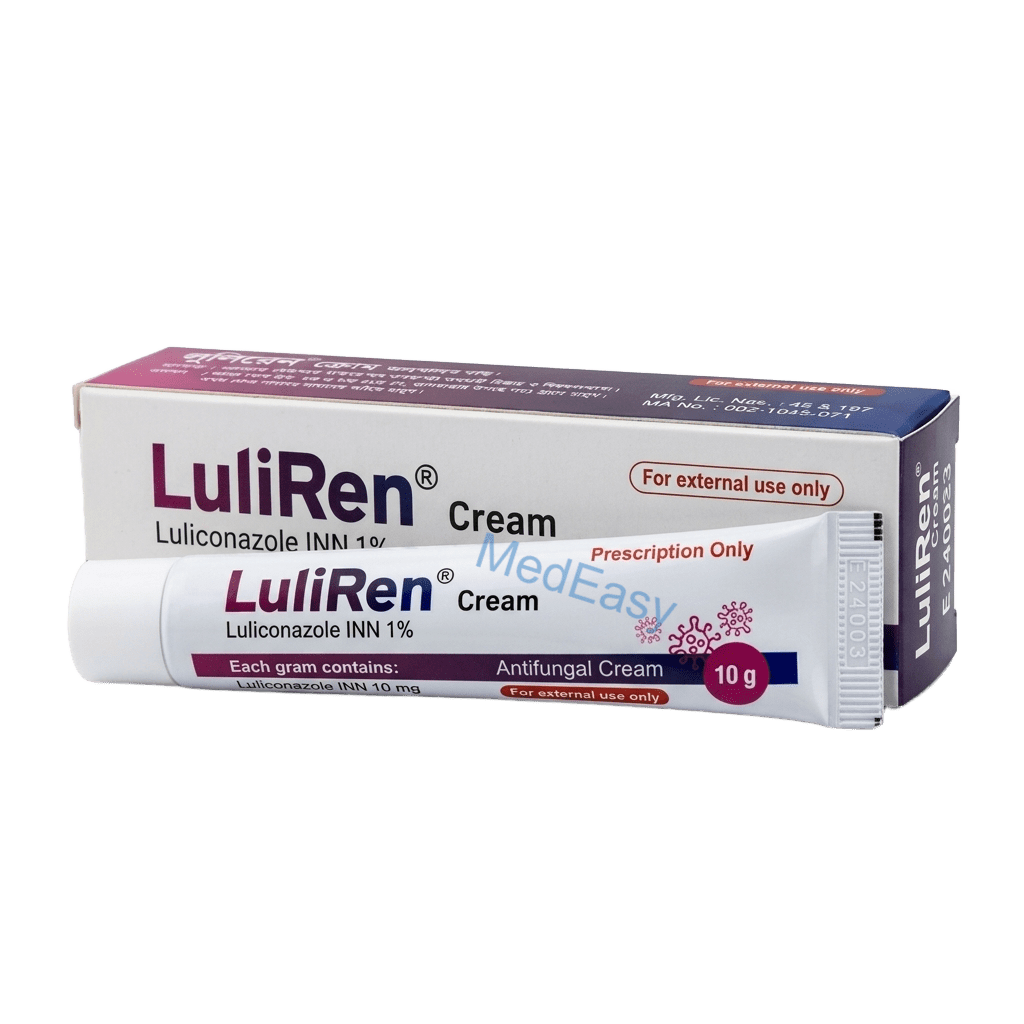
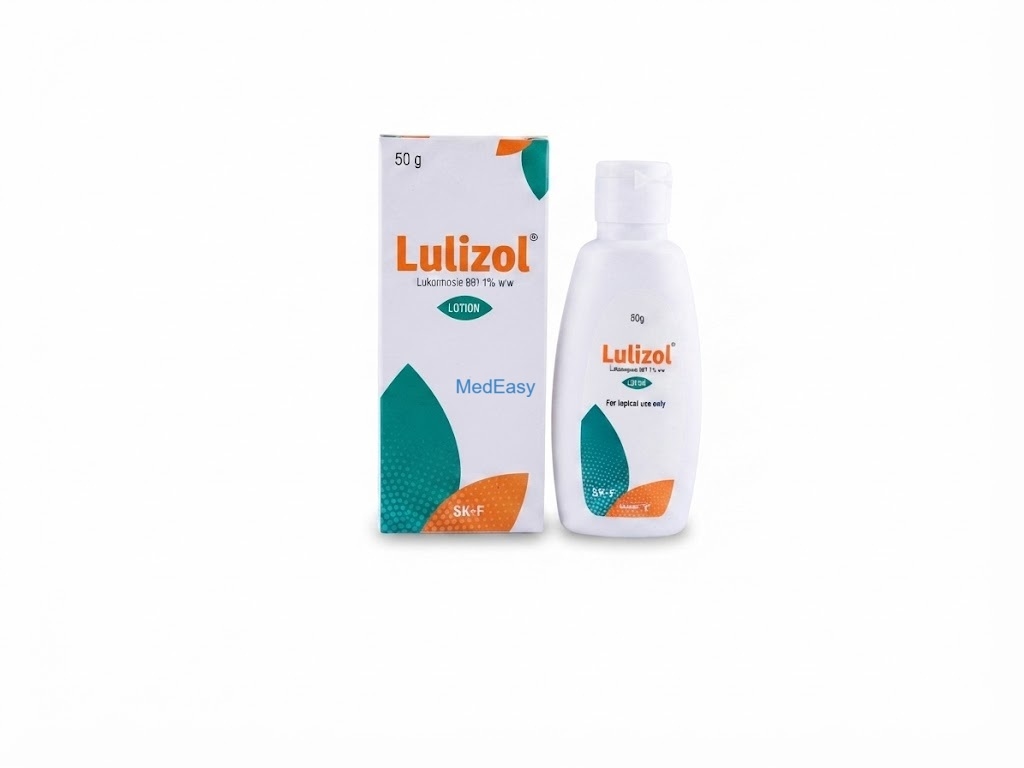
Lulizol1%
Eskayef Bangladesh Ltd.
৳418.50
Add to cart
Luliconazole is a topical azole antifungal used to treat fungal infections of the skin (dermatophyte infections, commonly known as ringworm/tinea).
Luliconazole is a topical azole antifungal used to treat fungal infections of the skin (dermatophyte infections, commonly known as ringworm/tinea).
Luliconazole has also been used off-label by clinicians for other localized superficial dermatophyte infections (e.g. tinea manuum) and, in some regions, for tinea versicolor and superficial candidiasis, based on its broad in-vitro antifungal spectrum; however, these uses are not FDA-approved indications and should only be used on a physician's advice.
Luliconazole is for external (topical) use on the skin only.
Luliconazole cream is for topical (external skin) use only. Wash and dry the affected area before application.
| Indication | Application | Duration |
|---|---|---|
| Interdigital tinea pedis (athlete's foot) | Apply a thin layer once daily to the affected area and about 1 inch (2.5 cm) of surrounding skin | 2 weeks |
| Tinea cruris (jock itch) | Apply a thin layer once daily to the affected area and surrounding skin | 1 week |
| Tinea corporis (ringworm of the body) | Apply a thin layer once daily to the affected area and surrounding skin | 1 week |
Use Luliconazole for the full duration prescribed, even if symptoms (itching, redness) improve earlier — stopping early increases the risk of the infection returning or not clearing completely. Do not apply to the eyes, mouth, nose, or vagina. Wash hands after application unless the hands are the area being treated. If no improvement is seen after the full course, consult a physician; the diagnosis may need to be reviewed.
See Dosage and Administration sections below for a quick summary, and Use in Special Populations for pediatric details.
Luliconazole is generally well tolerated when applied as directed. The most common adverse reactions, occurring in fewer than 1% of patients in clinical trials, are application-site reactions, generally mild in severity, including:
Less commonly reported reactions (including from postmarketing experience) include contact dermatitis and, rarely, cellulitis at or near the application site.
Stop using Luliconazole and consult a physician if signs of hypersensitivity (worsening redness, swelling, blistering, severe itching, or rash spreading beyond the application site) occur — see Precautions and Warnings.
Luliconazole is contraindicated in patients with known hypersensitivity to Luliconazole or to any component of the formulation.
No other absolute contraindications are established. Local irritation and other cautions are discussed under Precautions and Warnings.
Disclaimer
The information provided is accurate to the best of our knowledge, but it does not replace professional medical advice. We cannot guarantee its completeness or accuracy, and the absence of specific information about a drug should not be taken as an endorsement. We are not responsible for any consequences arising from this information, so please consult a healthcare professional for any concerns or questions.