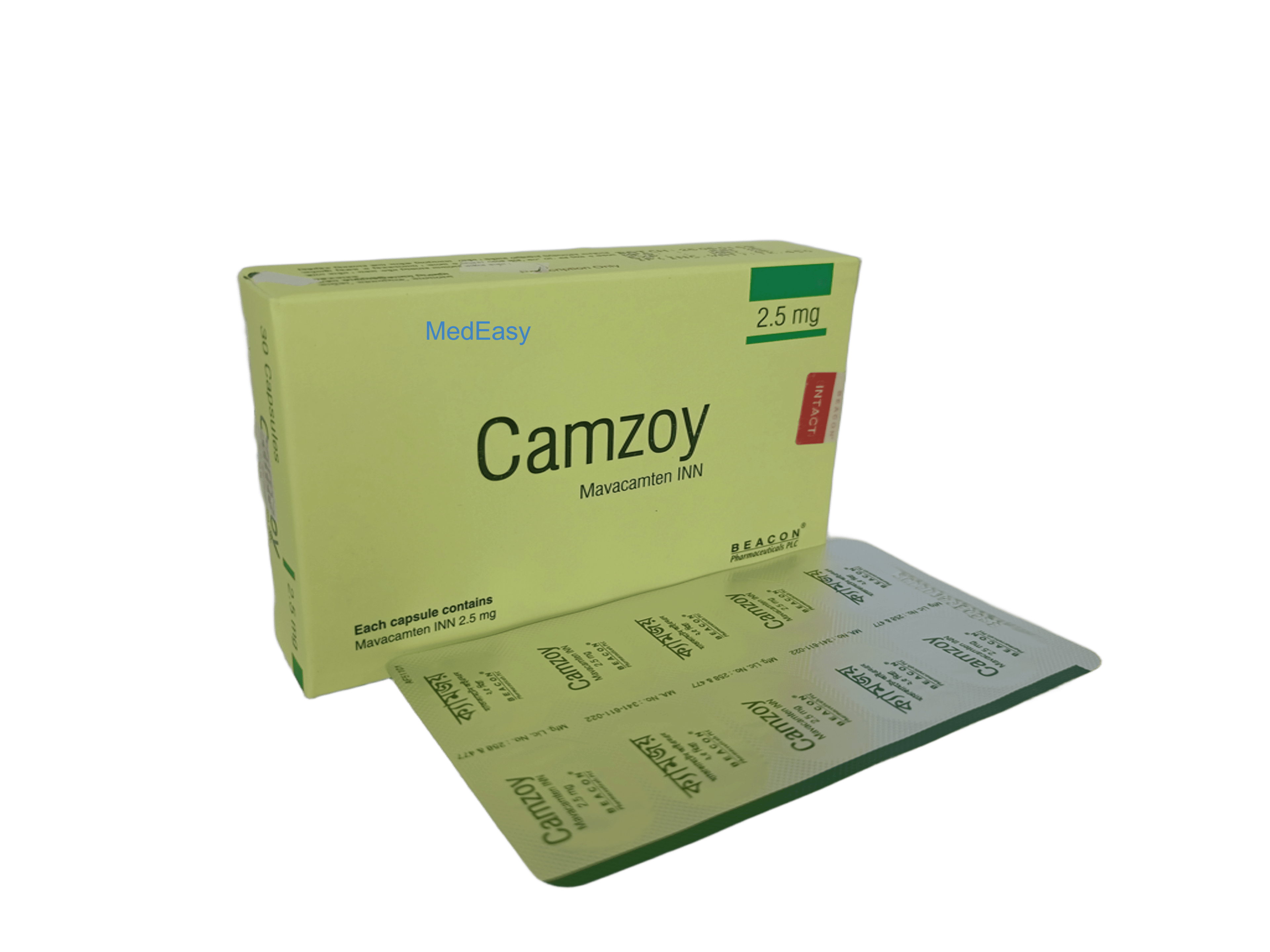
Generic medicine

Mavacamten: Brands, Price & Uses in Bangladesh

Established / FDA-Approved Indication Mavacamten is indicated for the treatment of adults with symptomatic New York Heart Association (NYHA) class II-III obstructive hypertrophic cardiomyopathy…

Forms:Capsule

About Mavacamten

Indications of Mavacamten

Established / FDA-Approved Indication

  • Mavacamten is indicated for the treatment of adults with symptomatic New York Heart Association (NYHA) class II-III obstructive hypertrophic cardiomyopathy (HCM), to improve functional capacity and reduce symptoms such as exertional dyspnoea, chest discomfort, palpitations, and pre-syncope/syncope.

Evidence Basis

Efficacy of Mavacamten in this population is based on randomized, double-blind, placebo-controlled trials (e.g. EXPLORER-HCM) demonstrating improvement in peak oxygen uptake, post-exercise left ventricular outflow tract (LVOT) gradient, NYHA functional class, and patient-reported symptom burden.

Not Indicated / Off-Label

Mavacamten is not indicated for non-obstructive HCM, for HCM in children, or for other forms of heart failure. It is a first-in-class, highly specialised agent intended only for use within a restricted access program by physicians experienced in the management of HCM; it is not a general-practice medication.

Dosage & Administration of Mavacamten

Adult Dosing (Obstructive HCM)

StepDoseNotes
Starting dose5 mg orally once dailyConfirm LVEF ≥55% and absence of pregnancy before starting
Available strengths2.5 mg, 5 mg, 10 mg, 15 mg capsulesDose is individually titrated
TitrationAdjusted at scheduled visits (approx. every 4 weeks initially, then every 12 weeks)Based on echocardiographic LVEF and Valsalva LVOT gradient, and symptoms
Maximum dose15 mg once dailyDo not exceed without specialist guidance

Pediatric Dosing

Not established; Mavacamten is not approved for use in children (see Use in Special Populations).

Renal Impairment

No dose adjustment is required for mild-to-moderate renal impairment. Data in severe renal impairment are limited; use with caution.

Hepatic Impairment

A lower starting dose and slower titration are recommended in moderate hepatic impairment; Mavacamten has not been studied in severe hepatic impairment and is not recommended.

Administration Instructions

Take Mavacamten exactly as prescribed by a cardiology specialist, at the same time each day, on an empty stomach (at least 2 hours before or 2 hours after a meal), because food increases absorption. Do not stop, skip doses, share this medicine, or change the dose without direct instruction from the prescribing physician, since abrupt changes can affect heart function.

Side Effects of Mavacamten

Common

  • Dizziness (reported in roughly a quarter of patients)
  • Syncope (fainting)
  • Fatigue
  • Palpitations

Serious

  • Reduced left ventricular ejection fraction and heart failure due to systolic dysfunction — the principal safety concern with Mavacamten; see Precautions and Warnings for the boxed warning and required monitoring.

Report any new or worsening shortness of breath, swelling of the legs/ankles, fatigue, dizziness, or fainting to the prescribing physician immediately.

Contraindications of Mavacamten

  • Known hypersensitivity to Mavacamten or any component of the formulation.
  • Concomitant use with moderate-to-strong CYP3A4 inducers (e.g. rifampin, St. John's wort).
  • Concomitant use with moderate-to-strong CYP2C19 inducers (e.g. carbamazepine).
  • Concomitant use with strong CYP2C19 inhibitors (e.g. fluconazole), because of the risk of markedly increased Mavacamten exposure and heart failure.

Mavacamten should not be initiated in patients with a left ventricular ejection fraction (LVEF) below 55% (see Precautions and Warnings).

Frequently Asked Questions about Mavacamten

What is Mavacamten used for?

Mavacamten is used in adults with symptomatic obstructive hypertrophic cardiomyopathy (a thickened heart muscle condition that obstructs blood flow) to reduce symptoms such as breathlessness, chest discomfort, and fainting spells, and to improve exercise capacity.

Why does Mavacamten require special monitoring?

Mavacamten carries a boxed warning because it can reduce the heart's pumping function (ejection fraction) and cause heart failure. Patients need echocardiograms before starting and regularly during treatment, and Mavacamten is only available through a restricted program managed by a specialist cardiologist.

Can I take Mavacamten with other medicines?

Only under close specialist supervision. Mavacamten interacts significantly with drugs that affect the liver enzymes CYP2C19 and CYP3A4; some combinations (such as strong CYP2C19 inhibitors like fluconazole, or strong CYP3A4/CYP2C19 inducers like rifampin) are contraindicated, while others require dose changes. Always tell your doctor about every medicine, supplement, or herbal product you take.

Is Mavacamten safe in pregnancy?

Mavacamten can harm a developing fetus and should be used in pregnancy only if clearly needed and the potential benefit outweighs the potential risk, as judged by your physician. Pregnancy must be ruled out before starting, and effective non-hormonal contraception is required during treatment and for 4 months afterward.

What should I do if I miss a dose or want to stop Mavacamten?

Do not stop, skip, or change your Mavacamten dose without talking to your cardiologist first, as sudden changes can affect heart function. If you miss a dose, contact your treating physician or follow the specific instructions they have given you.

What if I take too much Mavacamten?

An overdose can seriously reduce heart pumping function. Seek immediate medical attention or contact emergency services/poison control right away if an overdose is suspected; do not attempt to manage it at home.

Disclaimer

The information provided is accurate to the best of our knowledge, but it does not replace professional medical advice. We cannot guarantee its completeness or accuracy, and the absence of specific information about a drug should not be taken as an endorsement. We are not responsible for any consequences arising from this information, so please consult a healthcare professional for any concerns or questions.

DoctorBlogArticles