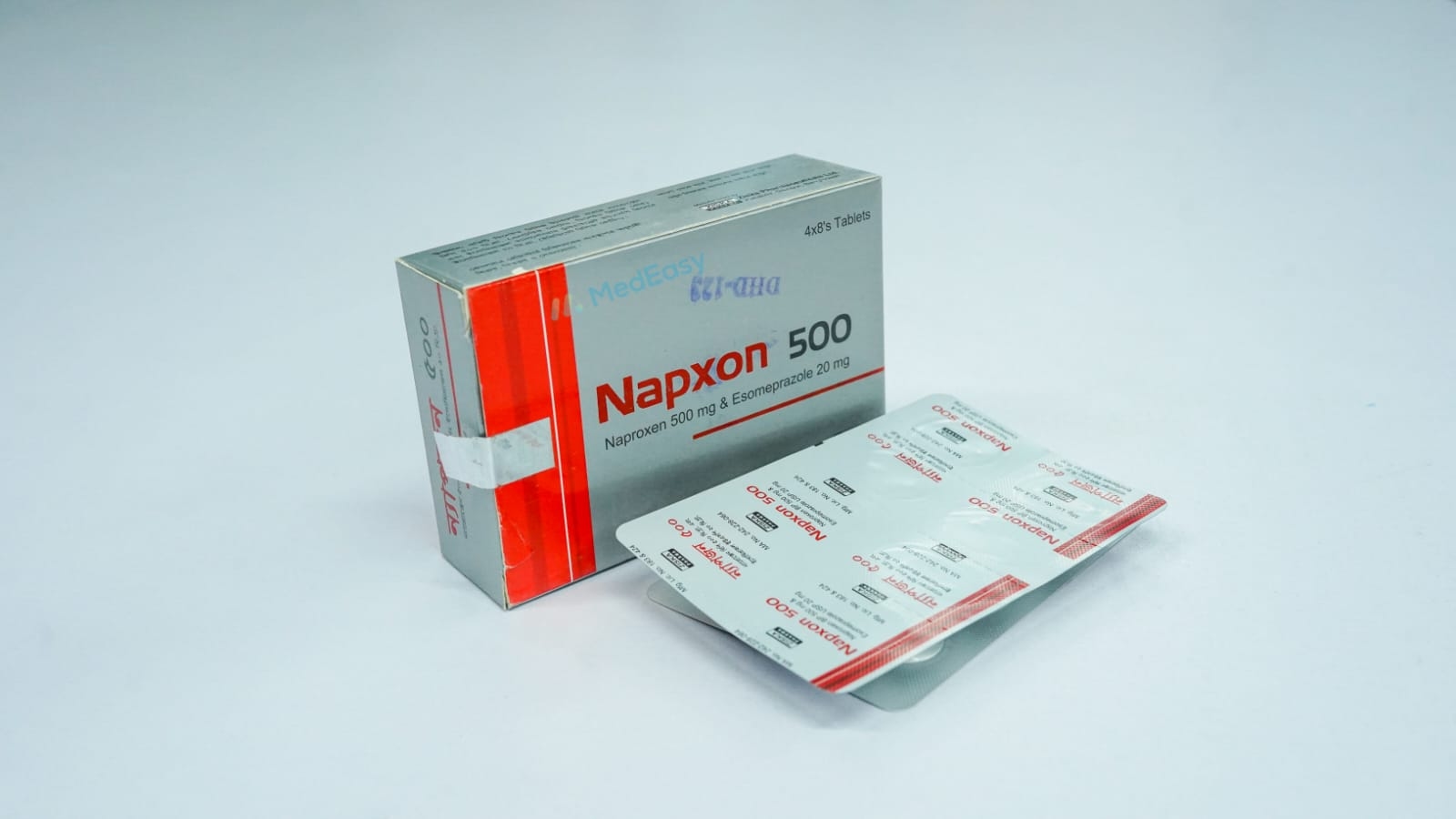
Generic medicine

Naproxen Sodium + Esomeprazole: Brands, Price & Uses in Bangladesh

Naproxen Sodium + Esomeprazole is a fixed-dose combination of an NSAID (naproxen sodium) and a proton pump inhibitor (esomeprazole) and more.

Forms:Tablet

About Naproxen Sodium + Esomeprazole

Indications of Naproxen Sodium + Esomeprazole

Naproxen Sodium + Esomeprazole is a fixed-dose combination of an NSAID (naproxen sodium) and a proton pump inhibitor (esomeprazole), used as follows:

Established / FDA-approved use

  • Relief of the signs and symptoms of osteoarthritis, rheumatoid arthritis, and ankylosing spondylitis in adult patients who require ongoing NSAID therapy and who are judged to be at risk of developing NSAID-associated gastric ulcers.

Important limitation

Naproxen Sodium + Esomeprazole is a delayed-release combination and is not recommended for the initial treatment of acute pain because the naproxen component is absorbed more slowly than with immediate-release naproxen alone. It is intended for patients who need long-term, regular NSAID dosing, not for as-needed short-term pain relief.

Naproxen Sodium + Esomeprazole does not treat the underlying disease (e.g., osteoarthritis or rheumatoid arthritis) but relieves pain, stiffness, and inflammation associated with it; the esomeprazole component is included specifically to reduce (not eliminate) the risk of NSAID-induced gastric ulcers, not to treat unrelated acid-reflux conditions on its own.

Dosage & Administration of Naproxen Sodium + Esomeprazole

Adults

IndicationRecommended dose
Osteoarthritis, rheumatoid arthritis, ankylosing spondylitis (with increased risk of NSAID-associated gastric ulcer)One tablet of Naproxen Sodium + Esomeprazole (naproxen 375 mg/esomeprazole 20 mg or naproxen 500 mg/esomeprazole 20 mg) taken twice daily, using the lowest effective naproxen dose for the shortest duration consistent with treatment goals.

Adolescents (12 years and older)

Body weightDose
50 kg or moreSame as adult dosing above.
38 kg to less than 50 kgNaproxen 375 mg/esomeprazole 20 mg tablet of Naproxen Sodium + Esomeprazole, twice daily.

Use in children under 12 years is not established (see Pediatric Uses).

Administration instructions

  • Swallow tablets of Naproxen Sodium + Esomeprazole whole with water; do not split, crush, or chew the tablet, as this destroys the delayed-release mechanism.
  • Take at least 30 minutes before a meal.
  • Naproxen Sodium + Esomeprazole is not intended for as-needed use in acute pain; it is meant for regular, ongoing dosing.

Special populations

  • Elderly: Use the lowest effective dose; elderly patients are more susceptible to adverse effects (see Precautions).
  • Renal impairment: Not recommended in patients with moderate-to-severe renal impairment (creatinine clearance less than 30 mL/min).
  • Hepatic impairment: Use with caution and at the lowest effective dose in mild-to-moderate hepatic impairment; avoid in severe hepatic impairment.

Side Effects of Naproxen Sodium + Esomeprazole

Side effects of Naproxen Sodium + Esomeprazole arise from both the naproxen and esomeprazole components.

Common side effects

  • Dyspepsia (indigestion), erosive gastritis/gastritis, heartburn
  • Nausea, diarrhea, upper abdominal pain, constipation
  • Headache
  • Peripheral edema (fluid retention/swelling)
  • Upper respiratory tract infection symptoms

Serious side effects (seek prompt medical attention)

  • Signs of gastrointestinal bleeding, ulceration, or perforation (e.g., black or bloody stools, vomiting blood, severe stomach pain) — see Precautions and Warnings.
  • Signs of a cardiovascular event such as chest pain, shortness of breath, weakness on one side of the body, or slurred speech (possible heart attack or stroke).
  • Signs of a severe allergic/anaphylactoid reaction (swelling of the face/throat, difficulty breathing, severe rash).
  • Severe skin reactions (blistering, peeling skin — possible Stevens-Johnson syndrome or toxic epidermal necrolysis).
  • Signs of liver problems (yellowing of skin/eyes, dark urine, unusual fatigue).
  • Signs of kidney problems (decreased urination, swelling, unusual tiredness).
  • Low magnesium symptoms with long-term use (muscle spasms, irregular heartbeat, seizures).
  • New or worsening high blood pressure, or worsening heart failure (swelling, sudden weight gain, shortness of breath).

Contraindications of Naproxen Sodium + Esomeprazole

Naproxen Sodium + Esomeprazole is contraindicated in patients with:

  • Known hypersensitivity to naproxen, esomeprazole, substituted benzimidazoles, or any component of Naproxen Sodium + Esomeprazole.
  • A history of asthma, urticaria, or allergic-type reactions after taking aspirin or other NSAIDs (including NSAID-induced anaphylactoid reactions).
  • Use for perioperative pain in the setting of coronary artery bypass graft (CABG) surgery.
  • Active gastrointestinal bleeding or active peptic ulcer disease.
  • The third trimester of pregnancy (late pregnancy), due to the risk of premature closure of the fetal ductus arteriosus with NSAID use.

Frequently Asked Questions about Naproxen Sodium + Esomeprazole

What is Naproxen Sodium + Esomeprazole used for?

Naproxen Sodium + Esomeprazole is used to relieve pain, stiffness, and inflammation caused by osteoarthritis, rheumatoid arthritis, and ankylosing spondylitis in patients who need ongoing NSAID treatment and who are at risk of developing stomach ulcers from NSAID use. It is not meant for immediate relief of sudden, short-term pain.

How should I take Naproxen Sodium + Esomeprazole?

Take Naproxen Sodium + Esomeprazole tablets whole with water at least 30 minutes before a meal, usually twice daily as directed by your physician. Do not split, crush, or chew the tablet, as this can destroy the special coating that allows the medicine to work correctly.

Can Naproxen Sodium + Esomeprazole be used during pregnancy?

Naproxen Sodium + Esomeprazole should be avoided during pregnancy unless your physician determines it is clearly needed, and it must not be used during the third trimester because of the risk of harm to the unborn baby's heart and kidney function. Always consult your physician before using Naproxen Sodium + Esomeprazole if you are pregnant or planning pregnancy.

What are the serious side effects I should watch for with Naproxen Sodium + Esomeprazole?

While taking Naproxen Sodium + Esomeprazole, seek urgent medical attention if you notice black or bloody stools, vomiting blood, severe stomach pain, chest pain, shortness of breath, sudden weakness on one side of the body, slurred speech, severe swelling, or a severe skin rash — these may indicate serious gastrointestinal bleeding, a heart attack, stroke, or a severe allergic reaction.

Who should not take Naproxen Sodium + Esomeprazole?

Naproxen Sodium + Esomeprazole should not be used by people who are allergic to naproxen, esomeprazole, or other NSAIDs/aspirin (including those with a history of asthma or hives after taking NSAIDs/aspirin), those with active stomach bleeding or ulcers, those undergoing coronary artery bypass graft (CABG) surgery, or women in the third trimester of pregnancy.

Can I take Naproxen Sodium + Esomeprazole with other pain relievers or aspirin?

You should not take other NSAIDs together with Naproxen Sodium + Esomeprazole unless directed by your physician, as this increases the risk of stomach bleeding and ulcers. If you take low-dose aspirin for heart protection, discuss this with your physician, since combining it with Naproxen Sodium + Esomeprazole can further increase gastrointestinal risk.

Disclaimer

The information provided is accurate to the best of our knowledge, but it does not replace professional medical advice. We cannot guarantee its completeness or accuracy, and the absence of specific information about a drug should not be taken as an endorsement. We are not responsible for any consequences arising from this information, so please consult a healthcare professional for any concerns or questions.

DoctorBlogArticles