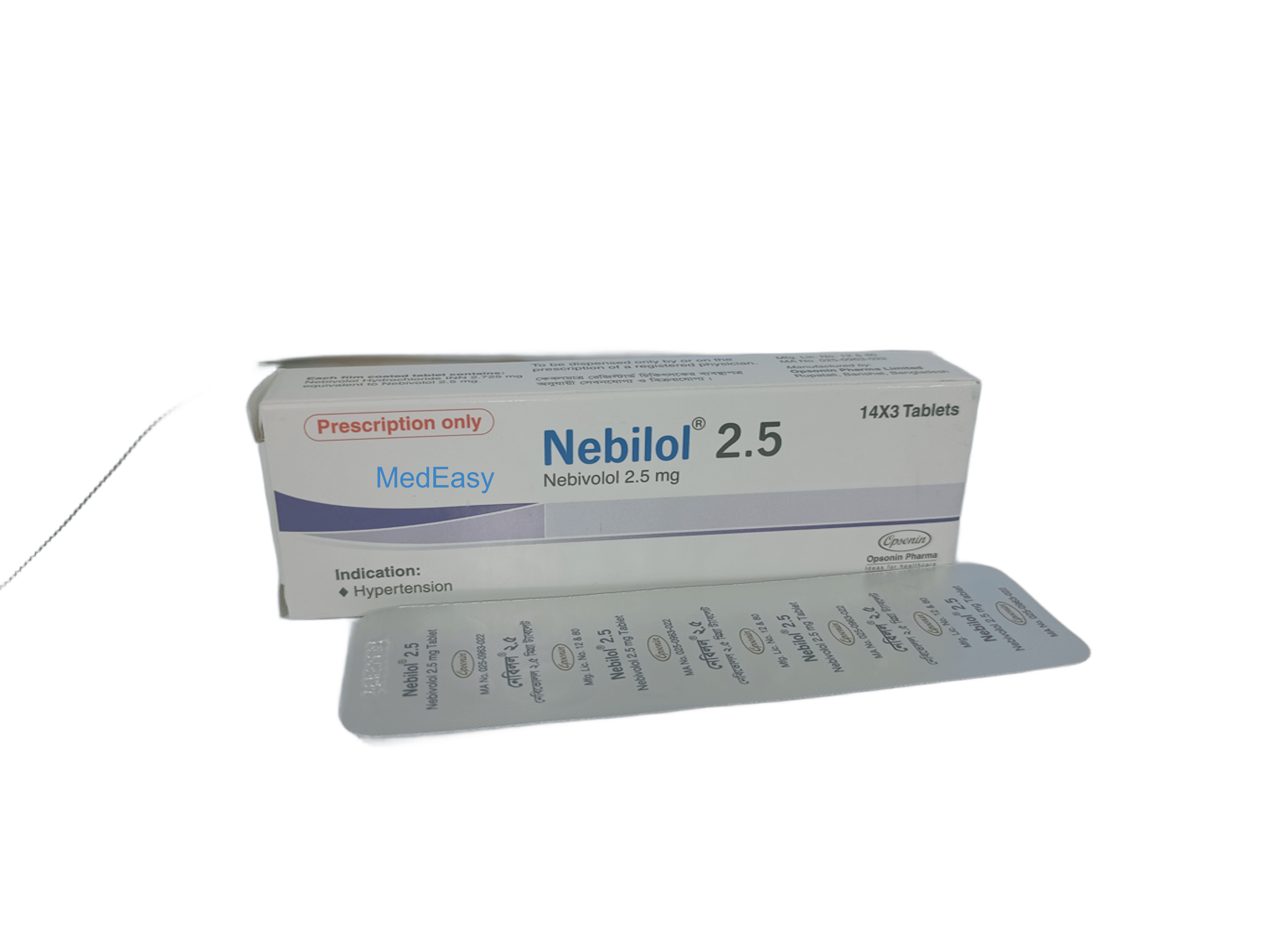
Generic medicine

Nebivolol Hydrochloride: Brands, Price & Uses in Bangladesh

Nebivolol Hydrochloride is a beta-1 selective adrenergic receptor blocker with additional vasodilating properties.

Forms:Tablet

About Nebivolol Hydrochloride

Indications of Nebivolol Hydrochloride

Nebivolol Hydrochloride is a beta-1 selective adrenergic receptor blocker with additional vasodilating properties. Its established and guideline-supported uses include:

  • Hypertension (FDA-approved/established use): Indicated for the treatment of high blood pressure, alone or in combination with other antihypertensive agents, to reduce the risk of fatal and non-fatal cardiovascular events, primarily strokes and myocardial infarctions.
  • Chronic Heart Failure (guideline-supported use, approved in several markets outside the US): Used for the treatment of stable mild to moderate chronic heart failure in elderly patients (typically age 70 years and above) as an adjunct to standard therapy (e.g., diuretics, ACE inhibitors/ARBs), when there is no clinically unstable episode within the last 6 weeks.

Nebivolol Hydrochloride is not approved for acute decompensated heart failure or as first-line monotherapy in unstable cardiac conditions.

Dosage & Administration of Nebivolol Hydrochloride

Dosing of Nebivolol Hydrochloride should be individualized and titrated according to patient response and tolerability.

IndicationPopulationDosing
HypertensionAdultsInitiate at 5 mg once daily; may be increased at 2-week intervals to 10 mg, 20 mg, and up to a maximum of 40 mg once daily as needed for blood pressure control.
Chronic heart failure (adjunct therapy)Elderly adults (typically ≥70 years, in markets where approved)Initiate at a very low dose (e.g., 1.25 mg once daily) with slow up-titration at 1-2 week intervals as tolerated, under close medical supervision, to a target maintenance dose.
Severe renal impairment (CrCl <30 mL/min)AdultsInitiate at 2.5 mg once daily; titrate cautiously.
Moderate hepatic impairmentAdultsInitiate at 2.5 mg once daily; titrate cautiously. See Contraindications for severe hepatic impairment.
Pediatric useUnder 18 yearsSafety and efficacy not established; not recommended.

Discontinuation of Nebivolol Hydrochloride should always be gradual, tapering the dose over 1-2 weeks; see Precautions and Warnings.

Side Effects of Nebivolol Hydrochloride

Nebivolol Hydrochloride is generally well tolerated, with a favorable side-effect profile attributed to its vasodilating action. Reported adverse effects include:

  • Common: Headache, fatigue, dizziness, nausea, diarrhea, insomnia.
  • Less common: Bradycardia, peripheral edema, dyspnea, chest pain, rash, paresthesia.
  • Rare/postmarketing: Bronchospasm, erectile dysfunction, abnormal liver function tests, hypersensitivity reactions (urticaria, angioedema), and various arrhythmias.

Contraindications of Nebivolol Hydrochloride

Nebivolol Hydrochloride is contraindicated in patients with:

  • Known hypersensitivity to Nebivolol Hydrochloride or any component of the formulation.
  • Severe bradycardia.
  • Sick sinus syndrome, unless a permanent pacemaker is in place.
  • Second- or third-degree atrioventricular (AV) block, unless a permanent pacemaker is in place.
  • Decompensated cardiac failure.
  • Cardiogenic shock.
  • Severe hepatic impairment.

Frequently Asked Questions about Nebivolol Hydrochloride

What is Nebivolol Hydrochloride used for?

Nebivolol Hydrochloride is mainly used to treat high blood pressure (hypertension) and, in some patients, as an add-on treatment for stable chronic heart failure. It works by relaxing blood vessels and slowing the heart rate.

How should I take Nebivolol Hydrochloride?

Nebivolol Hydrochloride is usually taken once daily, at the same time each day, with or without food. Your doctor will start you on a low dose and may gradually increase it based on your response.

Can I stop taking Nebivolol Hydrochloride suddenly?

No. Stopping Nebivolol Hydrochloride abruptly, especially if you have coronary artery disease, can cause a sudden worsening of chest pain, heart attack, or dangerous heart rhythm problems. Always taper off gradually under your doctor's supervision.

Who should not take Nebivolol Hydrochloride?

Nebivolol Hydrochloride should not be used by people with severe slow heart rate, certain heart blocks without a pacemaker, decompensated heart failure, cardiogenic shock, severe liver impairment, or known allergy to the drug.

Is Nebivolol Hydrochloride safe during pregnancy or breastfeeding?

Nebivolol Hydrochloride should be used during pregnancy only if clearly needed, since animal studies suggest possible risk to the fetus and there is limited human data; it is generally not recommended while breastfeeding due to possible effects on the infant. Always consult your physician before use in these situations.

What should I do if I miss a dose or take too much Nebivolol Hydrochloride?

If you miss a dose, take it as soon as you remember unless it is close to your next dose; do not double up. If you suspect an overdose of Nebivolol Hydrochloride, seek emergency medical attention immediately.

Disclaimer

The information provided is accurate to the best of our knowledge, but it does not replace professional medical advice. We cannot guarantee its completeness or accuracy, and the absence of specific information about a drug should not be taken as an endorsement. We are not responsible for any consequences arising from this information, so please consult a healthcare professional for any concerns or questions.

DoctorBlogArticles