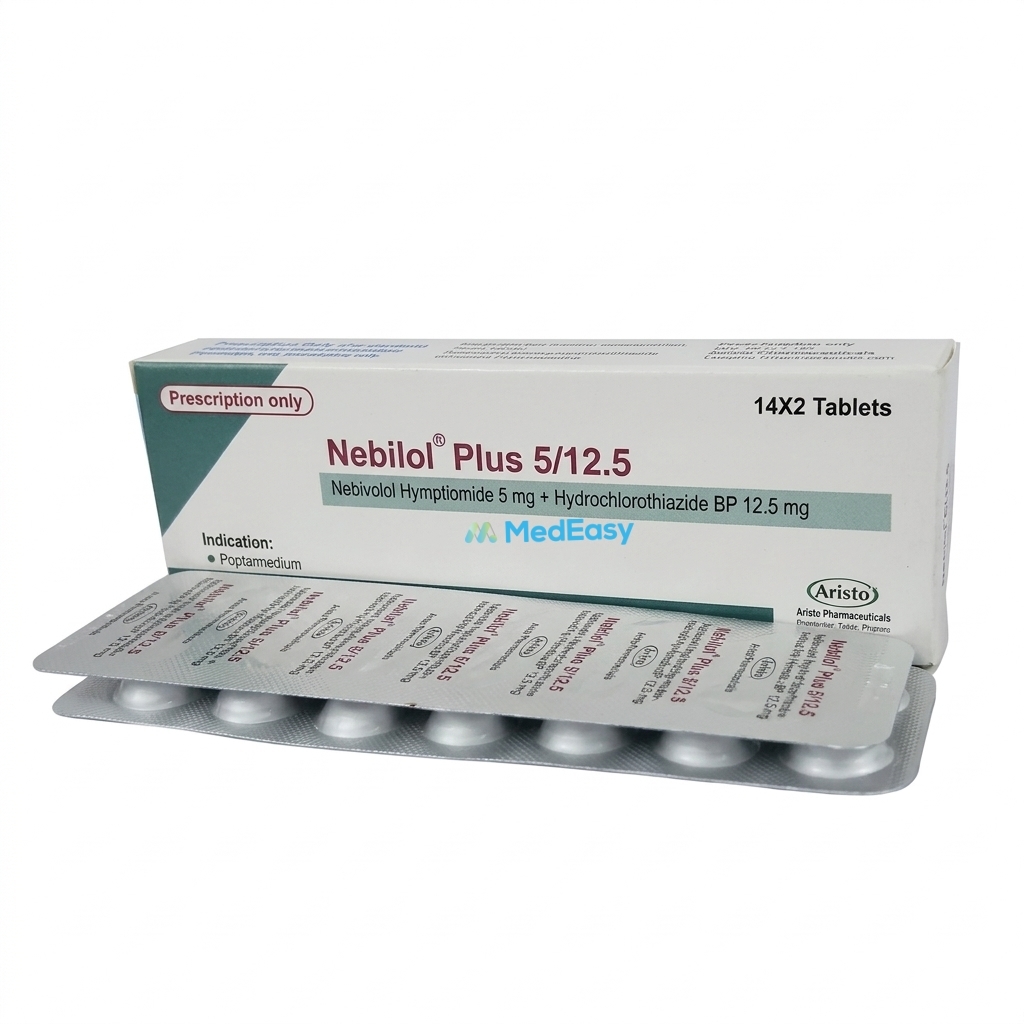
Generic medicine

Nebivolol + Hydrochlorothiazide: Brands, Price & Uses in Bangladesh

Nebivolol + Hydrochlorothiazide is a fixed-dose combination indicated for the treatment of hypertension (high blood pressure) , used to lower blood pressure in adults.

Forms:Tablet

About Nebivolol + Hydrochlorothiazide

Indications of Nebivolol + Hydrochlorothiazide

Nebivolol + Hydrochlorothiazide is a fixed-dose combination indicated for the treatment of hypertension (high blood pressure), used to lower blood pressure in adults.

  • Established/approved use: Treatment of essential hypertension in adult patients whose blood pressure is not adequately controlled on monotherapy with either a beta-blocker or a thiazide diuretic alone, or as an alternative to individual titration of the two components.
  • Combination-therapy requirement: Nebivolol + Hydrochlorothiazide is not intended for initial therapy in patients whose blood pressure can be controlled on a single agent; it is generally used once patients have been assessed to require more than one class of antihypertensive.
  • Guideline context: Combining a beta-1 selective blocker with a thiazide diuretic is a recognized guideline-supported strategy for achieving blood pressure targets when monotherapy is insufficient.

Nebivolol + Hydrochlorothiazide lowers blood pressure only; it does not treat the underlying cause of hypertension and does not replace lifestyle measures (diet, weight control, exercise, reduced salt intake) recommended alongside drug therapy.

Dosage & Administration of Nebivolol + Hydrochlorothiazide

General dosing principles

Nebivolol + Hydrochlorothiazide is taken by mouth, usually once daily, with or without food, at approximately the same time each day. Blood pressure should be reassessed periodically and the dose adjusted only under medical supervision.

Adult dosing

IndicationTypical adult dose
Hypertension, inadequately controlled on monotherapyOne tablet of the prescribed strength (commonly nebivolol 5 mg/hydrochlorothiazide 12.5 mg) once daily; dose may be adjusted by the physician based on response, typically not before 2 weeks of therapy.

Renal impairment

Use with caution in patients with renal impairment. Thiazides may be less effective and are generally avoided when creatinine clearance is markedly reduced (e.g., below approximately 30 mL/min); a physician should individualize therapy in this setting.

Hepatic impairment

Nebivolol + Hydrochlorothiazide is contraindicated in severe hepatic impairment (see Contraindications). Use with caution and close monitoring in mild-to-moderate hepatic impairment.

Missed dose

If a dose is missed, it should be taken as soon as remembered unless it is close to the time of the next dose, in which case the missed dose should be skipped. Do not double the dose.

Discontinuation

Do not stop Nebivolol + Hydrochlorothiazide abruptly, particularly in patients with underlying coronary artery disease; the beta-blocker component should be tapered gradually over one to two weeks under medical guidance (see Precautions and Warnings).

Side Effects of Nebivolol + Hydrochlorothiazide

Side effects of Nebivolol + Hydrochlorothiazide arise from either the beta-blocker or the thiazide diuretic component.

Common side effects

  • Headache and dizziness
  • Fatigue or tiredness
  • Bradycardia (slow heart rate)
  • Cold hands or feet
  • Nausea
  • Increased urination
  • Muscle cramps

Less common but important side effects

  • Electrolyte disturbances (low potassium, low sodium, low magnesium)
  • Orthostatic (postural) hypotension, especially in the elderly or volume-depleted patients
  • Worsening of blood glucose control in patients with diabetes
  • Increased blood uric acid levels or gout flare
  • Photosensitivity (increased skin sensitivity to sunlight)
  • Erectile dysfunction
  • Shortness of breath or bronchospasm in susceptible individuals

Patients should seek prompt medical attention for signs of a serious allergic reaction, severe dizziness or fainting, very slow heartbeat, significant swelling, or difficulty breathing.

Contraindications of Nebivolol + Hydrochlorothiazide

Nebivolol + Hydrochlorothiazide is contraindicated in patients with any of the following:

  • Known hypersensitivity to nebivolol, hydrochlorothiazide, other sulfonamide-derived drugs, or any component of the formulation.
  • Severe bradycardia (very slow heart rate).
  • Sick sinus syndrome, unless a permanent pacemaker is in place.
  • Second- or third-degree atrioventricular (AV) block, unless a permanent pacemaker is in place.
  • Decompensated (acute) cardiac failure.
  • Cardiogenic shock.
  • Severe hepatic impairment.
  • Anuria (absence of urine production).

Nebivolol + Hydrochlorothiazide should not be used in any of these conditions; inform the physician of any history of these conditions before starting treatment.

Frequently Asked Questions about Nebivolol + Hydrochlorothiazide

What is Nebivolol + Hydrochlorothiazide used for?

Nebivolol + Hydrochlorothiazide is used to treat high blood pressure (hypertension) in adults, typically when blood pressure is not adequately controlled with a single blood pressure medicine alone.

How should I take Nebivolol + Hydrochlorothiazide?

Take Nebivolol + Hydrochlorothiazide by mouth once daily, at about the same time each day, with or without food, exactly as prescribed by your physician. Do not change the dose or stop taking it without medical advice.

Can I stop taking Nebivolol + Hydrochlorothiazide suddenly if I feel better?

No. Stopping Nebivolol + Hydrochlorothiazide abruptly, especially if you have underlying heart disease, can cause a sudden rise in blood pressure, worsening chest pain, heart attack, or dangerous heart rhythm problems. If your physician decides to discontinue it, the dose should be lowered gradually over one to two weeks.

Is Nebivolol + Hydrochlorothiazide safe during pregnancy or breastfeeding?

Nebivolol + Hydrochlorothiazide should be used during pregnancy only if clearly needed, as it may affect the fetus, and during breastfeeding only under medical supervision, since both components pass into breast milk. Always consult your physician if you are pregnant, planning pregnancy, or breastfeeding before using Nebivolol + Hydrochlorothiazide.

What side effects should I watch for with Nebivolol + Hydrochlorothiazide?

Common side effects include headache, dizziness, tiredness, slow heart rate, cold hands or feet, and increased urination. Seek medical attention promptly for signs of a serious allergic reaction, fainting, very slow heartbeat, or severe dizziness.

Who should not take Nebivolol + Hydrochlorothiazide?

Nebivolol + Hydrochlorothiazide should not be used by people with severe bradycardia, sick sinus syndrome or advanced heart block without a pacemaker, decompensated heart failure, cardiogenic shock, severe liver impairment, anuria, or known hypersensitivity to nebivolol, hydrochlorothiazide, or sulfonamide-derived drugs. Discuss your full medical history with your physician before starting Nebivolol + Hydrochlorothiazide.

Disclaimer

The information provided is accurate to the best of our knowledge, but it does not replace professional medical advice. We cannot guarantee its completeness or accuracy, and the absence of specific information about a drug should not be taken as an endorsement. We are not responsible for any consequences arising from this information, so please consult a healthcare professional for any concerns or questions.

DoctorBlogArticles