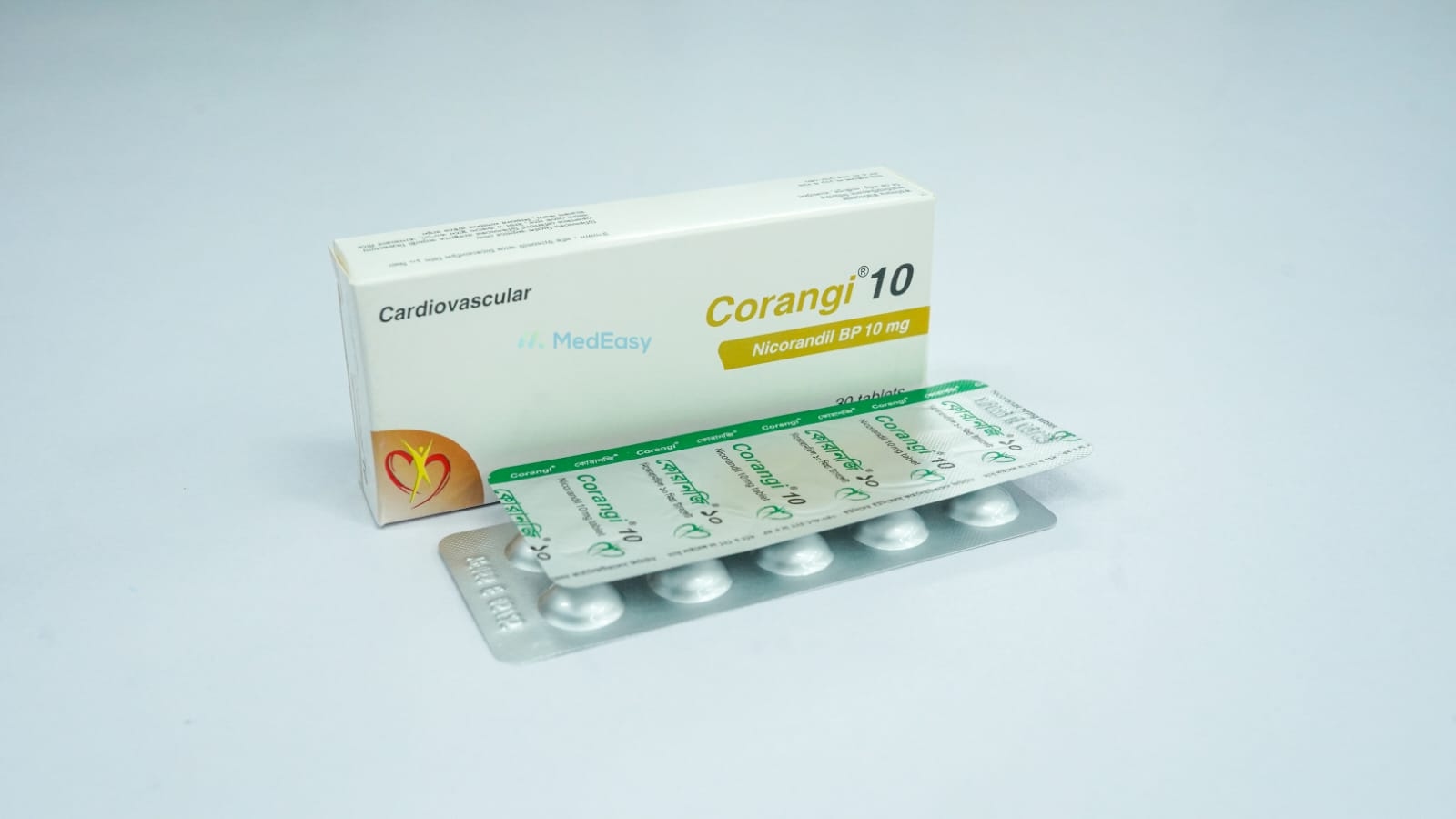
Generic medicine

Nicorandil: Brands, Price & Uses in Bangladesh

Nicorandil is indicated for the prevention and long-term treatment of chronic stable angina pectoris.

Forms:Tablet

About Nicorandil

Indications of Nicorandil

Nicorandil is indicated for the prevention and long-term treatment of chronic stable angina pectoris.

  • Established/guideline-supported use: Nicorandil is used as an anti-anginal agent in patients with chronic stable angina, particularly where first-line therapies (beta-blockers, calcium channel blockers, or nitrates) are inadequately effective, not tolerated, or contraindicated.
  • Adjunct use: Nicorandil may be added to existing anti-anginal therapy (such as a beta-blocker or calcium channel blocker) when symptom control is insufficient on monotherapy.

Nicorandil is not indicated for the treatment of acute myocardial infarction or unstable angina.

Dosage & Administration of Nicorandil

Adults (Chronic Stable Angina)

StepDose
Usual starting dose10 mg twice daily (morning and evening)
Patients prone to headache5 mg twice daily to start
Maintenance/titrationIncreased as needed and tolerated, up to 20 mg twice daily; some patients may require up to 40 mg twice daily under close medical supervision

Elderly

No specific dose adjustment is mandated, but the lowest effective starting dose is recommended with careful monitoring due to greater sensitivity to hypotensive effects.

Renal Impairment

No specific dose adjustment is established; use with caution and monitor blood pressure.

Hepatic Impairment

Dose reduction may be necessary; use with caution, particularly in severe hepatic impairment.

Pediatric Use

Use of Nicorandil in children is not recommended; safety and efficacy have not been established.

Nicorandil tablets should be swallowed, generally without regard to food, at the same times each day.

Side Effects of Nicorandil

Common side effects of Nicorandil include:

  • Headache - very common, especially at the start of treatment or after dose increases; often improves with continued use or dose reduction.
  • Flushing
  • Dizziness
  • Nausea and vomiting
  • Palpitations and tachycardia
  • Weakness

Important safety concern - ulceration: Nicorandil is associated with a recognized risk of ulceration, including gastrointestinal (mouth, anal, and intestinal), skin, and mucosal (including ocular/corneal) ulceration. These ulcers can be serious, may be associated with complications such as perforation, fistula, abscess, or bleeding, and may not resolve until Nicorandil is discontinued. Any unexplained ulceration occurring during treatment should prompt discontinuation and medical evaluation (see Precautions and Warnings).

Less common effects include hypotension, syncope, myalgia, and, rarely, angioedema or hepatic dysfunction.

Contraindications of Nicorandil

Nicorandil is contraindicated in the following conditions:

  • Known hypersensitivity to Nicorandil or any component of the formulation.
  • Cardiogenic shock.
  • Severe hypotension.
  • Hypovolemia.
  • Left ventricular failure with low cardiac filling pressure (e.g., acute myocardial infarction with left ventricular failure).
  • Concurrent use with phosphodiesterase-5 (PDE5) inhibitors (e.g., sildenafil, tadalafil, vardenafil), due to the risk of severe, potentially fatal hypotension.
  • Concurrent use with soluble guanylate cyclase stimulators (e.g., riociguat).

Frequently Asked Questions about Nicorandil

What is Nicorandil used for?

Nicorandil is used to prevent and treat chronic stable angina pectoris (chest pain caused by reduced blood flow to the heart), particularly when other anti-anginal medicines are not suitable, not tolerated, or not fully effective on their own.

How should I take Nicorandil?

Nicorandil is usually taken twice daily, in the morning and evening, swallowed whole with water. Take it at the same times each day as directed by your physician, and do not stop taking it suddenly without medical advice, as this can cause your angina to worsen.

Can I take Nicorandil with medicines for erectile dysfunction such as sildenafil?

No. Nicorandil must not be taken together with phosphodiesterase-5 (PDE5) inhibitors such as sildenafil, tadalafil, or vardenafil, because this combination can cause a severe and potentially life-threatening drop in blood pressure. Tell your physician about all medicines you are taking before starting Nicorandil.

What are the most common side effects of Nicorandil?

The most common side effect is headache, especially when starting treatment or after a dose increase; it often improves with continued use. Other common effects include flushing, dizziness, and nausea. Nicorandil is also associated with a risk of mouth, skin, or gastrointestinal ulcers - if you notice any unusual or persistent ulceration anywhere on your body while taking this medicine, contact your physician promptly, as the medicine may need to be stopped.

Is Nicorandil safe during pregnancy or breastfeeding?

Data on the use of Nicorandil during pregnancy are limited, so it should be used only if clearly necessary and if your physician determines the potential benefit outweighs any potential risk to the baby. It is not known whether Nicorandil passes into breast milk, so breastfeeding is generally not recommended during treatment unless your physician advises otherwise.

What should I do if I take too much Nicorandil?

An overdose of Nicorandil can cause a significant drop in blood pressure and a fast heart rate. Seek immediate medical attention or contact emergency services/poison control if an overdose is suspected, even if the person seems well, as symptoms may develop or worsen.

Disclaimer

The information provided is accurate to the best of our knowledge, but it does not replace professional medical advice. We cannot guarantee its completeness or accuracy, and the absence of specific information about a drug should not be taken as an endorsement. We are not responsible for any consequences arising from this information, so please consult a healthcare professional for any concerns or questions.

DoctorBlogArticles
