8% Off
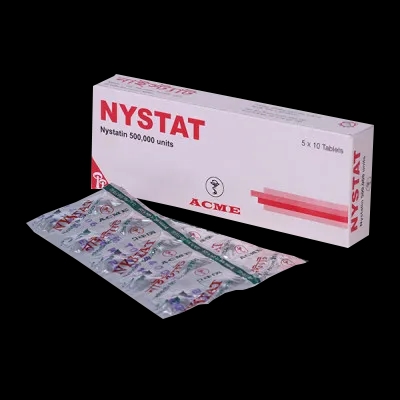
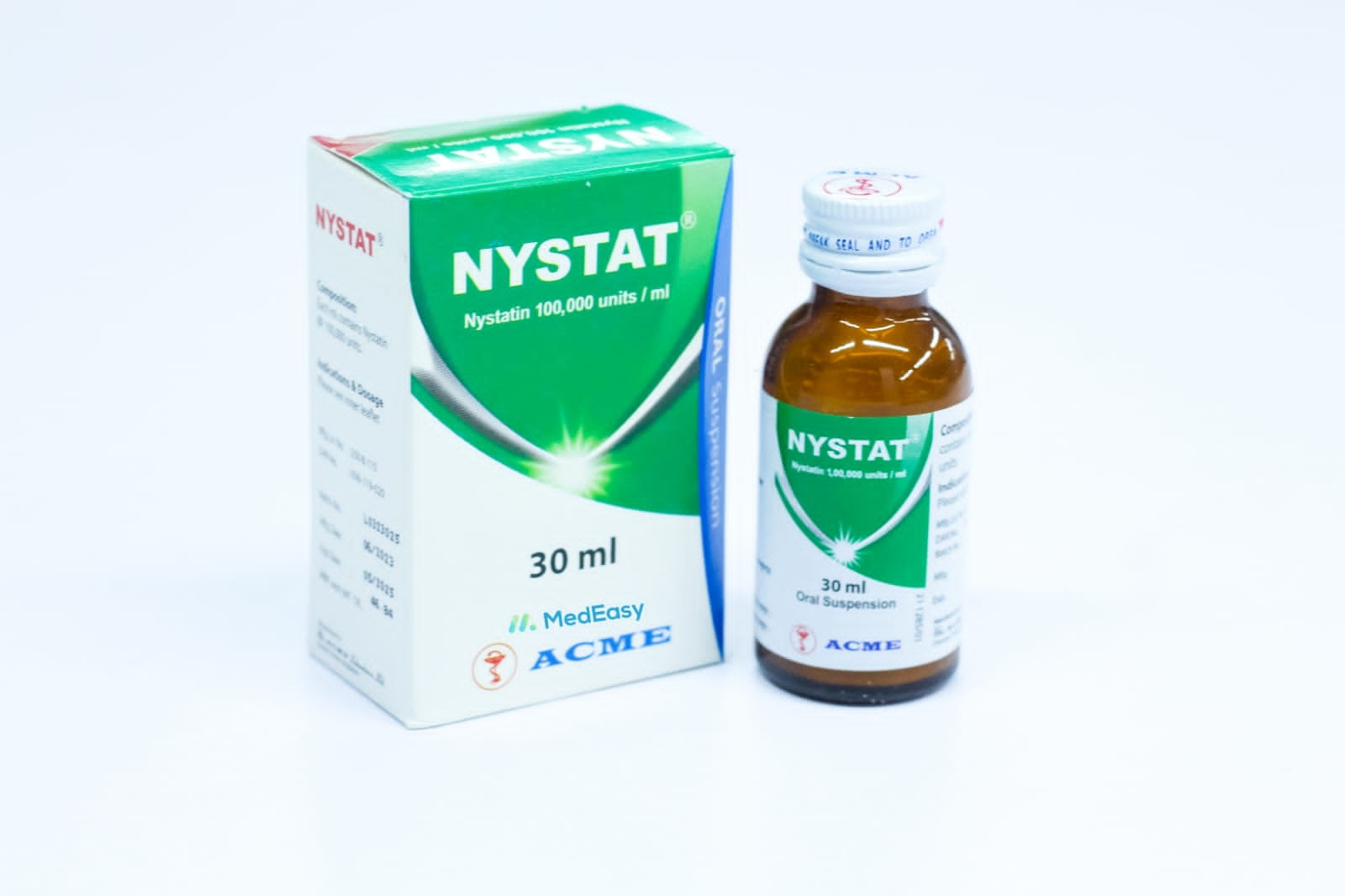
Nystat30 ml
ACME Laboratories Ltd.
৳43.09
Add to cart
Nystatin is a polyene antifungal antibiotic used for the local (topical) treatment of infections caused by Candida species (yeast/fungal infections).
Nystatin is a polyene antifungal antibiotic used for the local (topical) treatment of infections caused by Candida species (yeast/fungal infections). It is not effective against systemic (blood-borne) fungal infections because it is very poorly absorbed from the mouth, skin, gut, or vagina.
Note: Nystatin is only marketed and used in Bangladesh as a local/topical antifungal in oral suspension, vaginal tablet, and topical dosage forms, not as a systemic antifungal.
| Population | Dose | Frequency |
|---|---|---|
| Premature and low-birth-weight infants | 1 mL (100,000 units) | 4 times daily |
| Infants (full-term) | 2 mL (200,000 units) | 4 times daily |
| Children and adults | 4-6 mL (400,000-600,000 units) | 4 times daily |
For infants, use the supplied dropper to place half the dose in each side of the mouth; avoid feeding for 5-10 minutes afterward. For children and adults, half the dose should be retained/swished in each side of the mouth for as long as possible (or as directed on the product label) before swallowing, since Nystatin works locally on contact and is not absorbed. Treatment should continue for at least 48 hours after symptoms have resolved, and typically for 7-14 days, to help prevent relapse.
One vaginal tablet (100,000 units) inserted deep into the vagina once daily at bedtime, usually for 14 consecutive days, or as directed by the physician. Treatment should not be interrupted during menstruation unless advised otherwise.
Apply a thin layer to the affected skin area 2-3 times daily until the infection has cleared and for a few days afterward, or as directed by the physician.
Nystatin should always be taken exactly as prescribed; do not stop, extend, skip doses, or share this medicine with others without medical advice, even if symptoms improve early, to ensure the infection is fully cleared and to prevent recurrence.
Nystatin is generally very well tolerated because of its minimal systemic absorption. Reported side effects are usually mild and local.
Patients should seek prompt medical attention for signs of a serious allergic reaction (swelling of the face/lips/throat, difficulty breathing, severe rash).
Nystatin is contraindicated in patients with known hypersensitivity (allergy) to Nystatin or to any component of the specific product formulation.
Disclaimer
The information provided is accurate to the best of our knowledge, but it does not replace professional medical advice. We cannot guarantee its completeness or accuracy, and the absence of specific information about a drug should not be taken as an endorsement. We are not responsible for any consequences arising from this information, so please consult a healthcare professional for any concerns or questions.