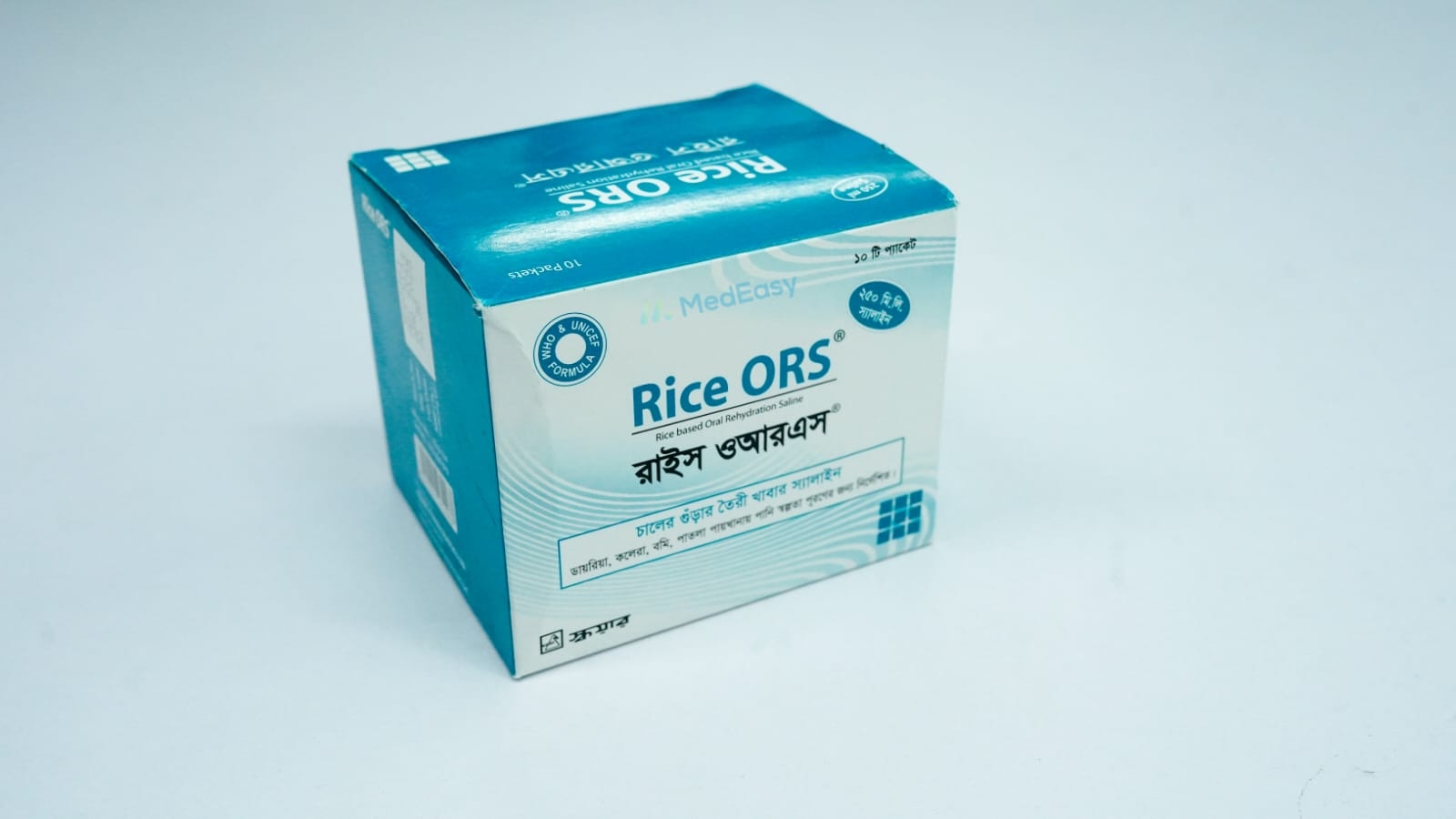
Generic medicine

Oral rehydration salt [rice based]: Brands, Price & Uses in Bangladesh

Established Uses Oral Rehydration Salt [Rice Based] is indicated for the treatment and prevention of dehydration caused by fluid and electrolyte loss due to acute diarrhea (including cholera) and…

Forms:Oral Powder

About Oral rehydration salt [rice based]

Indications of Oral rehydration salt [rice based]

Established Uses

Oral Rehydration Salt [Rice Based] is indicated for the treatment and prevention of dehydration caused by fluid and electrolyte loss due to acute diarrhea (including cholera) and vomiting, in infants, children, and adults. It is a rice-powder-based variant of oral rehydration solution (ORS), in which rice powder replaces glucose as the carbohydrate source, in line with WHO-endorsed rice-based ORS formulations.

  • First-line therapy for acute watery diarrhea: Used to correct or prevent dehydration of mild-to-moderate severity as part of WHO/UNICEF-recommended oral rehydration therapy (ORT), alongside continued feeding.
  • Cholera: Some clinical evidence suggests rice-based ORS may reduce stool output and shorten diarrhea duration compared with standard glucose-based ORS in patients with cholera; it is used for this indication in appropriate clinical settings, generally alongside standard cholera management.
  • Maintenance fluid and electrolyte replacement: Used to replace ongoing fluid and electrolyte losses during diarrheal illness and to prevent dehydration in at-risk patients (e.g., young children, elderly).

Important: Oral Rehydration Salt [Rice Based] is a rehydration therapy, not a treatment for the underlying cause of diarrhea, and does not reduce stool frequency in most non-cholera diarrheal illness. It does not replace medical evaluation for severe dehydration, bloody diarrhea, high fever, or diarrhea that fails to improve.

Dosage & Administration of Oral rehydration salt [rice based]

Oral Rehydration Salt [Rice Based] should be given after each loose or watery stool and to replace ongoing losses from vomiting, in addition to normal fluid and age-appropriate food intake (see Reconstitution for preparation instructions).

Age groupApproximate amount after each loose stool
Under 6 months (no other fluids unless directed by a physician)As advised by a physician; use only under medical supervision
6 months–2 years50–100 mL (approx. 10–20 teaspoonfuls)
2–9 years100–200 mL (approx. 20–40 teaspoonfuls)
10 years and above (including adults)200–500 mL (approx. 1–2 glassfuls)

For infants and young children with more significant dehydration, treatment should follow a structured rehydration plan (e.g., WHO Plan A for no dehydration given at home, or Plan B for some dehydration given under supervision), with amounts and rate adjusted to the degree of dehydration and body weight, ideally under the guidance of a healthcare provider.

Continue breastfeeding and age-appropriate normal feeding throughout treatment. Seek medical attention promptly if there are signs of severe dehydration, persistent vomiting, blood in stool, high fever, or if diarrhea does not improve within 2 days in children or 2–3 days in adults.

Side Effects of Oral rehydration salt [rice based]

Oral Rehydration Salt [Rice Based] is generally very well tolerated when prepared and administered correctly. Reported adverse effects are uncommon and are usually related to incorrect preparation or excessively rapid administration:

  • Vomiting, if given too quickly or in large volumes at once.
  • Abdominal distension or bloating.
  • Hypernatremia (if the solution is prepared too concentrated, i.e., with too little water) or hyponatremia (if over-diluted).
  • Hyperkalemia, rarely, particularly in patients with underlying renal impairment.

These effects can largely be avoided by following the exact reconstitution instructions on the pack (see Reconstitution).

Contraindications of Oral rehydration salt [rice based]

Oral Rehydration Salt [Rice Based] should not be given orally in the following situations, where oral rehydration is not appropriate and other management (e.g., intravenous fluids) is required:

  • Known hypersensitivity to any component of the formulation.
  • Intractable or persistent vomiting that prevents adequate oral intake.
  • Severe dehydration or hypovolemic shock requiring immediate intravenous fluid resuscitation.
  • Paralytic ileus.
  • Intestinal obstruction or perforation.

Frequently Asked Questions about Oral rehydration salt [rice based]

What is Oral Rehydration Salt [Rice Based] used for?

Oral Rehydration Salt [Rice Based] is used to treat and prevent dehydration caused by fluid and electrolyte loss from diarrhea (including cholera) and vomiting. It replaces water, sodium, potassium, and citrate lost from the body, using rice powder instead of glucose as the carbohydrate source.

How do I prepare Oral Rehydration Salt [Rice Based]?

Dissolve the entire contents of one sachet of Oral Rehydration Salt [Rice Based] in the exact volume of previously boiled and cooled water stated on the pack (commonly 250 mL or 500 mL). Stir until fully dissolved into a milky-white solution. Do not use an incorrect water volume, as this can make the solution unsafe.

How much Oral Rehydration Salt [Rice Based] should I give my child?

As a general guide, give about 50–100 mL to children aged 6 months to 2 years, and 100–200 mL to children aged 2–9 years, after each loose stool, in addition to normal feeding. Infants under 6 months should only receive Oral Rehydration Salt [Rice Based] under medical supervision. Always follow the guidance of a physician for the exact amount needed.

Can Oral Rehydration Salt [Rice Based] be used during pregnancy or breastfeeding?

Oral Rehydration Salt [Rice Based] is considered safe during pregnancy and breastfeeding, as it works as a fluid and electrolyte replacement rather than a systemic drug, with no known harmful effects. Breastfeeding should be continued alongside its use, as advised by a physician.

When should Oral Rehydration Salt [Rice Based] not be used?

Oral Rehydration Salt [Rice Based] should not be given by mouth in cases of intractable vomiting, severe dehydration requiring intravenous fluids, paralytic ileus, intestinal obstruction, or known hypersensitivity to any of its ingredients; these situations require urgent medical care rather than home oral rehydration.

How long can I keep prepared Oral Rehydration Salt [Rice Based] solution?

Once mixed with water, Oral Rehydration Salt [Rice Based] solution should generally be used within about 5–6 hours at room temperature and any unused portion discarded afterward, since the rice-based solution can spoil more quickly than glucose-based ORS. Always prepare a fresh batch for continued use.

Disclaimer

The information provided is accurate to the best of our knowledge, but it does not replace professional medical advice. We cannot guarantee its completeness or accuracy, and the absence of specific information about a drug should not be taken as an endorsement. We are not responsible for any consequences arising from this information, so please consult a healthcare professional for any concerns or questions.

DoctorBlogArticles