
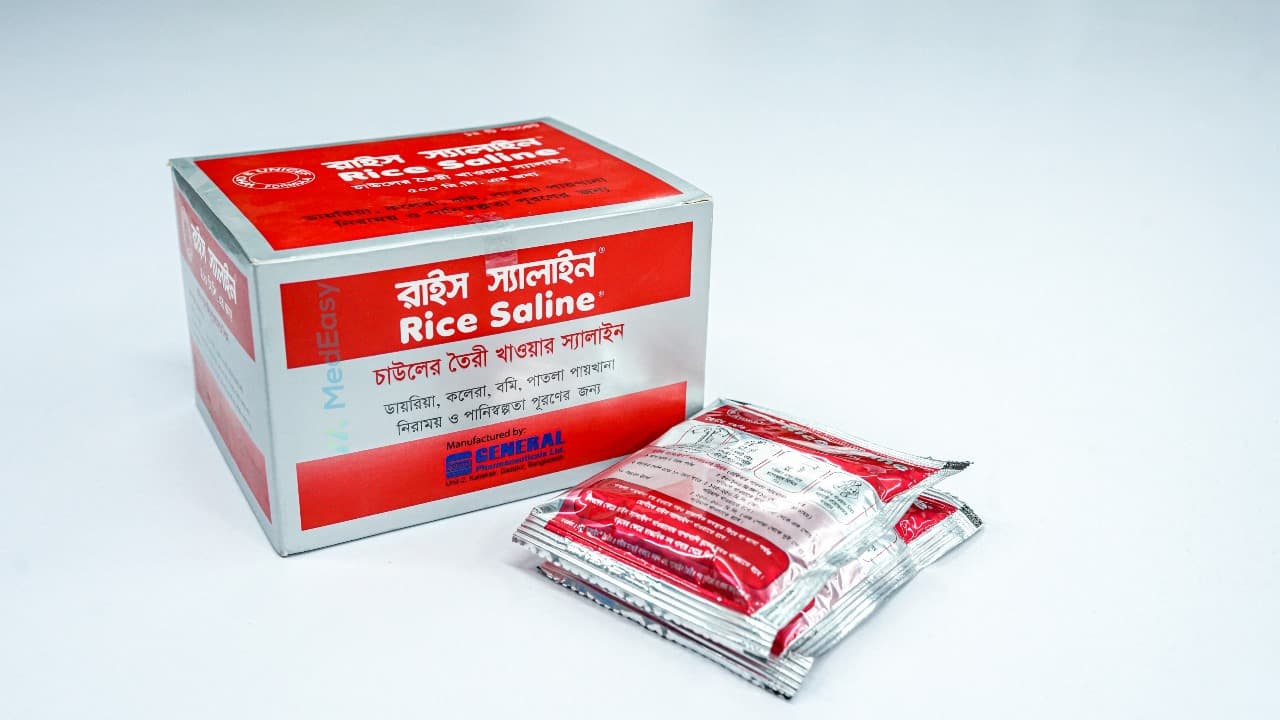

Medicine overview
Indications of Rice Saline
Established Uses
Rice Saline is indicated for the treatment and prevention of dehydration caused by fluid and electrolyte loss due to acute diarrhea (including cholera) and vomiting, in infants, children, and adults. It is a rice-powder-based variant of oral rehydration solution (ORS), in which rice powder replaces glucose as the carbohydrate source, in line with WHO-endorsed rice-based ORS formulations.
- First-line therapy for acute watery diarrhea: Used to correct or prevent dehydration of mild-to-moderate severity as part of WHO/UNICEF-recommended oral rehydration therapy (ORT), alongside continued feeding.
- Cholera: Some clinical evidence suggests rice-based ORS may reduce stool output and shorten diarrhea duration compared with standard glucose-based ORS in patients with cholera; it is used for this indication in appropriate clinical settings, generally alongside standard cholera management.
- Maintenance fluid and electrolyte replacement: Used to replace ongoing fluid and electrolyte losses during diarrheal illness and to prevent dehydration in at-risk patients (e.g., young children, elderly).
Important: Rice Saline is a rehydration therapy, not a treatment for the underlying cause of diarrhea, and does not reduce stool frequency in most non-cholera diarrheal illness. It does not replace medical evaluation for severe dehydration, bloody diarrhea, high fever, or diarrhea that fails to improve.
Composition
Each sachet of Oral Rehydration Salt [Rice Based] is formulated to be dissolved in a specified volume of clean, previously boiled and cooled water (typically 250 mL or 500 mL, as printed on the sachet). A representative 250 mL formulation contains:
| Ingredient | Amount per 250 mL sachet |
|---|---|
| Sodium Chloride BP | 0.65 g |
| Potassium Chloride BP | 0.375 g |
| Trisodium Citrate Dihydrate BP | 0.725 g |
| Processed Rice Powder | 12.5 g |
A 500 mL sachet contains double these amounts. Always check the specific pack size and printed reconstitution volume before preparation, as strengths vary by manufacturer.
Description
Rice Saline is an oral rehydration solution (ORS) in which the carbohydrate source is processed rice powder/starch rather than glucose. It belongs to the broader category of oral rehydration salts used worldwide, including in Bangladesh, for home and clinic-based management of dehydration caused by diarrheal illness. Rather than acting as a conventional pharmacologic drug, Rice Saline functions as a physiological rehydration therapy: when dissolved in the correct volume of clean water, it supplies glucose (derived from digested rice starch), sodium, potassium, and citrate in proportions that promote efficient intestinal absorption of water and electrolytes, even in the presence of ongoing diarrhea.
Because rice-based solutions have lower osmolarity than glucose-only ORS and provide a slow, sustained release of glucose during digestion, some studies (particularly in cholera) have found reduced stool output and shorter diarrhea duration compared with standard glucose-based ORS, although both are considered effective and are endorsed for oral rehydration therapy.
Therapeutic Class
Rice Saline belongs to the therapeutic class of Oral Rehydration Salts (Fluid and Electrolyte Replenishers), used in oral rehydration therapy (ORT).
Pharmacology
The pharmacologic basis of Oral Rehydration Salt [Rice Based] is the sodium-glucose co-transport mechanism in the small intestinal brush border (SGLT1), through which glucose actively co-transports sodium (and accompanying water) across the intestinal mucosa, a process that remains functional even during acute diarrhea. In Oral Rehydration Salt [Rice Based], digestion of rice starch by intestinal amylase releases glucose gradually, providing a sustained substrate for this co-transport mechanism rather than the immediate glucose load of standard ORS.
This gradual glucose release, combined with the lower overall osmolarity of the rice-based solution, is thought to reduce net intraluminal fluid secretion and, in some studies, to reduce stool output and duration of diarrhea compared with standard glucose-based ORS, particularly in cholera. Sodium chloride and potassium chloride replace electrolytes lost in stool and vomitus, while trisodium citrate acts as an alkalinizing agent that helps correct the metabolic acidosis commonly associated with diarrheal dehydration.
Dosage & Administration of Rice Saline
Rice Saline should be given after each loose or watery stool and to replace ongoing losses from vomiting, in addition to normal fluid and age-appropriate food intake (see Reconstitution for preparation instructions).
| Age group | Approximate amount after each loose stool |
|---|---|
| Under 6 months (no other fluids unless directed by a physician) | As advised by a physician; use only under medical supervision |
| 6 months–2 years | 50–100 mL (approx. 10–20 teaspoonfuls) |
| 2–9 years | 100–200 mL (approx. 20–40 teaspoonfuls) |
| 10 years and above (including adults) | 200–500 mL (approx. 1–2 glassfuls) |
For infants and young children with more significant dehydration, treatment should follow a structured rehydration plan (e.g., WHO Plan A for no dehydration given at home, or Plan B for some dehydration given under supervision), with amounts and rate adjusted to the degree of dehydration and body weight, ideally under the guidance of a healthcare provider.
Continue breastfeeding and age-appropriate normal feeding throughout treatment. Seek medical attention promptly if there are signs of severe dehydration, persistent vomiting, blood in stool, high fever, or if diarrhea does not improve within 2 days in children or 2–3 days in adults.
Administration of Rice Saline
Rice Saline is for oral use only, after reconstitution with the specified volume of clean, previously boiled and cooled water (see Reconstitution). Administer using a clean cup and spoon; for infants, small frequent sips or spoonfuls are preferred over large volumes given quickly, to reduce the risk of vomiting.
Give the solution slowly and frequently rather than in large amounts at once, especially in young children or if there is nausea. If the patient vomits, wait 5–10 minutes and then resume giving the solution more slowly. Prepare a fresh batch as instructed and discard any unused, previously prepared solution after the time specified on the pack (see Storage Conditions) to reduce the risk of bacterial contamination, since the rice-starch base can spoil more quickly than glucose-based ORS.
Interaction of Rice Saline
Rice Saline has no well-established, clinically significant drug-drug interactions, as it is a fluid and electrolyte replacement rather than a systemically acting pharmacologic agent. However, some theoretical points of caution apply:
- Potassium-sparing diuretics, ACE inhibitors, angiotensin receptor blockers: Because Rice Saline contains potassium chloride, concurrent use with drugs that reduce potassium excretion may theoretically increase the risk of hyperkalemia, particularly in patients with renal impairment.
- Oral medications requiring an empty stomach or specific fluid restriction: Large volumes of Rice Saline taken close to other oral medicines could theoretically affect gastric emptying or dilution; where relevant, separate timing from other medicines as advised by a physician or pharmacist.
There are no known interactions that would prevent co-administration of Rice Saline with routine medications in patients with normal renal function.
Contraindications
Oral Rehydration Salt [Rice Based] should not be given orally in the following situations, where oral rehydration is not appropriate and other management (e.g., intravenous fluids) is required:
- Known hypersensitivity to any component of the formulation.
- Intractable or persistent vomiting that prevents adequate oral intake.
- Severe dehydration or hypovolemic shock requiring immediate intravenous fluid resuscitation.
- Paralytic ileus.
- Intestinal obstruction or perforation.
Side Effects of Rice Saline
Rice Saline is generally very well tolerated when prepared and administered correctly. Reported adverse effects are uncommon and are usually related to incorrect preparation or excessively rapid administration:
- Vomiting, if given too quickly or in large volumes at once.
- Abdominal distension or bloating.
- Hypernatremia (if the solution is prepared too concentrated, i.e., with too little water) or hyponatremia (if over-diluted).
- Hyperkalemia, rarely, particularly in patients with underlying renal impairment.
These effects can largely be avoided by following the exact reconstitution instructions on the pack (see Reconstitution).
Pregnancy & Lactation
Rice Saline is considered safe for use during pregnancy and lactation, as it functions as a fluid and electrolyte replacement rather than a systemically absorbed drug, and no harmful effects on the fetus or nursing infant have been established. It may be used to manage dehydration due to diarrhea or vomiting (including hyperemesis) in pregnant and breastfeeding women when clinically indicated, as advised by a physician.
Breastfeeding should be continued alongside Rice Saline therapy in nursing mothers and in breastfed infants, per WHO/UNICEF guidance, as breast milk provides additional fluid, calories, and protective factors during diarrheal illness.
Precautions & Warnings
Use Rice Saline with caution and under close medical supervision in the following situations:
- Renal impairment, oliguria, or anuria: Reduced ability to excrete excess fluid, sodium, and potassium increases the risk of fluid overload and hyperkalemia; use only under medical guidance with monitoring.
- Conditions with impaired potassium excretion (e.g., adrenal insufficiency, certain cardiac or renal conditions): Risk of hyperkalemia; monitor as advised by a physician.
- Infants under 6 months: Use only under medical supervision, as fluid and electrolyte requirements differ and unsupervised use carries higher risk of imbalance.
- Correct preparation is essential: Always dissolve the full sachet contents in the exact volume of water specified on the pack. Using too little water can cause dangerous hypernatremia; using too much water reduces effectiveness and can cause hyponatremia.
- Hygiene and shelf-life of prepared solution: Because the rice-starch base is more prone to bacterial growth than glucose-based ORS, use only freshly boiled and cooled water, use clean utensils, and discard any unused prepared solution within the time stated on the pack (typically within about 5–6 hours at room temperature).
Rice Saline does not treat the underlying cause of diarrhea (e.g., bacterial or parasitic infection); seek prompt medical attention for bloody diarrhea, high fever, signs of severe dehydration (e.g., sunken eyes, lethargy, minimal urination, very dry mouth), or diarrhea that persists or worsens.
Overdose Effects of Rice Saline
Excessive or improperly prepared Rice Saline solution (e.g., too concentrated, or given in very large volumes without ongoing losses) may lead to hypernatremia, fluid overload, or, less commonly, hyperkalemia, especially in infants, the elderly, or patients with renal or cardiac impairment. Symptoms may include irritability, muscle twitching, seizures, swelling, or cardiac rhythm disturbances in severe cases.
If overdose or excessive intake is suspected, or if any concerning symptoms develop, stop administration and seek immediate medical attention or contact a poison control center; do not attempt specific home treatment for suspected electrolyte overdose.
Storage Conditions
Store unopened sachets of Rice Saline at room temperature (below 30°C), away from light and moisture, in a cool, dry place. Keep out of reach of children.
Once reconstituted, use the prepared solution within the time specified on the pack label (typically within about 5–6 hours at room temperature); discard any unused prepared solution after this time and prepare a fresh batch, as the rice-based solution can spoil or support bacterial growth more readily than glucose-based ORS.
Use In Special Populations
Infants under 6 months: Use Rice Saline only under medical supervision; fluid and electrolyte needs in this age group require closer monitoring.
Renal impairment: Use with caution and medical supervision due to reduced capacity to excrete sodium, potassium, and fluid; risk of overload and hyperkalemia (see Precautions and Warnings).
Hepatic impairment: No specific dose adjustment is established; general precautions regarding electrolyte monitoring apply as clinically indicated.
Elderly patients: Generally well tolerated; monitor for signs of fluid or electrolyte imbalance, particularly in those with cardiac, renal, or hepatic disease or those on diuretics.
Patients with diabetes: The rice-derived carbohydrate load is generally acceptable for rehydration purposes; blood glucose may still warrant monitoring during acute illness as clinically appropriate.
Duration Of Treatment
Rice Saline should be continued for as long as diarrhea and/or vomiting persist and there is ongoing risk of dehydration, typically for the duration of the acute illness (commonly a few days). It should be used alongside continued normal feeding and, in infants, continued breastfeeding, until stools return to normal consistency and frequency and hydration is restored.
Medical review is recommended if diarrhea persists beyond 2 days in young children or beyond 2–3 days in older children and adults, or sooner if there is blood in the stool, high fever, repeated vomiting preventing oral intake, or signs of worsening or severe dehydration.
Reconstitution
Rice Saline must be reconstituted before use:
- Wash hands and use a clean container, cup, and spoon.
- Boil the exact volume of drinking water specified on the sachet (commonly 250 mL or 500 mL) and allow it to cool to a comfortably warm or room temperature.
- Empty the entire contents of one sachet of Rice Saline into the measured, cooled water. Do not use a partial sachet or estimate the water volume, as this can lead to a solution that is too concentrated or too dilute.
- Stir thoroughly until the powder is completely dissolved; the solution typically appears milky-white due to the rice powder.
- Use the freshly prepared solution promptly. Discard any solution not used within the time stated on the pack (commonly within about 5–6 hours at room temperature) and prepare a fresh batch for further use.
Do not add sugar, salt, or other substances to the prepared solution, and do not boil the solution after the powder has been added.
Drug Classes
Oral Rehydration Salt [Rice Based] belongs to the drug/therapy class: Oral Rehydration Salts / Oral Rehydration Therapy (ORT) agents, a subclass of fluid and electrolyte replenishers.
Mode Of Action
The mode of action of Oral Rehydration Salt [Rice Based] relies on the intestinal sodium-glucose co-transporter (SGLT1) pathway, which remains active during diarrheal illness. Digestion of the processed rice powder by intestinal amylase releases glucose gradually within the gut lumen; this glucose co-transports sodium, and consequently water, across the intestinal epithelium, promoting net fluid and electrolyte absorption even while diarrhea continues.
Because the glucose is released gradually from rice starch rather than delivered as an immediate glucose load, the resulting solution has lower osmolarity than standard glucose-based ORS, which may further reduce net fluid secretion into the gut lumen. Potassium chloride replaces potassium lost in stool, and trisodium citrate provides bicarbonate-equivalent buffering capacity to help correct the metabolic acidosis associated with dehydration.
Pediatric Uses
Rice Saline is used in infants, children, and adolescents for the treatment and prevention of dehydration due to acute diarrhea and vomiting, and is a cornerstone of WHO/UNICEF-recommended oral rehydration therapy in children.
- Infants under 6 months: Use only under medical supervision, as dosing and monitoring needs differ in this age group; continue breastfeeding throughout.
- 6 months to 2 years: 50–100 mL after each loose stool, in addition to usual feeds.
- 2 to 9 years: 100–200 mL after each loose stool.
- 10 years and above: Dosed as in adults (see Dosage).
Caregivers should watch for signs of worsening dehydration (sunken eyes, lethargy, reduced urination, very dry mouth, inability to drink) or persistent vomiting, and seek prompt medical care if these occur, as some children require intravenous rehydration or closer supervision.
Frequently Asked Questions
Q: What is Rice Saline 500 Oral Powder used for?
A: Rice Saline 500 Oral Powder is used to treat and prevent dehydration caused by fluid and electrolyte loss from diarrhea (including cholera) and vomiting. It replaces water, sodium, potassium, and citrate lost from the body, using rice powder instead of glucose as the carbohydrate source.
Q: How do I prepare Rice Saline 500 Oral Powder?
A: Dissolve the entire contents of one sachet of Rice Saline 500 Oral Powder in the exact volume of previously boiled and cooled water stated on the pack (commonly 250 mL or 500 mL). Stir until fully dissolved into a milky-white solution. Do not use an incorrect water volume, as this can make the solution unsafe.
Q: How much Rice Saline 500 Oral Powder should I give my child?
A: As a general guide, give about 50–100 mL to children aged 6 months to 2 years, and 100–200 mL to children aged 2–9 years, after each loose stool, in addition to normal feeding. Infants under 6 months should only receive Rice Saline 500 Oral Powder under medical supervision. Always follow the guidance of a physician for the exact amount needed.
Q: Can Rice Saline 500 Oral Powder be used during pregnancy or breastfeeding?
A: Rice Saline 500 Oral Powder is considered safe during pregnancy and breastfeeding, as it works as a fluid and electrolyte replacement rather than a systemic drug, with no known harmful effects. Breastfeeding should be continued alongside its use, as advised by a physician.
Q: When should Rice Saline 500 Oral Powder not be used?
A: Rice Saline 500 Oral Powder should not be given by mouth in cases of intractable vomiting, severe dehydration requiring intravenous fluids, paralytic ileus, intestinal obstruction, or known hypersensitivity to any of its ingredients; these situations require urgent medical care rather than home oral rehydration.
Q: How long can I keep prepared Rice Saline 500 Oral Powder solution?
A: Once mixed with water, Rice Saline 500 Oral Powder solution should generally be used within about 5–6 hours at room temperature and any unused portion discarded afterward, since the rice-based solution can spoil more quickly than glucose-based ORS. Always prepare a fresh batch for continued use.
Disclaimer
The information provided is accurate to the best of our knowledge, but it does not replace professional medical advice. We cannot guarantee its completeness or accuracy, and the absence of specific information about a drug should not be taken as an endorsement. We are not responsible for any consequences arising from this information, so please consult a healthcare professional for any concerns or questions.
