8% Off
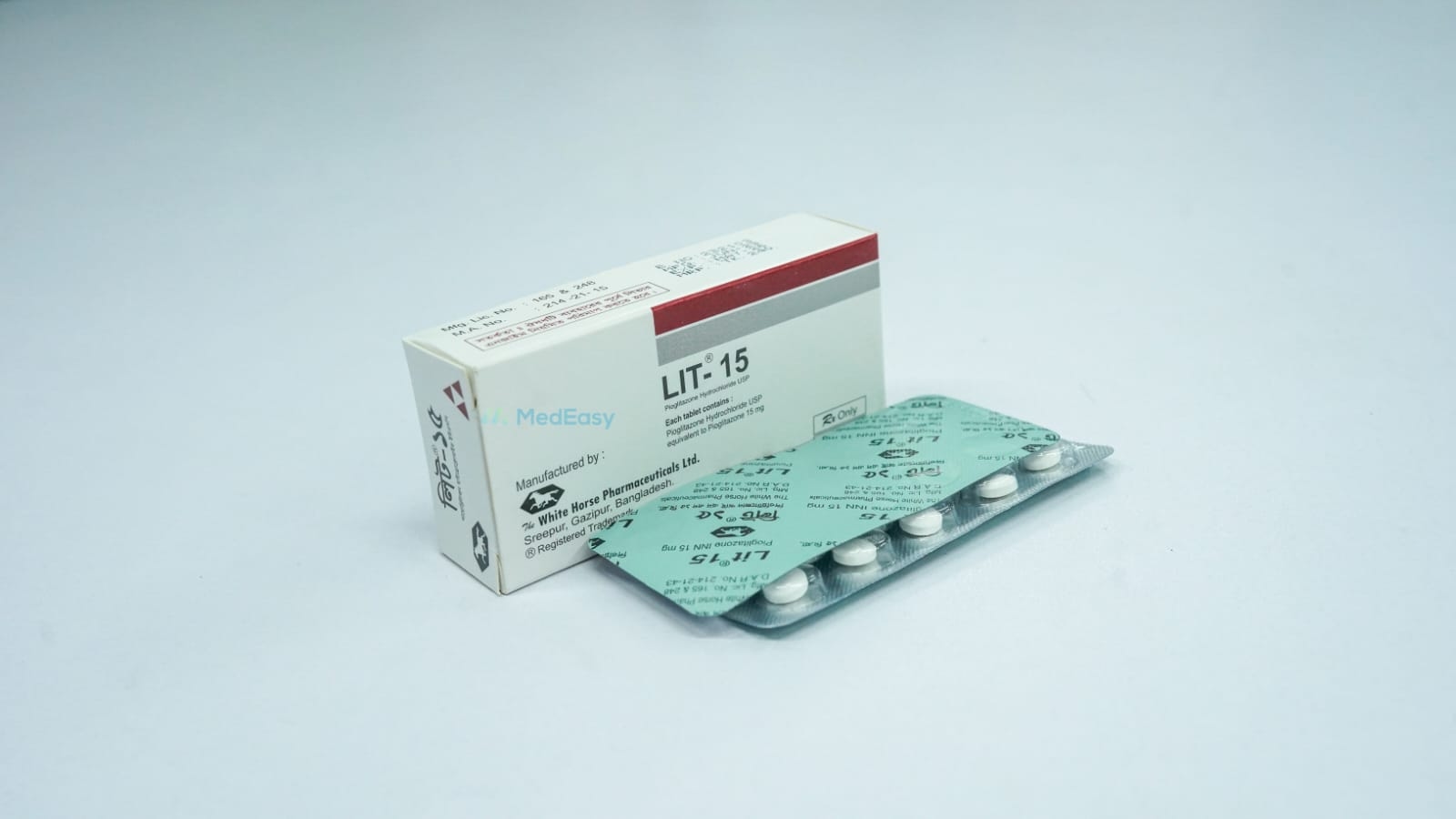
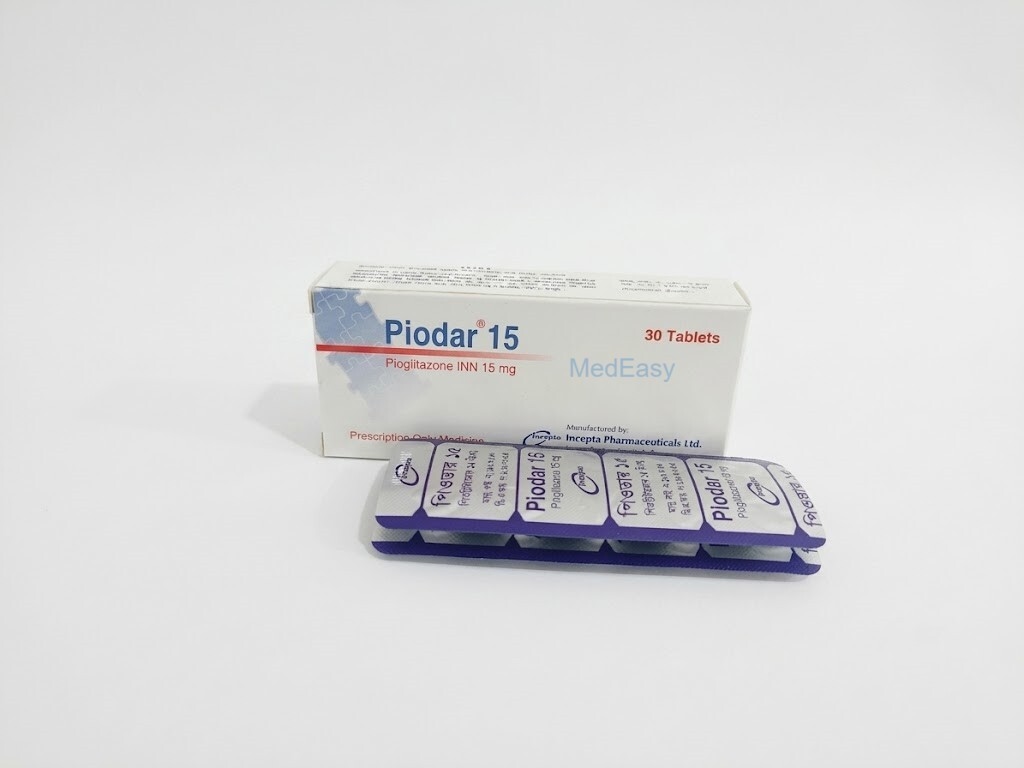
Piodar15 mg
Incepta Pharmaceuticals Ltd.
৳73.60
Add to cart
Pioglitazone is indicated as an adjunct to diet and exercise to improve glycemic control in adults with type 2 diabetes mellitus.
Pioglitazone is indicated as an adjunct to diet and exercise to improve glycemic control in adults with type 2 diabetes mellitus.
Pioglitazone is not indicated for type 1 diabetes mellitus or for the treatment of diabetic ketoacidosis.
Pioglitazone is taken orally once daily, with or without food. Therapy is individualized based on glycemic response and tolerability, and dose changes should be made gradually with monitoring.
| Indication / Setting | Typical adult dosing |
|---|---|
| Monotherapy | Initiate at 15 mg or 30 mg once daily; may be titrated in increments up to a maximum of 45 mg once daily based on response. |
| Combination with metformin or a sulfonylurea | Initiate Pioglitazone at 15 mg or 30 mg once daily added to the existing regimen; titrate as needed up to 45 mg once daily. The dose of the sulfonylurea may need to be reduced if hypoglycemia occurs. |
| Combination with insulin | Initiate Pioglitazone at 15 mg or 30 mg once daily while continuing insulin; monitor closely for fluid retention and signs of heart failure. The insulin dose may need to be reduced if hypoglycemia occurs. |
| Hepatic impairment | Pioglitazone should not be initiated in patients with active liver disease or baseline ALT greater than 2.5 times the upper limit of normal; use with caution and monitor liver enzymes in other hepatic impairment. |
| Renal impairment | No dose adjustment of Pioglitazone itself is required based on renal function, but caution is advised when used with insulin or sulfonylureas due to hypoglycemia risk. |
| Pediatric use | Safety and efficacy have not been established in patients under 18 years of age; not recommended. |
Maximum recommended dose: 45 mg once daily (30 mg once daily when used in combination with insulin, unless otherwise advised by the treating physician).
Pioglitazone is not appropriate for type 1 diabetes mellitus or diabetic ketoacidosis, as it is not effective for these conditions (this is a labeled non-indication rather than a pharmacologic contraindication).
Disclaimer
The information provided is accurate to the best of our knowledge, but it does not replace professional medical advice. We cannot guarantee its completeness or accuracy, and the absence of specific information about a drug should not be taken as an endorsement. We are not responsible for any consequences arising from this information, so please consult a healthcare professional for any concerns or questions.