10% Off
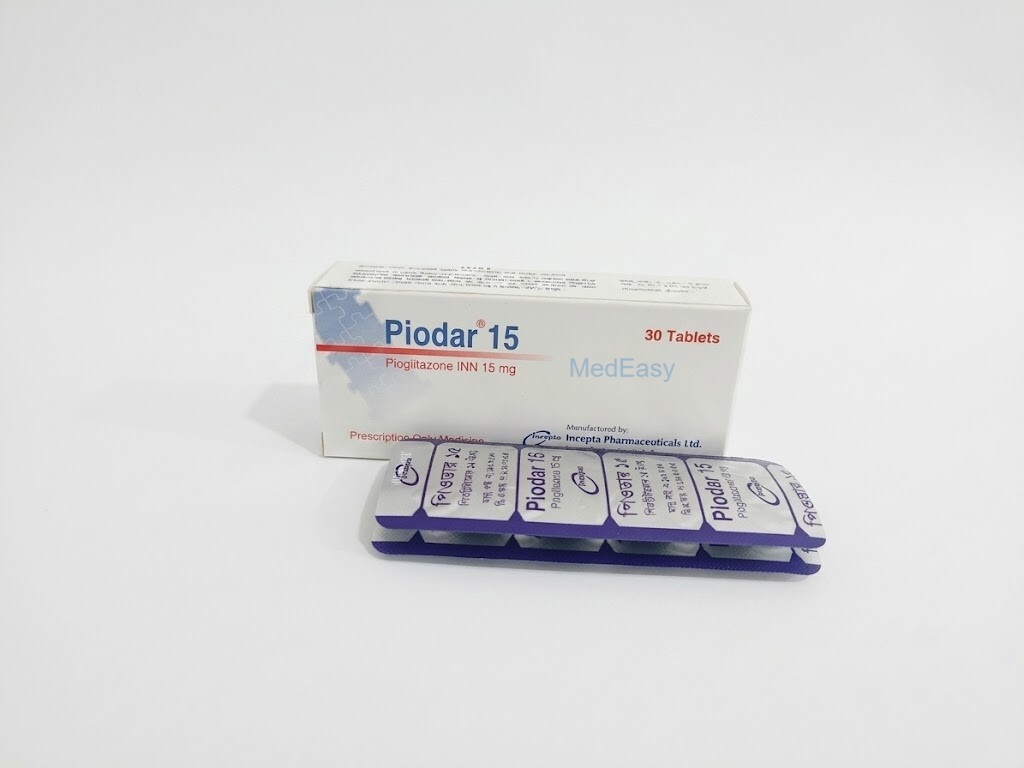
Piodar15 mg
Incepta Pharmaceuticals Ltd.
৳72.00
Add to cart


Piglit is indicated as an adjunct to diet and exercise to improve glycemic control in adults with type 2 diabetes mellitus.
Piglit is not indicated for type 1 diabetes mellitus or for the treatment of diabetic ketoacidosis.
Each tablet contains Pioglitazone (as pioglitazone hydrochloride) in strengths typically available as 15 mg, 30 mg, and 45 mg oral tablets. Combination products pairing Pioglitazone with metformin or a sulfonylurea are also available in some markets; always confirm the exact composition on the product label being dispensed.
Piglit is an oral antidiabetic medicine belonging to the thiazolidinedione (TZD) class, also known as "glitazones" or insulin sensitizers. Unlike sulfonylureas, Piglit does not stimulate insulin secretion from the pancreas; instead it improves the body's response to the insulin it already produces. It is used as part of a comprehensive treatment plan for type 2 diabetes mellitus that includes diet, exercise, and blood glucose monitoring.
Thiazolidinediones (TZDs) — oral antidiabetic agents (insulin sensitizers)
Pioglitazone is a selective agonist of the peroxisome proliferator-activated receptor-gamma (PPAR-γ), a nuclear receptor found in adipose tissue, skeletal muscle, and liver. Activation of PPAR-γ regulates the transcription of insulin-responsive genes involved in glucose production, transport, and utilization.
Onset of full glycemic effect is gradual; maximal benefit on fasting glucose and HbA1c may take several weeks to a few months of continuous therapy.
Piglit is taken orally once daily, with or without food. Therapy is individualized based on glycemic response and tolerability, and dose changes should be made gradually with monitoring.
| Indication / Setting | Typical adult dosing |
|---|---|
| Monotherapy | Initiate at 15 mg or 30 mg once daily; may be titrated in increments up to a maximum of 45 mg once daily based on response. |
| Combination with metformin or a sulfonylurea | Initiate Piglit at 15 mg or 30 mg once daily added to the existing regimen; titrate as needed up to 45 mg once daily. The dose of the sulfonylurea may need to be reduced if hypoglycemia occurs. |
| Combination with insulin | Initiate Piglit at 15 mg or 30 mg once daily while continuing insulin; monitor closely for fluid retention and signs of heart failure. The insulin dose may need to be reduced if hypoglycemia occurs. |
| Hepatic impairment | Piglit should not be initiated in patients with active liver disease or baseline ALT greater than 2.5 times the upper limit of normal; use with caution and monitor liver enzymes in other hepatic impairment. |
| Renal impairment | No dose adjustment of Piglit itself is required based on renal function, but caution is advised when used with insulin or sulfonylureas due to hypoglycemia risk. |
| Pediatric use | Safety and efficacy have not been established in patients under 18 years of age; not recommended. |
Maximum recommended dose: 45 mg once daily (30 mg once daily when used in combination with insulin, unless otherwise advised by the treating physician).
Piglit tablets should be swallowed whole with a glass of water, once daily, at approximately the same time each day, with or without food. Do not crush, chew, or split the tablet unless advised by a pharmacist. If a dose is missed, it should be taken as soon as remembered unless it is almost time for the next dose, in which case the missed dose should be skipped — do not double the dose.
Pioglitazone is not appropriate for type 1 diabetes mellitus or diabetic ketoacidosis, as it is not effective for these conditions (this is a labeled non-indication rather than a pharmacologic contraindication).
Pregnancy: Data on the use of Piglit in pregnant women are limited. Type 2 diabetes in pregnancy is generally managed with insulin, as it does not cross the placenta and allows tighter control. Piglit should be used in pregnancy only if clearly needed and if the potential benefit justifies the potential risk to the fetus; consult a physician before use in pregnancy or if pregnancy is confirmed or suspected during treatment.
Lactation: It is not known whether Piglit passes into human breast milk; it has been detected in the milk of lactating rats. Because of the potential for adverse effects in a nursing infant, a decision should be made whether to discontinue breastfeeding or discontinue Piglit, taking into account the importance of the drug to the mother, and only under medical supervision.
Fertility note: Piglit therapy may result in resumption of ovulation in premenopausal anovulatory women with insulin resistance, creating a risk of unintended pregnancy; adequate contraception should be discussed with a physician.
Piglit can cause or worsen congestive heart failure in some patients. After starting Piglit or increasing the dose, patients should be observed for signs and symptoms of heart failure, including rapid weight gain, edema, and dyspnea. Piglit is contraindicated in NYHA Class III/IV heart failure, and caution plus monitoring is warranted at all severities of heart failure. If heart failure develops, it should be managed per standard of care, and discontinuation or dose reduction of Piglit should be considered.
Limited data exist on Piglit overdose in humans. If an overdose is suspected, seek immediate medical attention or contact a poison control center/emergency services rather than attempting home treatment. Because Piglit itself is unlikely to cause hypoglycemia alone, overdose is more concerning when the drug is used together with insulin or sulfonylureas, where hypoglycemia can occur. Management should be supportive and symptomatic, guided by a physician, including monitoring of blood glucose, cardiac status (for signs of fluid overload/heart failure), and general supportive care as appropriate.
Store at room temperature (below 30°C), away from light and moisture. Keep out of reach of children.
Piglit is generally used as long-term, ongoing therapy for the chronic management of type 2 diabetes mellitus, alongside diet, exercise, and regular glucose monitoring. There is no fixed treatment duration; continued use is periodically reassessed by the treating physician based on glycemic control (e.g., HbA1c), tolerability, and monitoring for heart failure, liver, bone, and bladder-related safety signals. Treatment should not be stopped abruptly without medical advice, as this may worsen glycemic control.
Thiazolidinediones (TZDs); PPAR-gamma agonists; oral antidiabetic agents (insulin sensitizers)
Pioglitazone acts as a selective agonist at the peroxisome proliferator-activated receptor-gamma (PPAR-γ), altering the transcription of genes that govern glucose and lipid metabolism. This increases insulin sensitivity in muscle and fat tissue and decreases hepatic glucose production, thereby lowering blood glucose without directly stimulating pancreatic insulin secretion.
C (legacy FDA pregnancy category under the older labeling system; current U.S. prescribing information uses the narrative Pregnancy and Lactation Labeling Rule format instead of a letter category)
The safety and efficacy of Piglit have not been established in pediatric patients under 18 years of age. Piglit is therefore not recommended for use in children or adolescents, and type 2 diabetes in this age group should be managed with agents and strategies specifically studied and approved for pediatric use, under specialist care.
Q: What is Piglit 15 mg Tablet used for?
A: Piglit 15 mg Tablet is used along with diet and exercise to improve blood sugar control in adults with type 2 diabetes mellitus. It may be used alone or together with metformin, a sulfonylurea, or insulin.
Q: How should I take Piglit 15 mg Tablet?
A: Piglit 15 mg Tablet is usually taken by mouth once daily, with or without food, at about the same time each day. Do not change your dose or stop taking it without talking to your physician first.
Q: Can Piglit 15 mg Tablet cause heart problems?
A: Yes. Piglit 15 mg Tablet carries a boxed warning because it can cause or worsen congestive heart failure in some patients. Contact your physician promptly if you notice rapid weight gain, swelling in your legs or ankles, or shortness of breath. Piglit 15 mg Tablet should not be used by people with severe (NYHA Class III or IV) heart failure.
Q: Is Piglit 15 mg Tablet linked to bladder cancer?
A: Some studies have suggested a possible association between long-term, higher-dose use of Piglit 15 mg Tablet and bladder cancer, although the evidence is not fully consistent. As a precaution, Piglit 15 mg Tablet is avoided in people with active bladder cancer and used cautiously in those with a past history of it. Tell your physician right away if you notice blood in your urine or new urinary symptoms.
Q: Is Piglit 15 mg Tablet safe during pregnancy or breastfeeding?
A: Piglit 15 mg Tablet should be used in pregnancy only if clearly needed and if the benefit outweighs the potential risk to the baby; insulin is generally preferred for diabetes control in pregnancy. It is not known whether Piglit 15 mg Tablet passes into breast milk, so breastfeeding mothers should consult their physician before use. Piglit 15 mg Tablet can also cause ovulation to resume in some women who were not previously ovulating, so contraception should be discussed.
Q: What are the common side effects of Piglit 15 mg Tablet?
A: Common side effects include weight gain, mild swelling (fluid retention), upper respiratory infections, headache, and muscle pain. Serious but less common effects include heart failure symptoms, bone fractures (especially in women), liver problems, and vision changes; report these to your physician promptly.
Disclaimer
The information provided is accurate to the best of our knowledge, but it does not replace professional medical advice. We cannot guarantee its completeness or accuracy, and the absence of specific information about a drug should not be taken as an endorsement. We are not responsible for any consequences arising from this information, so please consult a healthcare professional for any concerns or questions.