
8% Off
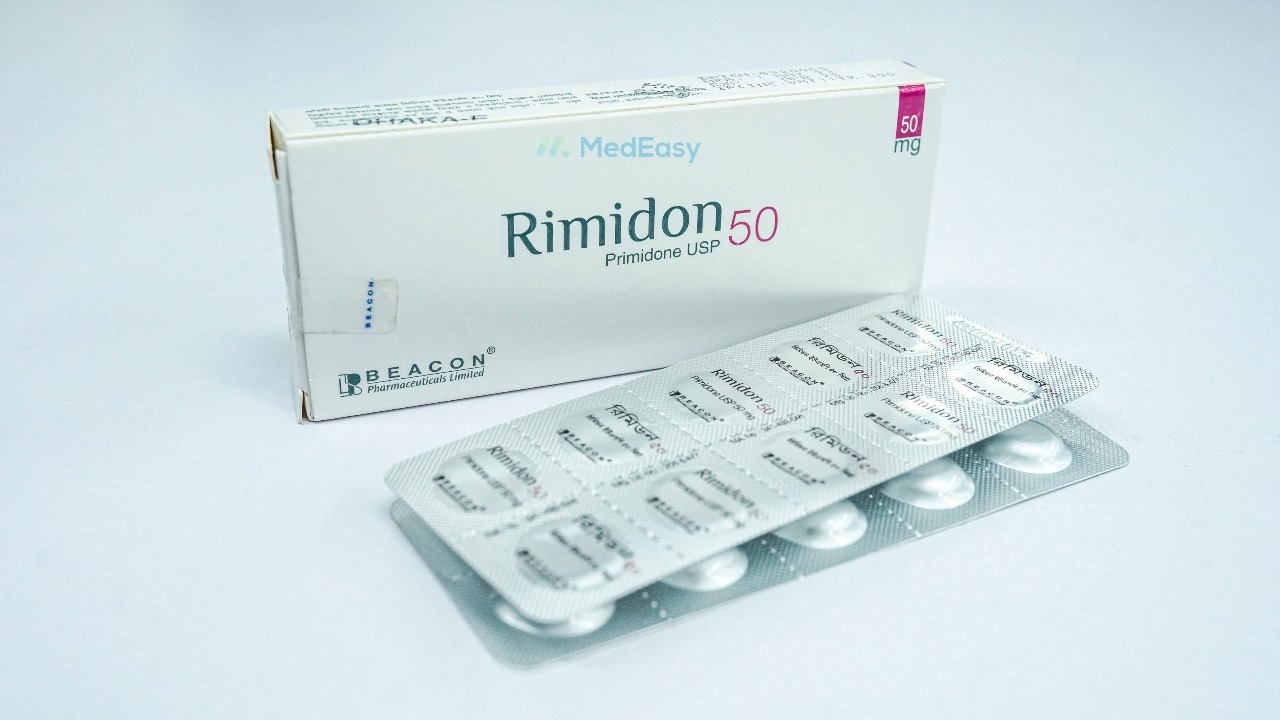
Rimidon50 mg
Beacon Pharmaceuticals PLC
৳92.00
Add to cart
Primidon is an antiepileptic (anticonvulsant) medicine used to control certain types of seizures.
Primidon is an antiepileptic (anticonvulsant) medicine used to control certain types of seizures. Its indications can be classified by strength of evidence as follows:
Primidon may be useful in grand mal seizures that have not responded adequately to other anticonvulsant therapy, generally as an add-on (combination) agent in such cases.
The decision to use Primidon for any indication, and the specific regimen, should be individualized by a qualified physician based on seizure type, response, and tolerability.
Dosage of Primidon must be individualized by the treating physician based on indication, age, and response. Treatment is typically started at a low dose and gradually increased ("titrated") to reduce sedation. The tables below summarize typical regimens; see also Dosage for a brief summary and Administration for how to take it.
| Day(s) | Dose |
|---|---|
| Days 1-3 | 100-125 mg once daily, at bedtime |
| Days 4-6 | 100-125 mg twice daily |
| Days 7-9 | 100-125 mg three times daily |
| Day 10 onward (maintenance) | 250 mg three times daily (250 mg three to four times daily as needed); usual maximum 500 mg four times daily |
| Day(s) | Dose |
|---|---|
| Days 1-3 | 50 mg once daily, at bedtime |
| Days 4-6 | 50 mg twice daily |
| Days 7-9 | 100 mg twice daily |
| Maintenance | 125-250 mg three times daily, or approximately 10-25 mg/kg/day in divided doses |
When Primidon is added to or substituted for another anticonvulsant, it is usually started at 100-125 mg at bedtime and increased gradually over about two weeks while the other drug is slowly withdrawn, under close physician supervision.
Lower doses are generally used, started very low (e.g. 25-50 mg at bedtime) and titrated slowly upward based on response and tolerability, as directed by the physician.
Primidon and its active metabolites are eliminated substantially by the kidneys; dose reduction and/or longer dosing intervals are generally required in significant renal impairment. In hepatic impairment, use with caution and closer monitoring, as metabolism to active metabolites may be affected. Specific adjustment should be individualized by the physician.
The most common side effects of Primidon, especially at the start of treatment or after a dose increase, are:
Less common but serious effects include blood cell abnormalities (e.g. low white cell counts, megaloblastic anemia), and mood/behavioral changes including suicidal thoughts (see Precautions and Warnings). Any severe rash, unusual bleeding/bruising, or thoughts of self-harm should prompt immediate medical attention.
Primidon is contraindicated in:
Disclaimer
The information provided is accurate to the best of our knowledge, but it does not replace professional medical advice. We cannot guarantee its completeness or accuracy, and the absence of specific information about a drug should not be taken as an endorsement. We are not responsible for any consequences arising from this information, so please consult a healthcare professional for any concerns or questions.