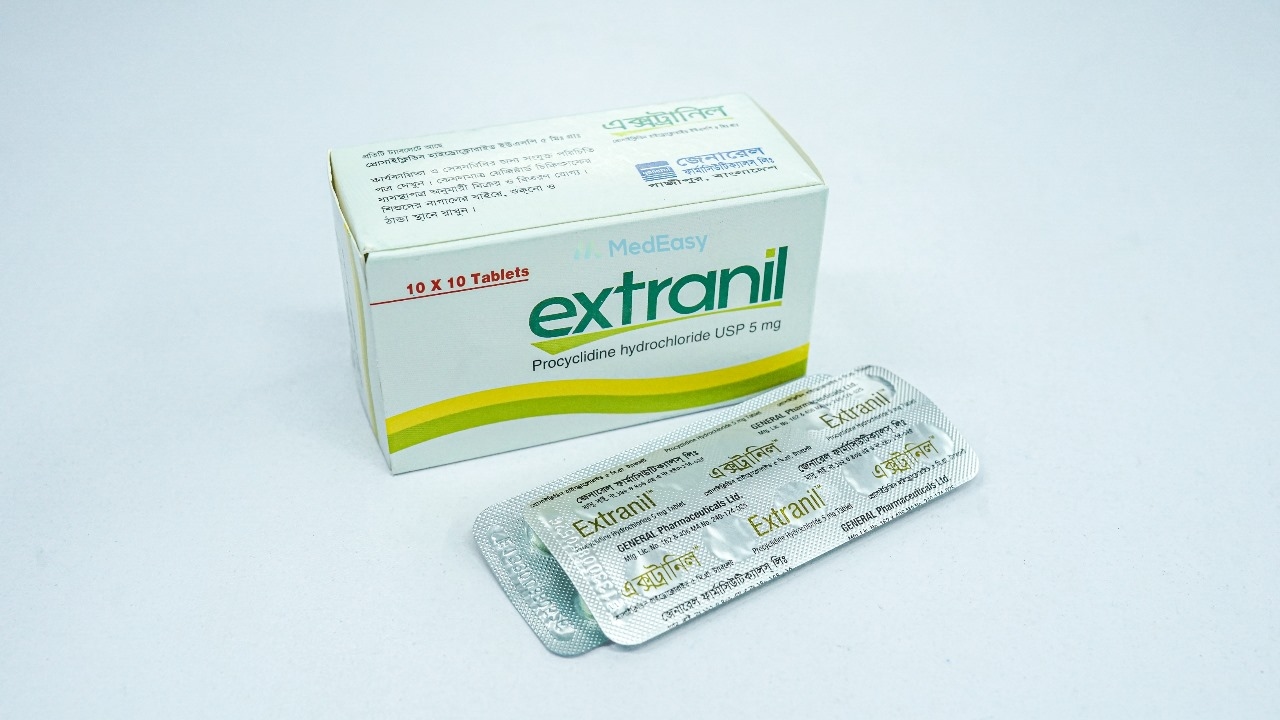
Generic medicine

Procyclidine Hydrochloride: Brands, Price & Uses in Bangladesh

Procyclidine Hydrochloride is an anticholinergic (antimuscarinic) agent used for the following established indications: Parkinson's disease (adjunctive treatment): Procyclidine Hydrochloride is used…

Forms:TabletIM/IV Injection

About Procyclidine Hydrochloride

Indications of Procyclidine Hydrochloride

Procyclidine Hydrochloride is an anticholinergic (antimuscarinic) agent used for the following established indications:

  • Parkinson's disease (adjunctive treatment): Procyclidine Hydrochloride is used as an adjunct in the treatment of all forms of parkinsonism, including idiopathic (primary), postencephalitic, and arteriosclerotic parkinsonism. It is generally used together with other antiparkinsonian agents rather than as sole therapy for moderate-to-severe disease.
  • Drug-induced extrapyramidal symptoms (established use): Procyclidine Hydrochloride is indicated for the control of extrapyramidal symptoms (parkinsonism-like reactions, akathisia, and acute dystonic reactions) caused by antipsychotic (neuroleptic) medications such as phenothiazines and other first-generation antipsychotics.

Procyclidine Hydrochloride works by reducing the relative excess of cholinergic activity that occurs in these conditions, thereby improving tremor, rigidity, and muscle spasm.

Dosage & Administration of Procyclidine Hydrochloride

Parkinsonism (adjunctive treatment)

PopulationDose
Adults - initial dose2.5 mg orally three times daily (after meals)
Adults - titrationMay be increased gradually to 2.5 mg to 5 mg three or four times daily as tolerated
Usual maintenance dose15-30 mg per day in divided doses; some patients with postencephalitic parkinsonism may require higher doses under close medical supervision
ElderlyStart at the lower end of the dose range; increase cautiously due to greater sensitivity to anticholinergic effects

Drug-induced extrapyramidal symptoms

PopulationDose
Adults - initial dose2.5 mg orally three times daily
Usual effective range10-20 mg per day in divided doses, adjusted according to response and tolerability

Administration: Procyclidine Hydrochloride tablets are usually taken orally after meals to reduce gastrointestinal irritation. Dose should always be individualized by the prescribing physician based on response and tolerability. Do not increase or decrease the dose without medical advice. Long-term therapy should not be stopped abruptly (see Precautions and Warnings).

Side Effects of Procyclidine Hydrochloride

Side effects of Procyclidine Hydrochloride are mostly related to its anticholinergic activity:

  • Common: dry mouth, blurred vision, dizziness, mild nausea, constipation, and urinary hesitancy.
  • Less common: nervousness, drowsiness, weakness, tachycardia (fast heartbeat), and skin rash.
  • Important/serious effects (especially in elderly patients): confusion, disorientation, agitation, memory impairment, and hallucinations. Elderly patients are particularly sensitive to these central anticholinergic effects (see Use in Special Populations).
  • Euphoria and abuse potential: Procyclidine Hydrochloride and related anticholinergic antiparkinsonian agents have a recognized potential for misuse due to euphoric effects at higher-than-prescribed doses; physicians should monitor for signs of misuse, especially in patients with a history of substance use disorder.

Patients should seek medical advice if side effects are severe or persistent.

Contraindications of Procyclidine Hydrochloride

Procyclidine Hydrochloride is contraindicated in patients with:

  • Known hypersensitivity to Procyclidine Hydrochloride or any component of the formulation.
  • Narrow-angle (angle-closure) glaucoma.
  • Untreated urinary retention.
  • Severe gastrointestinal obstructive disease, including pyloroduodenal obstruction, paralytic ileus, or megacolon.
  • Myasthenia gravis.

Frequently Asked Questions about Procyclidine Hydrochloride

What is Procyclidine Hydrochloride used for?

Procyclidine Hydrochloride is used to treat stiffness, tremor, and muscle spasm caused by Parkinson's disease, and to control extrapyramidal side effects (such as muscle stiffness, restlessness, or spasms) caused by certain antipsychotic medications.

How should I take Procyclidine Hydrochloride?

Procyclidine Hydrochloride is usually taken by mouth, after meals, exactly as prescribed by your physician. Do not change your dose or stop taking it without medical advice, as suddenly stopping long-term therapy can cause your symptoms to return or worsen.

What are the common side effects of Procyclidine Hydrochloride?

Common side effects include dry mouth, blurred vision, constipation, dizziness, and difficulty urinating. These are related to the anticholinergic action of Procyclidine Hydrochloride and often lessen as your body adjusts, but you should tell your doctor if they are severe or bothersome.

Can elderly patients take Procyclidine Hydrochloride safely?

Procyclidine Hydrochloride should be used with extra caution in elderly patients, as they are more prone to side effects such as confusion, memory problems, hallucinations, and falls. Doctors typically start with a lower dose in older adults.

Is Procyclidine Hydrochloride safe during pregnancy or breastfeeding?

Procyclidine Hydrochloride should be used during pregnancy or breastfeeding only if clearly needed and if your doctor decides the benefits outweigh the potential risks. Always consult your physician before using Procyclidine Hydrochloride if you are pregnant, planning pregnancy, or breastfeeding.

What should I do if I miss a dose or take too much Procyclidine Hydrochloride?

If you miss a dose, take it as soon as you remember unless it is almost time for the next dose. If you suspect an overdose of Procyclidine Hydrochloride (symptoms may include severe dry mouth, rapid heartbeat, confusion, hot flushed skin, or hallucinations), seek immediate medical attention or contact emergency services/poison control right away.

Disclaimer

The information provided is accurate to the best of our knowledge, but it does not replace professional medical advice. We cannot guarantee its completeness or accuracy, and the absence of specific information about a drug should not be taken as an endorsement. We are not responsible for any consequences arising from this information, so please consult a healthcare professional for any concerns or questions.

DoctorBlogArticles