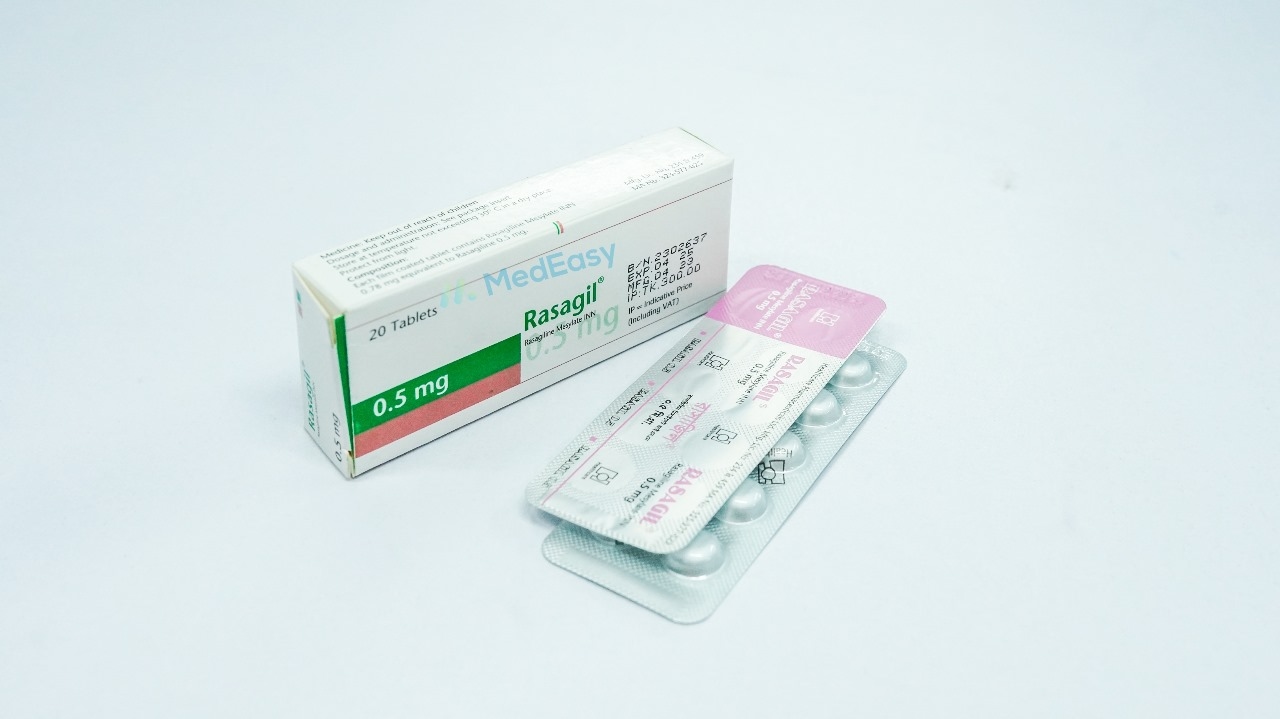
Generic medicine

Rasagiline: Brands, Price & Uses in Bangladesh

Rasagiline is a selective irreversible inhibitor of monoamine oxidase type B (MAO-B), approved for the treatment of idiopathic Parkinson's disease (PD).

Forms:Tablet

About Rasagiline

Indications of Rasagiline

Rasagiline is a selective irreversible inhibitor of monoamine oxidase type B (MAO-B), approved for the treatment of idiopathic Parkinson's disease (PD).

Established/FDA-Approved Uses

  • Monotherapy in early idiopathic Parkinson's disease, to improve motor symptoms without the need for other antiparkinsonian agents.
  • Adjunct therapy with levodopa (with or without other antiparkinsonian drugs) in patients with more advanced Parkinson's disease, including those experiencing "wearing-off" motor fluctuations.

Not Established / Off-Label

Rasagiline has been studied for possible disease-modifying (neuroprotective) effects in Parkinson's disease, but this benefit has not been definitively established, and it is not an approved indication.

Dosage & Administration of Rasagiline

IndicationDose
Monotherapy (early Parkinson's disease)1 mg orally once daily
Adjunct to levodopa (advanced Parkinson's disease)Initiate at 0.5 mg once daily; may increase to 1 mg once daily based on response and tolerability

Rasagiline may be taken with or without food, at approximately the same time each day. A reduction in the levodopa dose may be considered in patients receiving combination therapy who develop dopaminergic side effects (e.g., dyskinesia).

Dose Adjustment

  • Hepatic impairment: In mild hepatic impairment, the dose should not exceed 0.5 mg once daily. Use in moderate to severe hepatic impairment is not recommended (see Contraindications/Precautions).
  • Renal impairment: No dose adjustment is generally required, though clinical experience is limited.
  • CYP1A2 inhibitors (e.g., ciprofloxacin): Concomitant use requires a reduced Rasagiline dose (maximum 0.5 mg daily); see Interactions.

Side Effects of Rasagiline

Common Side Effects

  • Headache
  • Arthralgia (joint pain)
  • Dyspepsia
  • Flu-like symptoms
  • Dizziness
  • Depression

Dopaminergic/Monotherapy-Related Effects

  • Orthostatic (postural) hypotension
  • Dyskinesia and worsening of Parkinson's symptoms (with adjunct use)
  • Nausea and vomiting
  • Weight loss

Less Common but Important

  • Impulse control disorders (e.g., pathological gambling, hypersexuality, compulsive shopping or eating) associated with dopaminergic therapy
  • Sudden onset of sleep during daily activities, including driving
  • Hallucinations and psychotic-like behavior
  • Melanoma (patients with Parkinson's disease have a higher background risk; periodic skin monitoring is advised)

Patients should promptly report any unusual behavioral changes, fainting spells, or skin lesions to their physician.

Contraindications of Rasagiline

Rasagiline is contraindicated in:

  • Patients with known hypersensitivity to Rasagiline or any component of the formulation.
  • Patients receiving concomitant treatment with other monoamine oxidase inhibitors (MAOIs) (including linezolid and intravenous methylene blue) or other MAO-B inhibitors, due to risk of hypertensive crisis.
  • Patients receiving meperidine (pethidine), tramadol, methadone, or propoxyphene, due to risk of serious, potentially fatal reactions including serotonin syndrome.
  • Patients receiving St. John's Wort or cyclobenzaprine.
  • Patients with moderate to severe hepatic impairment, due to significantly increased drug exposure and risk of toxicity.

An adequate washout period (at least 14 days) is required between stopping Rasagiline and starting any of these contraindicated agents, and vice versa (5 weeks for fluoxetine).

Frequently Asked Questions about Rasagiline

What is Rasagiline used for?

Rasagiline is used to treat Parkinson's disease, either alone in early stages or together with levodopa in more advanced stages, to help control symptoms such as tremor, stiffness, and slowness of movement.

Can I take Rasagiline with antidepressants?

Combining Rasagiline with antidepressants such as SSRIs, SNRIs, or tricyclics is generally not recommended because it can increase the risk of a serious condition called serotonin syndrome. Always inform your doctor about all medications you take before starting Rasagiline.

Do I need to avoid certain foods while taking Rasagiline?

At the recommended doses, strict dietary tyramine restriction is usually not required, but it is still wise to avoid excessive amounts of aged cheeses, cured meats, and fermented foods, as very high tyramine intake could rarely trigger a dangerous rise in blood pressure.

What should I do if I miss a dose of Rasagiline?

If you miss a dose, take it as soon as you remember unless it is almost time for your next dose, in which case skip the missed dose. Do not take a double dose to make up for a missed one, and contact your doctor if you are unsure.

Is Rasagiline safe during pregnancy?

There is not enough human safety data on Rasagiline use during pregnancy, and animal studies have shown some risk to the developing fetus. It should only be used in pregnancy if your doctor decides the benefit clearly outweighs the potential risk, so always consult your physician.

Can Rasagiline cause sudden sleepiness or behavioral changes?

Yes, some patients taking Rasagiline have experienced sudden episodes of falling asleep during daily activities, including driving, as well as new or worsening impulsive behaviors like gambling or compulsive shopping. Report any such changes to your doctor promptly and use caution with driving or operating machinery until you know how the medicine affects you.

Disclaimer

The information provided is accurate to the best of our knowledge, but it does not replace professional medical advice. We cannot guarantee its completeness or accuracy, and the absence of specific information about a drug should not be taken as an endorsement. We are not responsible for any consequences arising from this information, so please consult a healthcare professional for any concerns or questions.

DoctorBlogArticles