8% Off
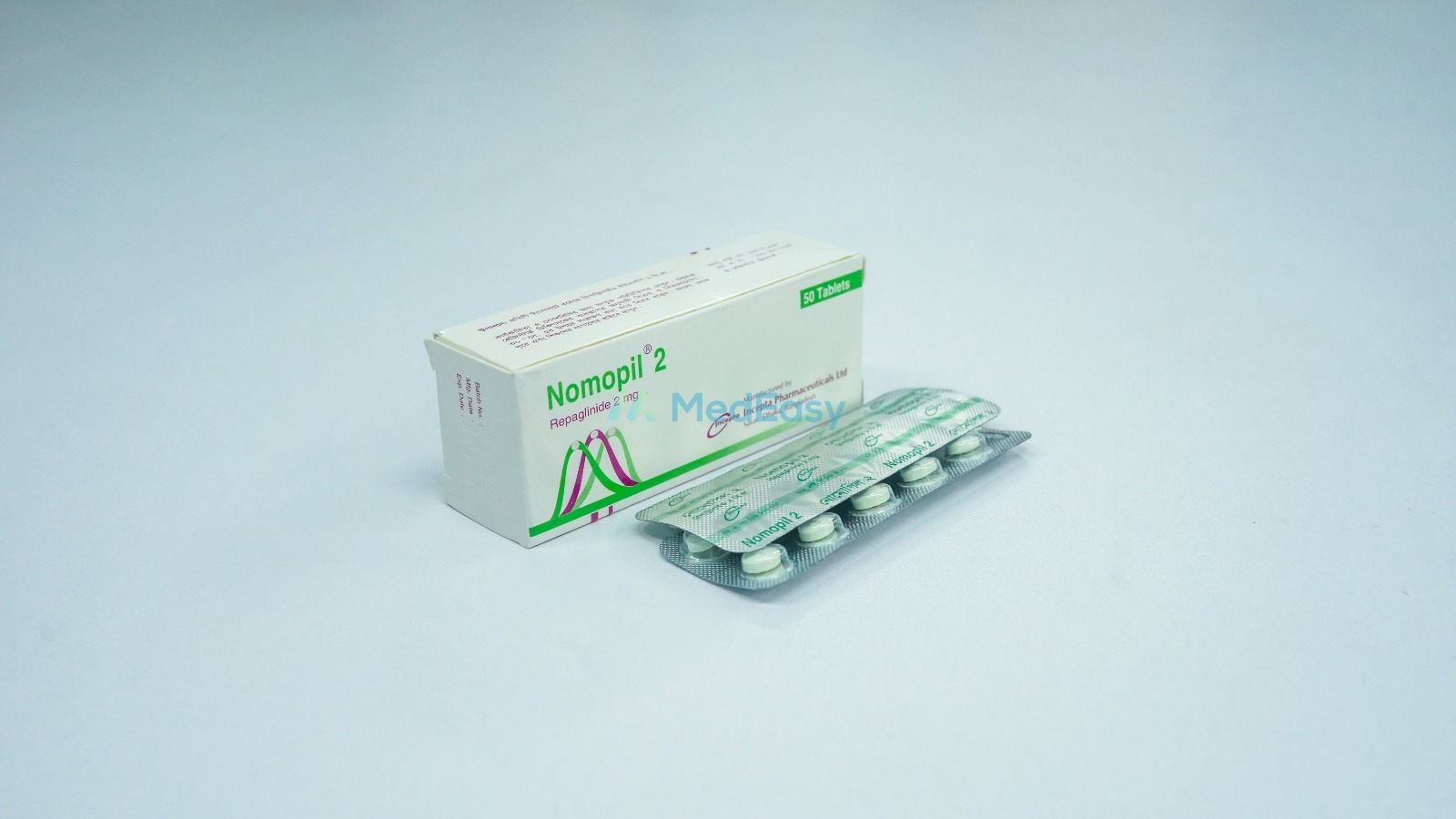
Nomopil2 mg
Incepta Pharmaceuticals Ltd.
৳46.00
Add to cart
Repaglinide is indicated as an adjunct to diet and exercise to improve glycemic control in adults with type 2 diabetes mellitus.
Repaglinide is indicated as an adjunct to diet and exercise to improve glycemic control in adults with type 2 diabetes mellitus.
Repaglinide is not indicated for type 1 diabetes mellitus or for the treatment of diabetic ketoacidosis.
Repaglinide should be taken shortly before meals (typically within 15–30 minutes of eating), 2, 3, or 4 times daily depending on the number of meals eaten.
| Indication | Dosing |
|---|---|
| Initial dose (patients not previously treated, or HbA1c < 8%) | 0.5 mg with each meal |
| Initial dose (patients previously treated with another glucose-lowering agent, or HbA1c ≥ 8%) | 1 mg or 2 mg with each meal |
| Dose titration | Double the pre-meal dose (up to 4 mg per meal) at intervals of at least one week, based on blood glucose response |
| Maximum dose | 4 mg per meal; total daily dose should not exceed 16 mg |
| Combination with metformin or a thiazolidinedione | Use the same dosing/titration schedule as monotherapy, added to the existing agent |
Repaglinide must be taken shortly before a meal. If a meal is skipped, the corresponding dose of Repaglinide should also be skipped to reduce the risk of hypoglycemia; if an extra meal is eaten, an extra dose should be taken before that meal. This "one meal, one dose; no meal, no dose" rule is a defining feature of Repaglinide dosing, distinguishing it from once-daily oral antidiabetics.
Use with caution and extend dosing intervals during dose titration in patients with hepatic impairment, as clearance of Repaglinide is reduced. Repaglinide is contraindicated in severe hepatic impairment (see Contraindications).
No initial dose adjustment is required for mild-to-moderate renal impairment, but titration should proceed cautiously. In patients with renal impairment or on dialysis, an initial dose of 0.5 mg with meals is recommended, with careful titration and monitoring due to increased hypoglycemia risk.
Use the same dosing principles with cautious, conservative titration, given increased sensitivity to hypoglycemia in older adults.
Disclaimer
The information provided is accurate to the best of our knowledge, but it does not replace professional medical advice. We cannot guarantee its completeness or accuracy, and the absence of specific information about a drug should not be taken as an endorsement. We are not responsible for any consequences arising from this information, so please consult a healthcare professional for any concerns or questions.