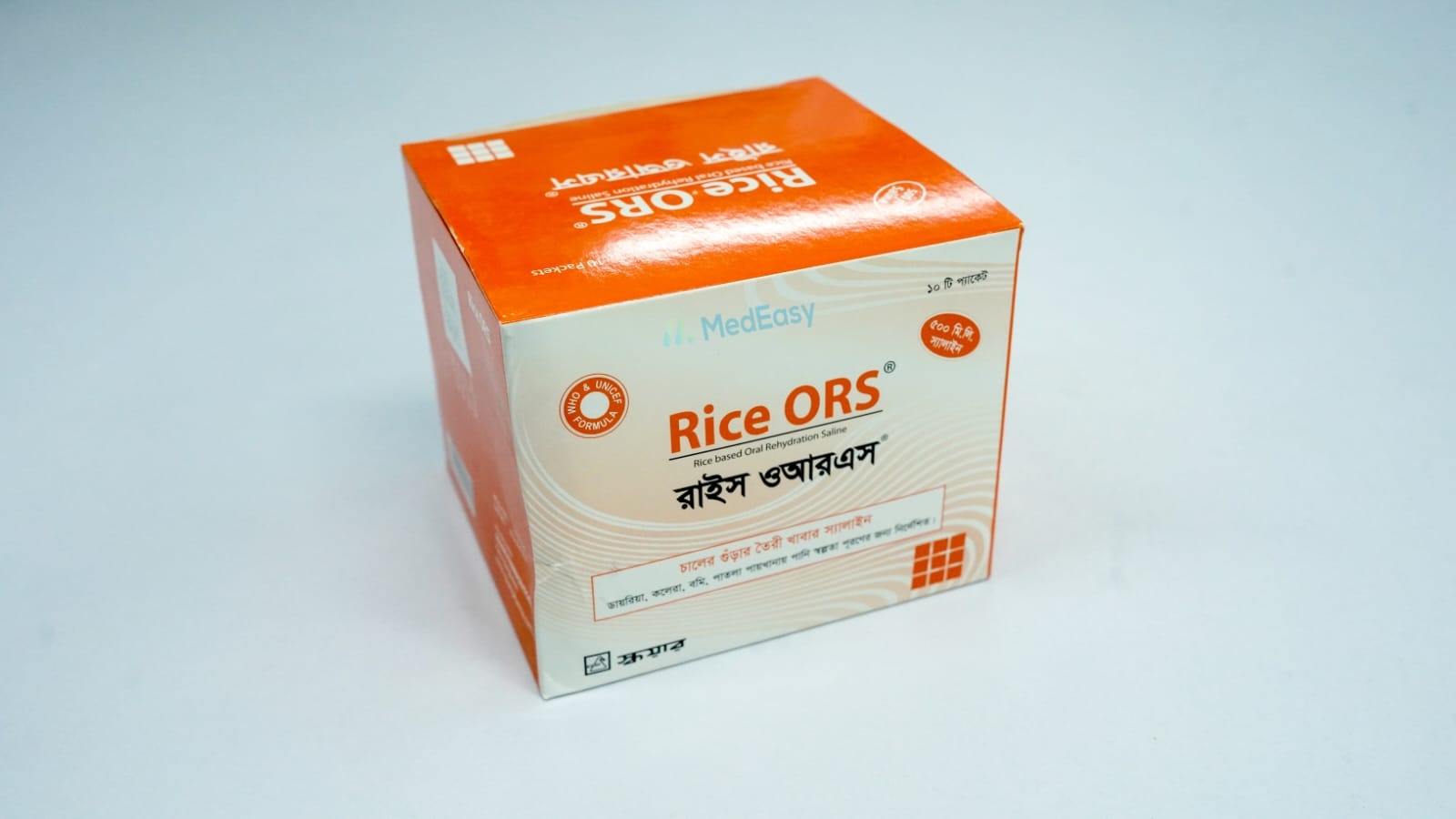
Generic medicine

Rice Based Oral Rehydration Saline: Brands, Price & Uses in Bangladesh

Established Uses Rice Based Oral Rehydration Saline is indicated for the prevention and treatment of dehydration and associated electrolyte losses caused by diarrhea of any cause (including acute…

Forms:Saline

About Rice Based Oral Rehydration Saline

Indications of Rice Based Oral Rehydration Saline

Established Uses

Rice Based Oral Rehydration Saline is indicated for the prevention and treatment of dehydration and associated electrolyte losses caused by diarrhea of any cause (including acute gastroenteritis and cholera) in infants, children, and adults. It is used as first-line oral fluid and electrolyte replacement therapy in mild to moderate dehydration.

Guideline-Supported Use

Rice Based Oral Rehydration Saline is recommended by WHO/UNICEF diarrheal disease management protocols as part of Plan A (home management to prevent dehydration) and Plan B (treatment of some dehydration), used together with continued feeding and zinc supplementation in children.

Adjunct Use

In cholera and other severe secretory diarrheas, Rice Based Oral Rehydration Saline is used as an adjunct alongside appropriate antimicrobial therapy (when indicated) and, in cases of severe dehydration, following initial intravenous fluid resuscitation, to complete rehydration and replace ongoing stool losses.

Rice Based Oral Rehydration Saline does not treat the underlying cause of diarrhea (e.g., infection); it corrects and prevents fluid and electrolyte depletion resulting from it.

Dosage & Administration of Rice Based Oral Rehydration Saline

General Principles

Rice Based Oral Rehydration Saline powder must be reconstituted with the exact volume of clean, safe drinking water specified on the sachet/pack before use — never with milk, soup, or other fluids, and never with less or more water than instructed. Give the solution orally, in frequent small sips or by spoon (or, for infants, a clean cup and spoon); avoid feeding bottles.

SituationApproximate Dosing
No visible dehydration (prevention, Plan A)Children <2 years: 50–100 mL after each loose stool; children 2–10 years: 100–200 mL after each loose stool; ≥10 years and adults: as much as wanted, at least 200-300 mL after each loose stool.
Some dehydration (Plan B)Approximately 75 mL/kg body weight given over the first 4 hours, reassessing hydration status regularly; continue with Plan A quantities once rehydrated.
Ongoing lossesReplace each further episode of vomiting or loose stool with an additional dose of Rice Based Oral Rehydration Saline as above.

For severe dehydration, intravenous fluids are required first (see Contraindications); Rice Based Oral Rehydration Saline is then used to complete rehydration and maintain hydration once the patient can tolerate oral intake.

Continue offering usual food/breastfeeding/age-appropriate feeds alongside Rice Based Oral Rehydration Saline; do not withhold food.

Side Effects of Rice Based Oral Rehydration Saline

Rice Based Oral Rehydration Saline is generally very well tolerated when reconstituted and administered correctly. Reported effects are uncommon and usually related to incorrect preparation or administration rate:

  • Vomiting, if the solution is given too quickly, especially in a dehydrated or nauseated patient.
  • Abdominal distension or bloating.
  • Hypernatremia or hyponatremia, and other electrolyte disturbances, if the solution is prepared with too little or too much water, respectively, or given in excessive amounts to a patient with impaired renal function (see Overdose Effects and Precautions).

Contraindications of Rice Based Oral Rehydration Saline

Rice Based Oral Rehydration Saline is contraindicated in:

  • Severe dehydration or hypovolemic shock, where urgent intravenous fluid resuscitation is required rather than oral rehydration alone.
  • Persistent vomiting that prevents any oral intake from being retained.
  • Paralytic ileus or intestinal obstruction.
  • Anuria or complete inability to pass urine.

In these situations, Rice Based Oral Rehydration Saline must not be used as a substitute for the required intravenous or other emergency treatment; it can be resumed once the underlying emergency is controlled and the patient is able to tolerate oral fluids.

Frequently Asked Questions about Rice Based Oral Rehydration Saline

What is Rice Based Oral Rehydration Saline used for?

Rice Based Oral Rehydration Saline is used to prevent and treat dehydration and replace lost electrolytes caused by diarrhea (including cholera and acute gastroenteritis) and vomiting, in both children and adults. It is a rice-carbohydrate-based oral rehydration solution rather than a medicine to cure the infection itself.

How do I prepare Rice Based Oral Rehydration Saline correctly?

Dissolve the entire contents of one sachet of Rice Based Oral Rehydration Saline in the exact volume of clean, safe drinking water stated on the pack (commonly 200 mL, 500 mL, or 1 litre). Do not use less or more water than instructed, and do not add sugar, salt, milk, or juice. Use the solution within 24 hours and discard any leftover after that.

Can Rice Based Oral Rehydration Saline be given to infants and young children?

Yes, Rice Based Oral Rehydration Saline is appropriate and recommended for infants (including newborns) and young children with diarrhea, given in small frequent amounts by clean cup and spoon. However, if an infant shows signs of severe dehydration (lethargy, sunken eyes, very little urine, unable to keep fluids down), seek immediate medical attention, as intravenous fluids may be needed.

Is Rice Based Oral Rehydration Saline safe during pregnancy and breastfeeding?

Rice Based Oral Rehydration Saline is generally considered safe during pregnancy and breastfeeding, as oral rehydration is standard management for dehydration in these situations. A pregnant or breastfeeding woman with diarrhea or vomiting should still consult a physician, especially if symptoms are severe or persistent.

What happens if Rice Based Oral Rehydration Saline is prepared too concentrated or given in excess?

Giving Rice Based Oral Rehydration Saline that is prepared with too little water, or in excessive volumes (especially in infants or people with kidney problems), can cause electrolyte imbalances such as hypernatremia or hyperkalemia, which may cause irritability, weakness, or in serious cases seizures. If this is suspected, stop giving the solution and seek immediate medical attention or contact a poison control center.

When should I stop using Rice Based Oral Rehydration Saline and see a doctor instead?

Stop relying on Rice Based Oral Rehydration Saline alone and seek urgent medical care if there is severe dehydration (lethargy, sunken eyes, minimal urine output, inability to keep fluids down), persistent vomiting preventing oral intake, blood in the stool, high fever, signs of shock, or diarrhea lasting more than a few days, since these situations may need intravenous fluids or other treatment beyond oral rehydration.

Disclaimer

The information provided is accurate to the best of our knowledge, but it does not replace professional medical advice. We cannot guarantee its completeness or accuracy, and the absence of specific information about a drug should not be taken as an endorsement. We are not responsible for any consequences arising from this information, so please consult a healthcare professional for any concerns or questions.

DoctorBlogArticles