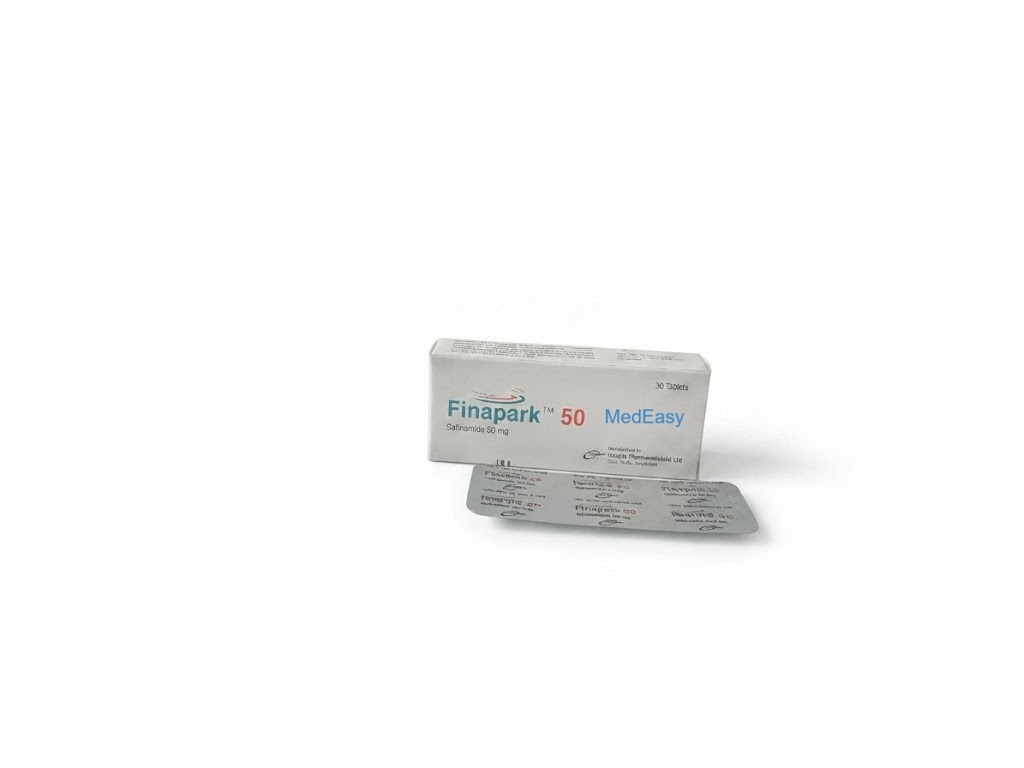
Generic medicine

Safinamide Mesylate: Brands, Price & Uses in Bangladesh

Safinamide Mesylate is indicated as an adjunctive (add-on) treatment to levodopa/carbidopain adult patients with Parkinson's disease who are experiencing "off" episodes (periods when levodopa's…

Forms:Tablet

About Safinamide Mesylate

Indications of Safinamide Mesylate

Safinamide Mesylate is indicated as an adjunctive (add-on) treatment to levodopa/carbidopain adult patients with Parkinson's disease who are experiencing "off" episodes (periods when levodopa's effectwears off and Parkinsonian symptoms return).

  • FDA-approved use: Add-on therapy to levodopa/carbidopa for Parkinson's disease patients with motor fluctuations ("off" time), used to help reduce the amount of daily "off" time and increase "on" time without troublesome dyskinesia.
  • Requires combination therapy: Safinamide Mesylate is not used as a standalone (monotherapy) treatment for Parkinson's disease; it must be given together with levodopa/carbidopa.

Safinamide Mesylate is not approved and should not be used for other neurological or psychiatric conditions unless specifically directed by a physician.

Dosage & Administration of Safinamide Mesylate

Adult Dose (Parkinson's disease, adjunct to levodopa/carbidopa)

StepDoseNotes
Starting dose50 mg orally once dailyGiven in addition to the patient's existing levodopa/carbidopa regimen
Maintenance doseMay be increased to 100 mg orally once dailyAfter at least 2 weeks, based on individual tolerability and response

Administration

  • Take Safinamide Mesylate by mouth once daily, at approximately the same time each day, with or without food.
  • Swallow the tablet whole; do not crush or chew unless advised otherwise by a physician.
  • If a dose is missed, take it as soon as remembered unless it is almost time for the next dose; do not double the dose.
  • Do not stop Safinamide Mesylate abruptly without consulting a physician, as sudden discontinuation may cause withdrawal-type symptoms (see Precautions).

Dose Adjustment in Hepatic Impairment

  • Mild hepatic impairment: No dose adjustment generally required.
  • Moderate hepatic impairment: Maximum recommended dose is 50 mg once daily.
  • Severe hepatic impairment: Safinamide Mesylate is contraindicated (see Contraindications).

Dose Adjustment in Renal Impairment

No dose adjustment is generally required in mild-to-moderate renal impairment. Safinamide Mesylate has not been well studiedin severe renal impairment; use with caution and under close physician supervision if prescribed in this setting.

Side Effects of Safinamide Mesylate

Most side effects of Safinamide Mesylate are mild to moderate. Common and serious effects include:

Common

  • Dyskinesia (involuntary movements, often an exacerbation of existing levodopa-induced dyskinesia)
  • Falls
  • Nausea
  • Insomnia
  • Headache

Serious (seek prompt medical attention)

  • Hypertensive crisis (severe headache, chest pain, visual disturbance, confusion)
  • Serotonin syndrome (agitation, hallucinations, rapid heart rate, fever, muscle rigidity/twitching, loss of coordination)
  • Sudden onset of sleep during daily activities, including driving
  • New or worsening hallucinations or psychotic-like behavior
  • New or worsening compulsive/impulse-control behaviors (e.g., gambling, hypersexuality, compulsive eating or shopping)

Patients should report any new or worsening symptoms to their physician promptly.

Contraindications of Safinamide Mesylate

Safinamide Mesylate is contraindicated in the following situations:

  • Known hypersensitivity to Safinamide Mesylate or any component of the formulation.
  • Concomitant use with other monoamine oxidase (MAO) inhibitors, including selegiline, rasagiline, linezolid,and intravenous methylene blue (risk of hypertensive crisis/serotonin syndrome).
  • Concomitant use with certain opioid drugs, specifically methadone, meperidine/pethidine and related opioids,and tramadol (risk of serious, potentially fatal serotonin syndrome).
  • Concomitant use with other agents specifically contraindicated per labeling due to serotonergic risk, such ascyclobenzaprine, dextromethorphan, and St. John's Wort.
  • Severe hepatic impairment (Child-Pugh Class C).

Frequently Asked Questions about Safinamide Mesylate

What is Safinamide Mesylate used for?

Safinamide Mesylate is used as an add-on (adjunctive) medicine together with levodopa/carbidopa to treat adults with Parkinson's disease who experience "off" episodes, when the effect of levodopa wears off between doses.

Can Safinamide Mesylate be used alone, without levodopa?

No. Safinamide Mesylate is only approved as an adjunct to levodopa/carbidopa therapy; it has not been studied and is not indicated as a standalone treatment for Parkinson's disease.

What medicines should never be combined with Safinamide Mesylate?

Safinamide Mesylate must not be taken with other MAO inhibitors, or with certain opioid medicines such as methadone, meperidine/pethidine, or tramadol, because combining these can cause a dangerous reaction including hypertensive crisis or serotonin syndrome. Always tell your physician about every medicine, supplement, and herbal product you take before starting Safinamide Mesylate.

Is Safinamide Mesylate safe during pregnancy?

Data are limited, and animal studies suggest possible fetal harm. Safinamide Mesylate should be used in pregnancy only if clearly needed and if the potential benefit to the mother justifies the potential risk to the baby; this decision should always be made with a physician.

What should I do if I miss a dose or want to stop taking Safinamide Mesylate?

If you miss a dose, take it as soon as you remember unless it is almost time for the next dose - do not double up. Do not stop Safinamide Mesylate suddenly on your own, as abrupt discontinuation can cause fever, confusion, or worsening of Parkinson's symptoms; any change in treatment should be guided by your physician, usually with a gradual dose reduction.

What are the most important side effects to watch for with Safinamide Mesylate?

Watch for signs of high blood pressure or hypertensive crisis (severe headache, chest pain), serotonin syndrome (agitation, fever, rapid heartbeat, muscle rigidity), sudden sleepiness during daily activities, new hallucinations or confusion, and new compulsive behaviors such as gambling or overeating. Report any of these to your physician promptly.

Disclaimer

The information provided is accurate to the best of our knowledge, but it does not replace professional medical advice. We cannot guarantee its completeness or accuracy, and the absence of specific information about a drug should not be taken as an endorsement. We are not responsible for any consequences arising from this information, so please consult a healthcare professional for any concerns or questions.

DoctorBlogArticles