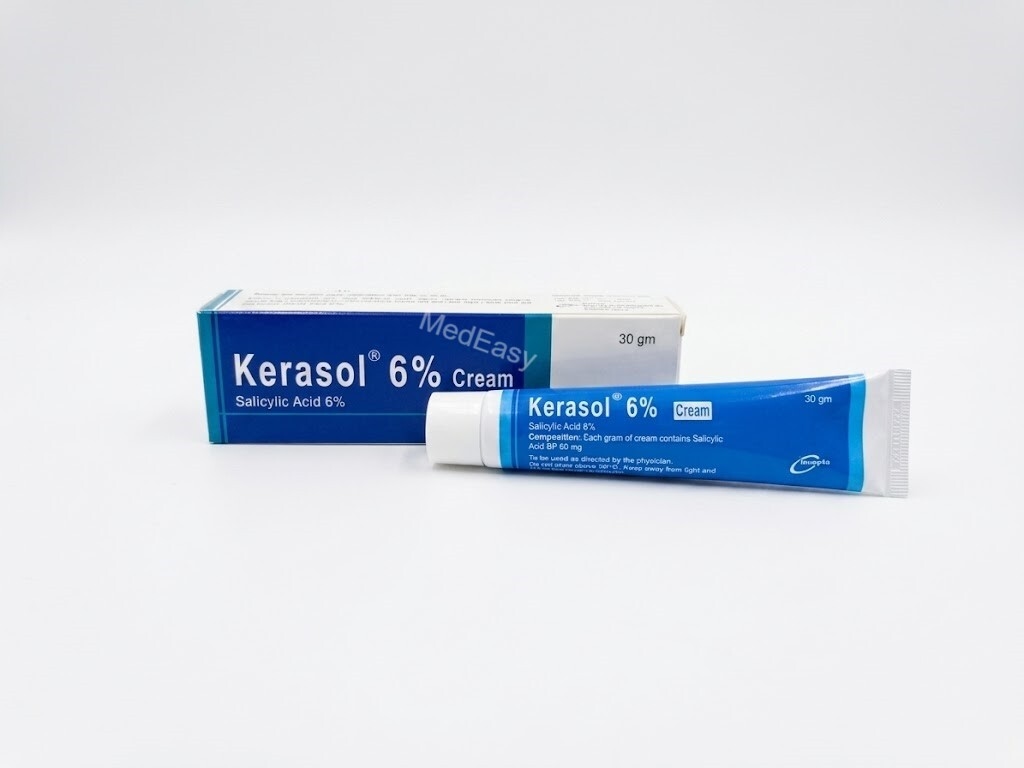
Generic medicine

Salicylic Acid: Brands, Price & Uses in Bangladesh

Salicylic Acid is a topical keratolytic (skin-peeling) agent used for a range of hyperkeratotic and scaling skin conditions.

Forms:CreamLotion

About Salicylic Acid

Indications of Salicylic Acid

Salicylic Acid is a topical keratolytic (skin-peeling) agent used for a range of hyperkeratotic and scaling skin conditions. Its evidence and approved uses vary by concentration and formulation (gel, lotion, shampoo, plaster/pad, cream).

Established/FDA-recognized (OTC) uses

  • Acne vulgaris - low concentrations (0.5%-2%) as a topical acne treatment to unclog pores and reduce comedones.
  • Common, plantar, and flat warts - higher concentrations (up to 17-40%) as an over-the-counter wart remover.
  • Dandruff and seborrheic dermatitis of the scalp - medicated shampoos to reduce scaling.
  • Corns and calluses - higher-strength plasters/pads to soften and remove thickened skin.

Guideline-supported/adjunct uses

  • Psoriasis (scalp and body plaques) - used as a keratolytic adjunct to remove scale and improve penetration of other topical agents (e.g., corticosteroids, vitamin D analogues); not a treatment for the underlying disease itself.
  • Ichthyosis and other hyperkeratotic skin disorders - as an adjunctive keratolytic under medical supervision.

Off-label/other use

  • Chemical peels for photoaging and hyperpigmentation (higher-concentration professional/in-office formulations, typically 20-30%), performed under professional supervision.

Dosage & Administration of Salicylic Acid

IndicationTypical StrengthDirections
Acne0.5%-2% gel/lotion/cleanserApply a thin layer to affected area(s) 1-2 times daily after cleansing; allow skin to fully dry before application.
Warts (common/plantar)17%-40% liquid, gel, or plasterSoak the wart in warm water for 5 minutes, apply directly to the wart only (avoid surrounding skin), and cover as directed; repeat daily for up to 12 weeks. Higher-strength plasters are typically changed every 48 hours.
Dandruff/seborrheic dermatitis2%-3% shampooMassage into wet scalp, leave for several minutes, then rinse; use 2-3 times weekly or as directed.
Psoriasis scale/corns & calluses3%-6% (psoriasis); 40% plaster (corns/calluses)Apply as directed by a physician, typically at night under occlusion for psoriasis scale removal; corn/callus plasters applied and changed per product instructions.

Always follow the specific product's instructions or physician's directions, as concentration and vehicle strongly affect the correct regimen.

Side Effects of Salicylic Acid

Local skin reactions are the most common adverse effects of Salicylic Acid and are usually dose- and concentration-dependent:

  • Application-site burning, stinging, or redness (common, especially on first use).
  • Dryness, peeling, and mild irritation of treated skin.
  • Contact dermatitis or allergic skin reaction (uncommon).
  • Hypopigmentation or hyperpigmentation, particularly in darker skin tones (uncommon).
  • Skin ulceration or chemical burn with excessive concentration, prolonged contact, or use on compromised skin (rare, dose-related).
  • Salicylate toxicity (tinnitus, nausea, vomiting, hyperventilation, confusion) - rare, occurring only with extensive application over large surface areas, prolonged occlusive use, or in young children.

Contraindications of Salicylic Acid

Salicylic Acid is contraindicated in:

  • Patients with known hypersensitivity to salicylic acid, aspirin, or other salicylates.
  • Use on the feet of patients with diabetes mellitus or on skin with impaired blood circulation/peripheral vascular disease without direct medical supervision, due to the risk of skin ulceration and necrosis.
  • Application to irritated, inflamed, infected, or broken (non-intact) skin.
  • Application to moles, birthmarks, unusual warts with hair growth, or genital warts, without prior medical evaluation.

Frequently Asked Questions about Salicylic Acid

What is Salicylic Acid used for?

Salicylic Acid is a topical keratolytic used mainly to treat acne, remove common and plantar warts, reduce dandruff and seborrheic dermatitis scaling, soften corns and calluses, and as an adjunct in managing psoriasis scale.

Can I use Salicylic Acid if I have diabetes?

People with diabetes should not use Salicylic Acid on their feet without direct medical supervision, because reduced circulation and nerve sensation increase the risk of skin ulceration, poor wound healing, and infection.

Is Salicylic Acid safe during pregnancy or breastfeeding?

Salicylic Acid should be used during pregnancy and breastfeeding only if clearly needed, at the lowest effective concentration over the smallest area, and after consulting a physician, since systemic absorption is possible with extensive or prolonged use; breast-area application should be avoided while breastfeeding.

Can children use Salicylic Acid?

Salicylic Acid should be used in children only as directed by a physician or product labeling, avoided in infants under 2 years unless a doctor advises otherwise, and avoided in children with chickenpox or flu-like illness due to a theoretical link between salicylates and Reye's syndrome.

What should I do if I accidentally swallow Salicylic Acid or apply too much?

If accidental ingestion occurs or you notice ringing in the ears, nausea, rapid breathing, or confusion after extensive use of Salicylic Acid, seek immediate medical attention or contact a poison control center/emergency services right away.

What side effects can Salicylic Acid cause?

Common side effects of Salicylic Acid include burning, stinging, redness, dryness, and peeling at the application site; excessive use, high concentrations, or use on broken skin can rarely cause chemical burns or skin ulceration.

Disclaimer

The information provided is accurate to the best of our knowledge, but it does not replace professional medical advice. We cannot guarantee its completeness or accuracy, and the absence of specific information about a drug should not be taken as an endorsement. We are not responsible for any consequences arising from this information, so please consult a healthcare professional for any concerns or questions.

DoctorBlogArticles