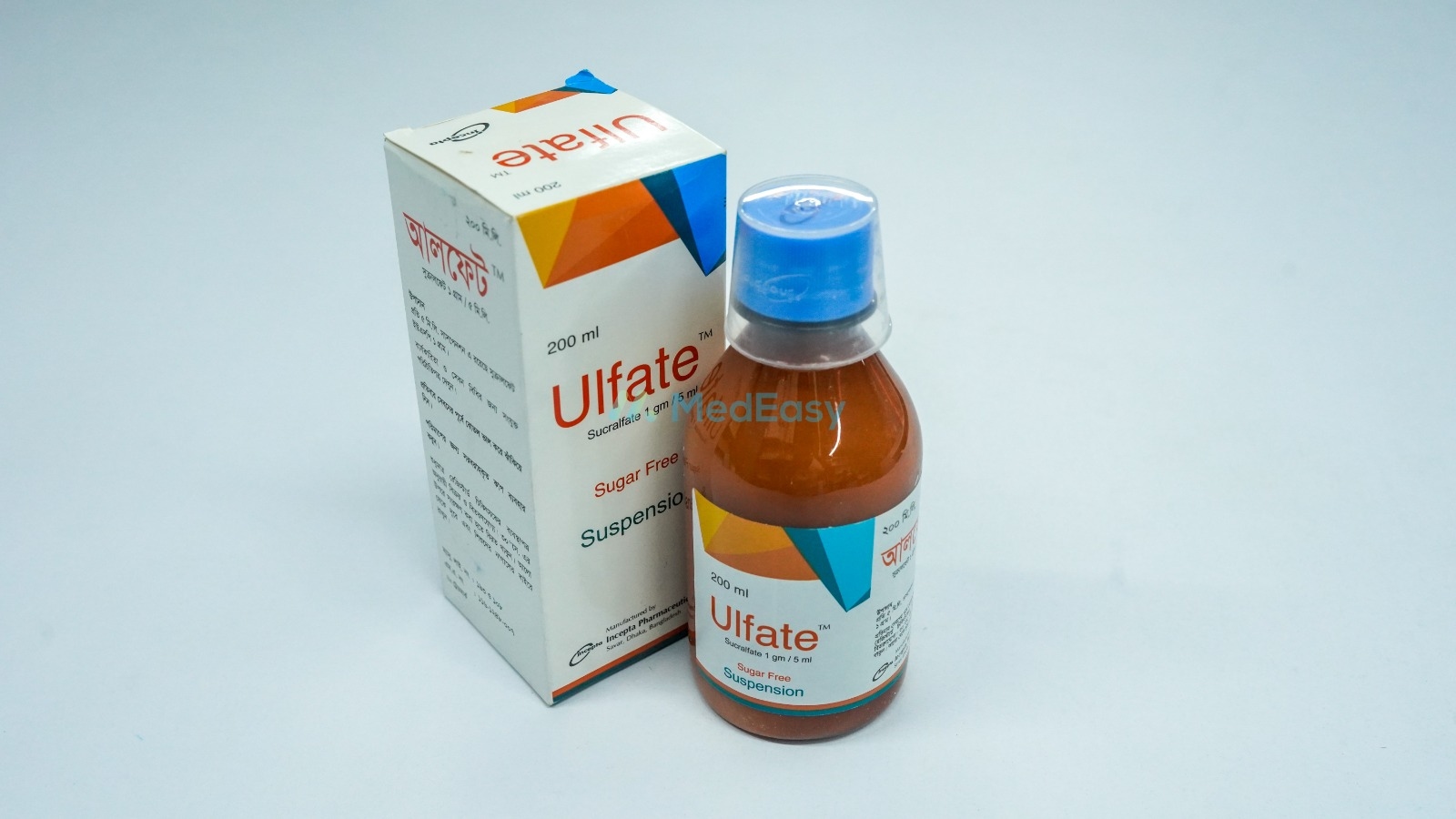
Generic medicine

Sucralfate: Brands, Price & Uses in Bangladesh

Sucralfate is a locally-acting mucosal protectant primarily indicated for gastrointestinal ulcer disease.

Forms:Oral SuspensionTabletSyrup

About Sucralfate

Indications of Sucralfate

Sucralfate is a locally-acting mucosal protectant primarily indicated for gastrointestinal ulcer disease. Its evidence-based uses are classified as follows:

FDA-approved / established indications

  • Active duodenal ulcer: Short-term treatment (up to 8 weeks) of active duodenal ulcer.
  • Maintenance therapy: Maintenance treatment of duodenal ulcer at a reduced dose after healing of an acute episode, to reduce risk of recurrence.

Guideline-supported / commonly accepted off-label uses

  • Stress ulcer prophylaxis in critically ill hospitalized patients (an alternative to acid-suppressive therapy in select cases).
  • Gastric ulcer treatment, used analogously to duodenal ulcer management.
  • Oral and esophageal mucositis associated with cancer chemotherapy or radiotherapy, used as a topical coating agent (adjunct, symptomatic use).
  • Radiation proctitis (rectal enema formulation) as an adjunct to standard care.

Use of Sucralfate for indications beyond active/maintenance duodenal ulcer therapy is generally considered off-label and should be guided by a physician's clinical judgment.

Dosage & Administration of Sucralfate

IndicationAdult Dose
Active duodenal ulcer1 g four times daily, on an empty stomach, 1 hour before meals and at bedtime, for 4–8 weeks (or as directed by physician)
Maintenance therapy (duodenal ulcer)1 g twice daily
Stress ulcer prophylaxis / other off-label usesAs directed by the treating physician; regimens vary by indication and setting

Administration instructions

  • Sucralfate should be taken on an empty stomach, generally 1 hour before meals and at bedtime, for optimal binding to the ulcer site.
  • Tablets may be dissolved in a small amount of water if swallowing is difficult; the suspension should be shaken well before use.
  • Important: Because Sucralfate can bind to and significantly reduce the absorption of many other oral medicines, other oral drugs should generally be taken at least 2 hours before or after Sucralfate. See Drug Interactions for details.
  • Complete the full course of treatment as prescribed, even if symptoms improve early, unless advised otherwise by a physician.

Side Effects of Sucralfate

Sucralfate is generally very well tolerated because of its minimal systemic absorption. Reported adverse effects include:

Common

  • Constipation (most frequently reported, up to 2% of patients)
  • Dry mouth
  • Nausea, indigestion (dyspepsia)

Less common

  • Dizziness, headache
  • Skin rash, pruritus
  • Back pain
  • Diarrhea, flatulence

Rare but serious

  • Bezoar formation — rare cases reported, particularly in critically ill patients, those receiving enteral tube feeding, or with delayed gastric emptying.
  • Hypophosphatemia with prolonged, high-dose use.
  • Aluminum accumulation/toxicity with chronic use, particularly in patients with renal impairment (see Precautions).
  • Hypersensitivity reactions (rash, angioedema) — rare.

Contraindications of Sucralfate

Sucralfate is contraindicated in patients with known hypersensitivity to Sucralfate or any component of the formulation.

Frequently Asked Questions about Sucralfate

What is Sucralfate used for?

Sucralfate is mainly used to treat active duodenal ulcers and to prevent their recurrence (maintenance therapy). It is also sometimes used off-label for stress ulcer prevention, gastric ulcers, and mouth/throat soreness caused by cancer treatment, on a physician's advice.

When should I take Sucralfate?

Sucralfate works best when taken on an empty stomach, generally 1 hour before meals and again at bedtime, so that it can properly coat the ulcer site.

Can I take Sucralfate with my other medicines?

Sucralfate can bind to many other oral medicines (such as certain antibiotics, thyroid medicine, phenytoin, digoxin, and warfarin) and significantly reduce their absorption. To avoid this, take other oral medicines at least 2 hours before or after your Sucralfate dose, and always tell your doctor or pharmacist about all medicines you take.

Is Sucralfate safe during pregnancy and breastfeeding?

Sucralfate has minimal absorption into the bloodstream and has not shown clear evidence of fetal harm in animal studies, but data in pregnant women are limited. It should be used during pregnancy only if clearly needed and under a physician's advice, weighing potential benefits against potential risks. Similarly, breastfeeding mothers should consult their physician before using Sucralfate, as data on transfer into breast milk are limited, though significant transfer is considered unlikely.

What are the common side effects of Sucralfate?

The most common side effect of Sucralfate is constipation. Other less common effects include dry mouth, nausea, indigestion, dizziness, and skin rash. Serious side effects are rare given its minimal absorption into the body.

Can people with kidney problems take Sucralfate?

Patients with chronic kidney failure, especially those on dialysis, should use Sucralfate only under close medical supervision, because small amounts of aluminum absorbed from the medicine can accumulate over time in reduced kidney function and cause toxicity with long-term use.

Disclaimer

The information provided is accurate to the best of our knowledge, but it does not replace professional medical advice. We cannot guarantee its completeness or accuracy, and the absence of specific information about a drug should not be taken as an endorsement. We are not responsible for any consequences arising from this information, so please consult a healthcare professional for any concerns or questions.

DoctorBlogArticles