
Generic medicine

Tazarotene: Brands, Price & Uses in Bangladesh

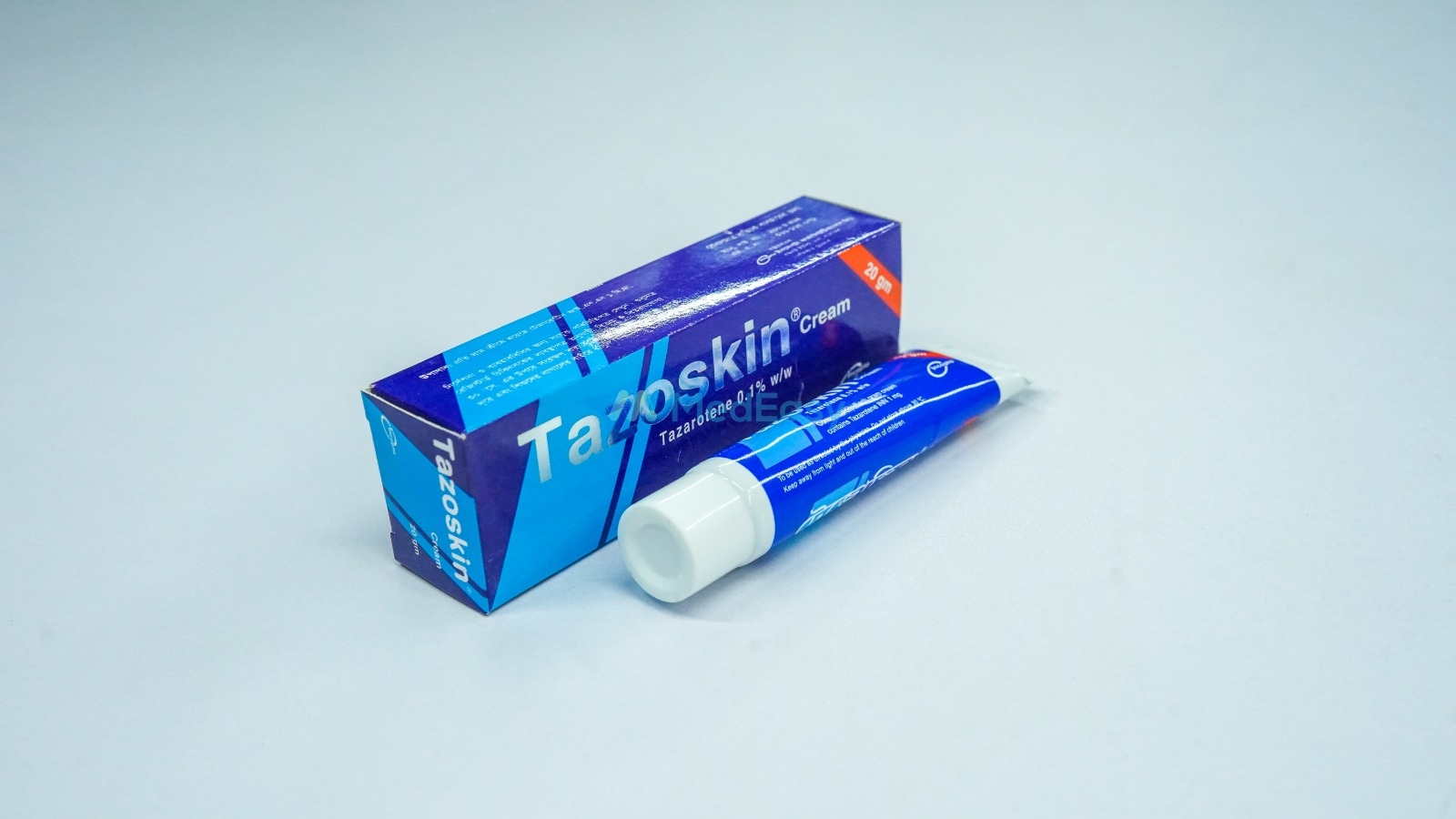
Tazarotene is a topical retinoid indicated for the following uses, classified by strength of evidence: FDA-approved – Plaque psoriasis: Tazarotene is indicated for the topical treatment of…

Forms:Cream

About Tazarotene

Indications of Tazarotene

Tazarotene is a topical retinoid indicated for the following uses, classified by strength of evidence:

  • FDA-approved – Plaque psoriasis: Tazarotene is indicated for the topical treatment of stable plaque psoriasis of limited body surface area in adults.
  • FDA-approved – Acne vulgaris: Tazarotene is indicated for the topical treatment of acne vulgaris in appropriate patients, including adolescents per specific product labeling.
  • FDA-approved (specific formulation) – Photodamage: Tazarotene 0.1% cream is indicated as part of a comprehensive skin care and sun protection programme for mitigation of facial fine wrinkling, mottled hyper-/hypopigmentation, and benign facial lentigines associated with photodamage, for use only as directed by a physician.
  • Not indicated / off-label: Tazarotene is not established or approved for use in unstable, erythrodermic, exfoliative, or pustular psoriasis, and should not be used for these conditions unless specifically directed by a dermatologist.

Dosage & Administration of Tazarotene

General Instructions

Tazarotene is for topical (external skin) use only. It should be applied as a thin film once daily, in the evening, to clean, dry skin, unless a physician directs otherwise. Avoid application to the eyes, eyelids, lips, angles of the nose, mucous membranes, and normal (non-affected) surrounding skin. Wash hands after application.

IndicationRecommended Use
Plaque psoriasisApply a thin film of Tazarotene cream or gel (0.05% or 0.1%) once daily in the evening to the psoriatic lesions, covering no more than the body surface area specified by the prescriber. Adjacent healthy skin should be protected.
Acne vulgarisApply a thin film of Tazarotene cream, gel, foam, or lotion (0.045% or 0.1%, per product) once daily in the evening to the entire affected area of the face and/or trunk, after the skin is clean and dry.
Photodamage (facial fine wrinkling, mottled hyper-/hypopigmentation, benign lentigines)Apply a pea-sized amount of Tazarotene 0.1% cream once daily in the evening to the face only, as part of a comprehensive skin care and sun-protection programme, under physician supervision.

Therapy is usually started at a lower strength/frequency and adjusted based on tolerability. If significant irritation occurs, application may be reduced to alternate evenings or a lower-strength formulation may be substituted, as advised by the prescriber. Do not apply more Tazarotene than directed, and do not apply to a larger area than prescribed. See Precautions and Warnings for guidance on sun exposure and skin irritation.

Side Effects of Tazarotene

The most common adverse effects of Tazarotene are local skin reactions at the application site, which are often most pronounced during the first few weeks of treatment and tend to lessen with continued use:

  • Burning, stinging, or a sensation of skin irritation
  • Erythema (redness)
  • Pruritus (itching)
  • Dryness, peeling, or scaling (desquamation) of the skin
  • Worsening of localized irritation with sun/wind/cold exposure

Less common effects include: localized skin pain, contact dermatitis, skin discoloration (hyper- or hypopigmentation), a transient worsening of psoriasis, and rash. Photosensitivity reactions can occur (see Precautions and Warnings). Severe irritation or allergic contact dermatitis is uncommon but should prompt discontinuation of Tazarotene and medical review.

Contraindications of Tazarotene

Tazarotene is contraindicated in:

  • Pregnancy. Tazarotene is a retinoid with demonstrated teratogenic potential in animal studies; it must not be used by women who are pregnant or who may become pregnant during treatment (see Pregnancy and Lactation).
  • Known hypersensitivity to Tazarotene or to any component of the specific formulation being used.

Frequently Asked Questions about Tazarotene

What is Tazarotene used for?

Tazarotene is a topical retinoid used mainly to treat plaque psoriasis and acne vulgaris. Certain formulations are also used, as part of a broader skin care and sun-protection programme, to help reduce the appearance of fine facial wrinkles, mottled pigmentation, and benign lentigines caused by sun damage.

How should I apply Tazarotene?

Apply a thin film of Tazarotene once daily in the evening to clean, dry skin, avoiding the eyes, lips, nostrils, and mucous membranes. Use only the amount and frequency directed by your physician, and wash your hands after applying unless your hands are part of the treated area.

Why does my skin burn, sting, or peel after using Tazarotene?

Local skin irritation – burning, stinging, redness, dryness, and peeling – is a common effect of Tazarotene, especially in the first few weeks of treatment, and usually lessens with continued use. If irritation is severe or persistent, tell your physician; they may recommend reducing how often you apply Tazarotene or switching to a lower-strength formulation.

Can I use Tazarotene if I am pregnant or breastfeeding?

No. Tazarotene is contraindicated in pregnancy because, as a retinoid, it carries a risk of harm to the developing baby based on animal studies. Women who could become pregnant should use effective contraception while using Tazarotene, and a pregnancy test before starting is recommended. If you are breastfeeding, use Tazarotene only if your physician feels the benefit outweighs the potential risk, and avoid applying it to the chest area.

Do I need to avoid sun exposure while using Tazarotene?

Yes. Tazarotene can make your skin more sensitive to sunlight and ultraviolet (UV) light, including tanning beds. Minimize sun exposure, use sunscreen and protective clothing, and avoid other photosensitizing products or medicines while using Tazarotene unless your physician approves.

Can children use Tazarotene?

Tazarotene is approved for acne in adolescents from about 9 to 12 years of age and older, depending on the specific product. Its safety and efficacy for plaque psoriasis have not been established in children, so it should only be used in pediatric patients under a physician's direct guidance.

Disclaimer

The information provided is accurate to the best of our knowledge, but it does not replace professional medical advice. We cannot guarantee its completeness or accuracy, and the absence of specific information about a drug should not be taken as an endorsement. We are not responsible for any consequences arising from this information, so please consult a healthcare professional for any concerns or questions.
DoctorBlogArticles