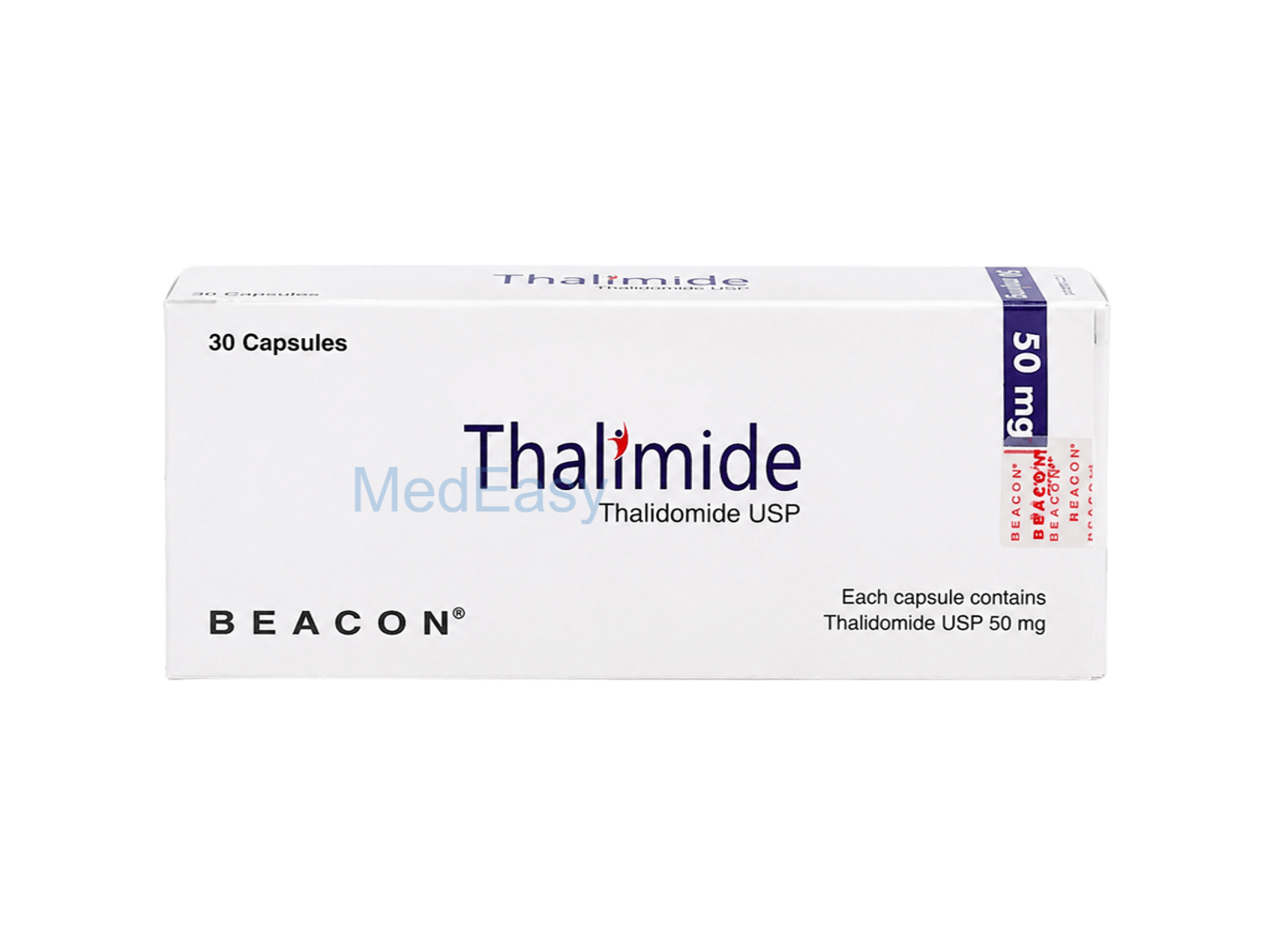
Generic medicine

Thalidomide: Brands, Price & Uses in Bangladesh

Thalidomide is indicated for the following conditions: Newly diagnosed multiple myeloma (established, FDA-approved use): in combination with dexamethasone and more.

Forms:Capsule

About Thalidomide

Indications of Thalidomide

Thalidomide is indicated for the following conditions:

  • Newly diagnosed multiple myeloma (established, FDA-approved use): in combination with dexamethasone, for the treatment of adult patients with newly diagnosed multiple myeloma.
  • Erythema nodosum leprosum, ENL (established, FDA-approved use): for the acute treatment of cutaneous manifestations of moderate-to-severe ENL, and as maintenance therapy to prevent and suppress recurrence of ENL skin lesions.

Thalidomide should not be used as monotherapy in patients with moderate-to-severe ENL neuritis, and it does not replace standard multidrug anti-leprosy (mycobacterial) therapy, which must be continued concurrently.

Other uses of Thalidomide (for example in certain refractory graft-versus-host disease, Behçet's disease-related ulcers, or other inflammatory or oncologic conditions) are off-label and should only be considered by a specialist when standard treatments have failed, given the drug's serious risk profile.

Dosage & Administration of Thalidomide

Dosing of Thalidomide is individualized by indication and must be initiated and monitored by a physician experienced in its use, within an appropriate risk-management program.

IndicationTypical adult doseNotes
Multiple myeloma (newly diagnosed)200 mg orally once daily, in combination with dexamethasone, given in 28-day treatment cyclesContinued as tolerated per treatment protocol; thromboprophylaxis usually required (see Precautions)
Erythema nodosum leprosum, acute100-300 mg orally once daily; up to 400 mg/day may be used for severe reactionsContinue for at least 2 weeks and until active skin lesions have resolved, then taper
Erythema nodosum leprosum, maintenanceTaper in decrements of about 50 mg every 2-4 weeks to the lowest effective doseUsed to prevent/suppress recurrence; discontinue as soon as possible

Patients weighing less than 50 kg are generally started at the lower end of the dosing range. Thalidomide capsules should be taken whole with water at bedtime, at least one hour after the evening meal, to minimize sedation during waking hours.

Side Effects of Thalidomide

Common and important adverse effects of Thalidomide include:

  • Peripheral neuropathy — common, may be dose-limiting, and can be irreversible even after stopping the drug (see Precautions).
  • Venous thromboembolism (DVT/PE) — significant risk, increased further when combined with dexamethasone or other myeloma agents (see Precautions).
  • Sedation/somnolence, dizziness, and confusion.
  • Bradycardia (slowed heart rate).
  • Neutropenia and thrombocytopenia (low white cell and platelet counts).
  • Constipation, fatigue, edema, hypocalcemia, rash or skin desquamation, and dry skin.
  • Rare but serious: severe skin reactions (e.g., Stevens-Johnson syndrome), and increased risk of secondary malignancies with prolonged combination therapy.

Patients should seek prompt medical attention for signs of neuropathy (numbness, tingling, pain in hands/feet), blood clots (leg swelling/pain, chest pain, shortness of breath), or severe rash.

Contraindications of Thalidomide

Thalidomide is contraindicated in:

  • Pregnancy — absolute contraindication with no exceptions; even a single dose taken during pregnancy can cause severe, life-threatening birth defects or fetal death.
  • Females of reproductive potential who are not enrolled in, or not fully compliant with, the mandatory pregnancy-prevention/risk-management program (which requires confirmed negative pregnancy testing and use of two effective methods of contraception).
  • Known hypersensitivity to thalidomide or any component of the formulation.

Frequently Asked Questions about Thalidomide

What is Thalidomide used for?

Thalidomide is used, in combination with dexamethasone, for newly diagnosed multiple myeloma, and separately for treating and preventing recurrence of erythema nodosum leprosum (ENL), a painful skin complication of leprosy.

Can Thalidomide be taken during pregnancy?

No. Thalidomide is absolutely contraindicated in pregnancy — even one dose can cause severe, life-threatening birth defects or fetal death. Women who can become pregnant must have a negative pregnancy test and use two reliable forms of contraception before, during, and after treatment, as required by the mandatory risk-management program.

What are the most serious risks of Thalidomide?

The most serious risks of Thalidomide, highlighted in boxed warnings, are severe birth defects if taken during pregnancy, and an increased risk of blood clots (deep vein thrombosis and pulmonary embolism), especially when combined with dexamethasone. Patients may need blood-thinning medicine to reduce this clot risk.

Why does Thalidomide sometimes cause numbness or tingling?

Thalidomide commonly causes peripheral neuropathy — numbness, tingling, or pain, usually in the hands and feet — which can be dose-limiting and sometimes permanent. Tell your doctor immediately if you notice these symptoms so the dose can be adjusted.

Can I share my Thalidomide capsules with someone else?

No, never. Thalidomide must not be shared with anyone, even a person with similar symptoms, because of the catastrophic risk of birth defects if it reaches a pregnant woman. Unused capsules should be returned to a pharmacy for safe disposal, not thrown in household trash.

How should Thalidomide be taken?

Thalidomide capsules are usually taken once daily by mouth at bedtime, at least one hour after the evening meal, swallowed whole with water. Follow your physician's exact instructions on dose and duration for your specific condition.

Disclaimer

The information provided is accurate to the best of our knowledge, but it does not replace professional medical advice. We cannot guarantee its completeness or accuracy, and the absence of specific information about a drug should not be taken as an endorsement. We are not responsible for any consequences arising from this information, so please consult a healthcare professional for any concerns or questions.

DoctorBlogArticles