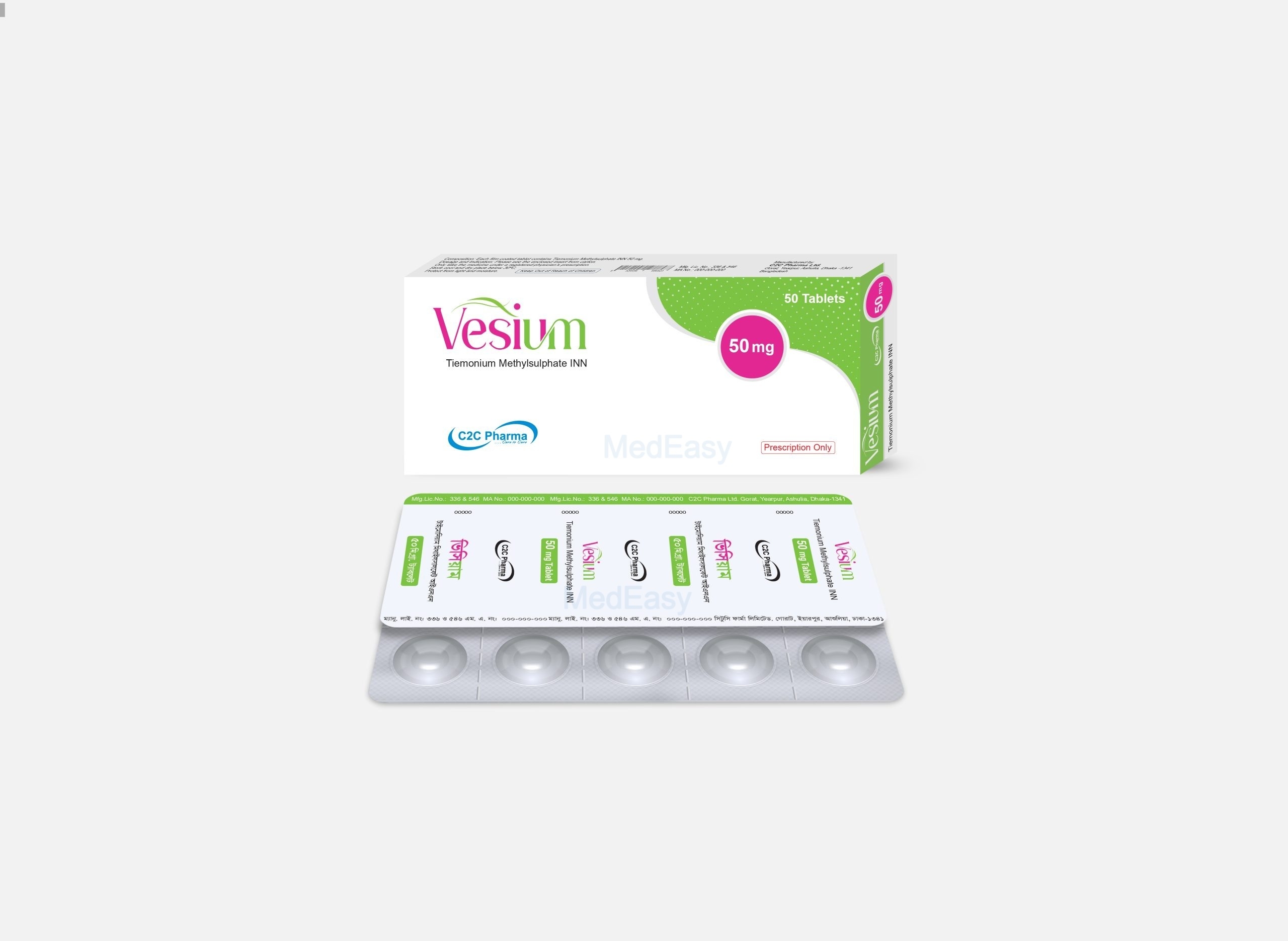
Generic medicine

Tiemonium Methylsulfate: Brands, Price & Uses in Bangladesh

Tiemonium Methylsulfate is an antimuscarinic (anticholinergic) antispasmodic agent used for the symptomatic relief of pain and spasm arising from the gastrointestinal, biliary and more.

Forms:Tablet

About Tiemonium Methylsulfate

Indications of Tiemonium Methylsulfate

Tiemonium Methylsulfate is an antimuscarinic (anticholinergic) antispasmodic agent used for the symptomatic relief of pain and spasm arising from the gastrointestinal, biliary, and genitourinary tracts.

Established/labeled uses

  • Symptomatic relief of gastrointestinal spasm and associated colicky abdominal pain (e.g., functional/irritable-bowel-type spasm, enteritis-associated cramping).
  • Symptomatic relief of biliary tract spasm (biliary colic).
  • Symptomatic relief of genitourinary tract spasm and pain, including renal/ureteric colic and bladder (detrusor) spasm.

Adjunct/procedural use

  • As an adjunct premedication to reduce smooth-muscle spasm and associated discomfort during certain gastrointestinal or gynecological instrumental or radiological procedures (e.g., endoscopy, hysterosalpingography); it is used together with, not instead of, the primary procedure and analgesia.

Tiemonium Methylsulfate provides symptomatic relief of spasm and pain; it does not treat the underlying disease process causing the spasm. Persistent, severe, or worsening abdominal or pelvic pain requires medical evaluation to establish a specific diagnosis.

Dosage & Administration of Tiemonium Methylsulfate

Dosage of Tiemonium Methylsulfate should be individualized by a physician according to indication, severity of symptoms, dosage form available, and patient factors (age, renal/hepatic function). The following reflects typical adult dosing ranges used in markets where Tiemonium Methylsulfate is available; always follow the prescriber's instructions and the specific product label.

IndicationTypical adult doseNotes
Gastrointestinal spasm / colicky abdominal painOne tablet 2–3 times daily, taken before mealsReassess if pain persists beyond a few days
Biliary tract spasm (biliary colic)One tablet 2–3 times daily, or as directed for acute episodesInvestigate underlying biliary pathology if recurrent
Genitourinary spasm (renal/ureteric colic, bladder spasm)One tablet 2–3 times daily, or as directed for acute episodesSeek urgent care for suspected renal colic with fever, obstruction, or inability to pass urine
Pre-procedure antispasmodic (e.g., endoscopy, hysterosalpingography)Single dose shortly before the procedure, as directed by the treating physicianUsed as an adjunct at the discretion of the treating team

Renal/hepatic impairment

Specific validated dose-adjustment data for renal or hepatic impairment are not well established; use Tiemonium Methylsulfate cautiously and at the lowest effective dose in patients with significant renal or hepatic impairment, under medical supervision.

Pediatric dosing

Well-established pediatric dosing for Tiemonium Methylsulfate is not established; see Use in Special Populations.

Side Effects of Tiemonium Methylsulfate

Adverse effects of Tiemonium Methylsulfate are mainly related to its anticholinergic activity and are generally dose-related.

Common

  • Dry mouth
  • Blurred vision / accommodation disturbances
  • Constipation
  • Urinary hesitancy
  • Drowsiness or dizziness

Less common

  • Tachycardia (rapid heartbeat)
  • Urinary retention
  • Skin flushing, dryness
  • Confusion, particularly in elderly patients

Report any severe, persistent, or bothersome side effect from Tiemonium Methylsulfate to a physician.

Contraindications of Tiemonium Methylsulfate

Tiemonium Methylsulfate is contraindicated in patients with:

  • Known hypersensitivity to Tiemonium Methylsulfate or to any component of the formulation.
  • Narrow-angle (angle-closure) glaucoma.
  • Urinary retention due to bladder outlet or prostatic obstruction.
  • Pyloric stenosis or other mechanical gastrointestinal obstruction.
  • Paralytic ileus.
  • Severe ulcerative colitis with risk of toxic megacolon.
  • Myasthenia gravis.

Frequently Asked Questions about Tiemonium Methylsulfate

What is Tiemonium Methylsulfate used for?

Tiemonium Methylsulfate is an antispasmodic (anticholinergic) medicine used to relieve pain and spasm of the gastrointestinal tract (such as colicky abdominal pain), biliary tract (biliary colic), and genitourinary tract (such as renal/ureteric colic or bladder spasm).

How should I take Tiemonium Methylsulfate?

Tiemonium Methylsulfate is usually taken by mouth, generally before meals, exactly as directed by your physician. Do not take more than the prescribed dose, and do not continue taking Tiemonium Methylsulfate for longer than advised without medical review.

Can I take Tiemonium Methylsulfate during pregnancy or while breastfeeding?

Data on Tiemonium Methylsulfate in pregnancy are limited, so it should be used in pregnancy only if clearly needed and if the potential benefit outweighs the potential risk to the fetus. It is also not well established whether Tiemonium Methylsulfate passes into breast milk. In both situations, consult a physician before use.

What are the common side effects of Tiemonium Methylsulfate?

The most common side effects of Tiemonium Methylsulfate are related to its anticholinergic action and include dry mouth, blurred vision, constipation, urinary hesitancy, and drowsiness or dizziness. Less commonly, Tiemonium Methylsulfate can cause a fast heartbeat or urinary retention.

Who should not take Tiemonium Methylsulfate?

Tiemonium Methylsulfate should not be used by people with narrow-angle glaucoma, urinary retention due to bladder outlet or prostate obstruction, pyloric stenosis or other bowel obstruction, paralytic ileus, severe ulcerative colitis with risk of toxic megacolon, myasthenia gravis, or known hypersensitivity to Tiemonium Methylsulfate.

What should I do if I take too much Tiemonium Methylsulfate?

If an overdose of Tiemonium Methylsulfate is suspected, seek immediate medical attention or contact emergency services or a poison control center right away rather than attempting to treat it at home.

Disclaimer

The information provided is accurate to the best of our knowledge, but it does not replace professional medical advice. We cannot guarantee its completeness or accuracy, and the absence of specific information about a drug should not be taken as an endorsement. We are not responsible for any consequences arising from this information, so please consult a healthcare professional for any concerns or questions.

DoctorBlogArticles