
8% Off
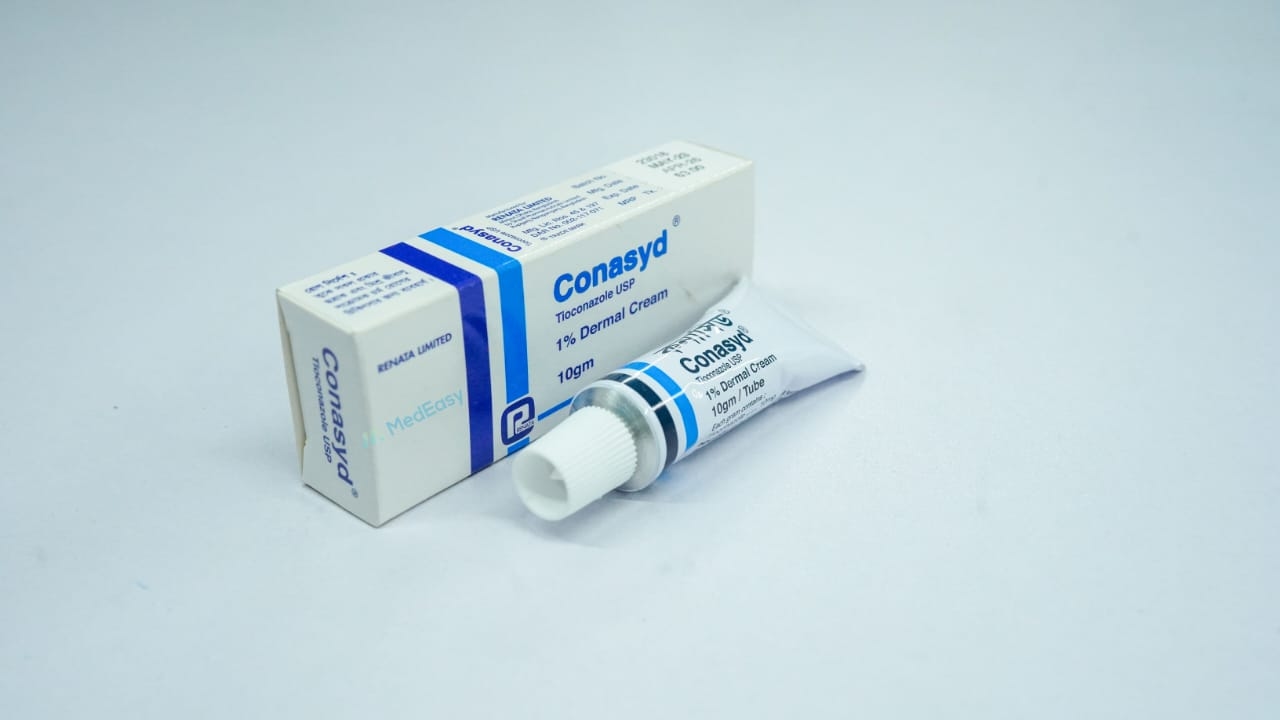
Conasyd1%
Renata Limited
৳57.96
Add to cart
Tioconazole is an imidazole antifungal indicated for the following conditions: Established/FDA-approved (OTC) use Vulvovaginal candidiasis (vaginal yeast infection) — for women previously diagnosed…
Tioconazole is an imidazole antifungal indicated for the following conditions:
Note: Tioconazole should not be used for a first episode of vaginal symptoms without prior physician diagnosis, since other conditions (e.g., bacterial vaginosis, sexually transmitted infections) can mimic yeast infection symptoms.
Dosage and duration of Tioconazole depend on the indication and formulation used. Always complete the full prescribed course, even if symptoms improve early, to ensure complete fungal eradication and reduce the chance of recurrence.
| Indication / Formulation | Adult Dose | Duration |
|---|---|---|
| Vulvovaginal candidiasis — 6.5% vaginal ointment (single-dose) | One full applicator (~4.6 g) inserted intravaginally, once, preferably at bedtime | Single application (1-day therapy) |
| Vulvovaginal candidiasis — 1% vaginal cream | One applicatorful inserted intravaginally once daily at bedtime | Typically 3 consecutive nights (3-day therapy), per product labeling |
| Vulvovaginal candidiasis — 300 mg vaginal suppository | One suppository inserted intravaginally once at bedtime | Single dose; may be repeated after one week if directed by a physician |
| Tinea corporis / tinea cruris / pityriasis versicolor — 1% dermal cream | Apply a thin layer to the affected area and surrounding skin once or twice daily | Usually 2 weeks, or as directed by a physician |
| Tinea pedis — 1% dermal cream | Apply a thin layer to the affected area twice daily | Up to 4-6 weeks for complete resolution |
For vaginal use, insert the applicator high into the vagina. Wash hands before and after application. Avoid intercourse and the use of tampons during treatment with Tioconazole. If using the dermal cream, wash and dry the affected area gently before application.
If symptoms do not improve within 3 days, or persist beyond 7 days after starting Tioconazole, or if symptoms recur within two months, stop use and consult a physician to confirm the diagnosis and rule out other causes.
Tioconazole is generally well tolerated when used as directed. Most reported side effects are local and mild-to-moderate in severity.
Seek medical attention if a rash, hives, severe irritation, abdominal pain, fever, chills, nausea, vomiting, or foul-smelling vaginal discharge develops during treatment with Tioconazole, as these may indicate an allergic reaction or a different underlying condition.
Tioconazole is contraindicated in individuals with a known hypersensitivity to Tioconazole or to any other imidazole antifungal agent (e.g., clotrimazole, miconazole) or to any component of the specific product formulation.
Disclaimer
The information provided is accurate to the best of our knowledge, but it does not replace professional medical advice. We cannot guarantee its completeness or accuracy, and the absence of specific information about a drug should not be taken as an endorsement. We are not responsible for any consequences arising from this information, so please consult a healthcare professional for any concerns or questions.

