
8% Off
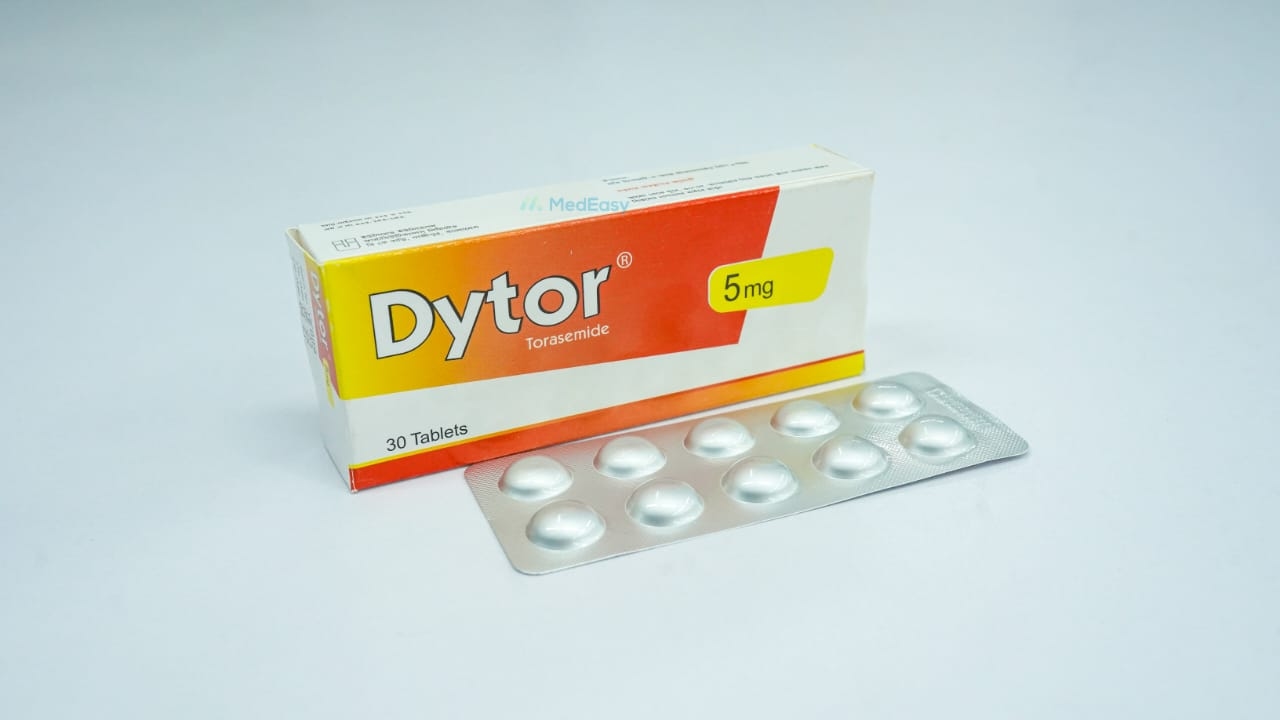
Dytor5 mg
Unimed Unihealth MFG. Ltd.
৳101.20
Add to cart
Torasemide is a loop diuretic that is FDA-approved (established indications) for the following uses: Edema associated with congestive heart failure - to reduce fluid overload.
Torasemide is a loop diuretic that is FDA-approved (established indications) for the following uses:
Torasemide is not approved for use in children; safety and efficacy in pediatric patients have not been established.
| Indication | Adult Dose |
|---|---|
| Edema - Heart failure | Initial 10-20 mg once daily orally or IV; may be doubled at intervals until desired diuretic response is achieved. Doses above 200 mg have not been adequately studied. |
| Edema - Chronic renal disease | Initial 20 mg once daily; may be doubled at intervals as needed. Maximum studied dose is 200 mg. |
| Edema - Hepatic cirrhosis | Initial 5-10 mg once daily, generally combined with an aldosterone antagonist or potassium-sparing diuretic; may be doubled at intervals. Doses above 40 mg have not been adequately studied in this population. |
| Hypertension | Initial 5 mg once daily; may increase to 10 mg once daily if response is inadequate after 4-6 weeks; a second antihypertensive agent may be added if 10 mg is insufficient. |
Torasemide can be taken with or without food, preferably in the morning to avoid nocturnal urination. If administered intravenously, it should be given slowly (over about 2 minutes) to reduce the risk of ototoxicity.
Pediatric dosing: safety and efficacy of Torasemide have not been established in patients under 18 years of age; it is not recommended for pediatric use.
Renal/hepatic adjustment: Torasemide is contraindicated in anuria. In hepatic cirrhosis, therapy should start at a lower dose (see table) with careful monitoring of fluid/electrolyte status to avoid precipitating hepatic encephalopathy (see Precautions).
Common side effects of Torasemide include increased urination, dizziness, headache, nausea, indigestion, diarrhea or constipation, joint/muscle pain, and cough.
Less common but serious side effects include electrolyte disturbances (low potassium, low sodium, low magnesium), symptomatic hypotension, ototoxicity (hearing loss, tinnitus, vertigo - especially with rapid IV administration or in patients with renal impairment), hyperglycemia (worsening glucose control in diabetics), hyperuricemia (may precipitate gout), and rarely, blood dyscrasias or severe skin reactions. Seek prompt medical attention for sudden hearing changes, severe dizziness, irregular heartbeat, or signs of severe allergic reaction.
Torasemide is contraindicated in patients with:
Disclaimer
The information provided is accurate to the best of our knowledge, but it does not replace professional medical advice. We cannot guarantee its completeness or accuracy, and the absence of specific information about a drug should not be taken as an endorsement. We are not responsible for any consequences arising from this information, so please consult a healthcare professional for any concerns or questions.

