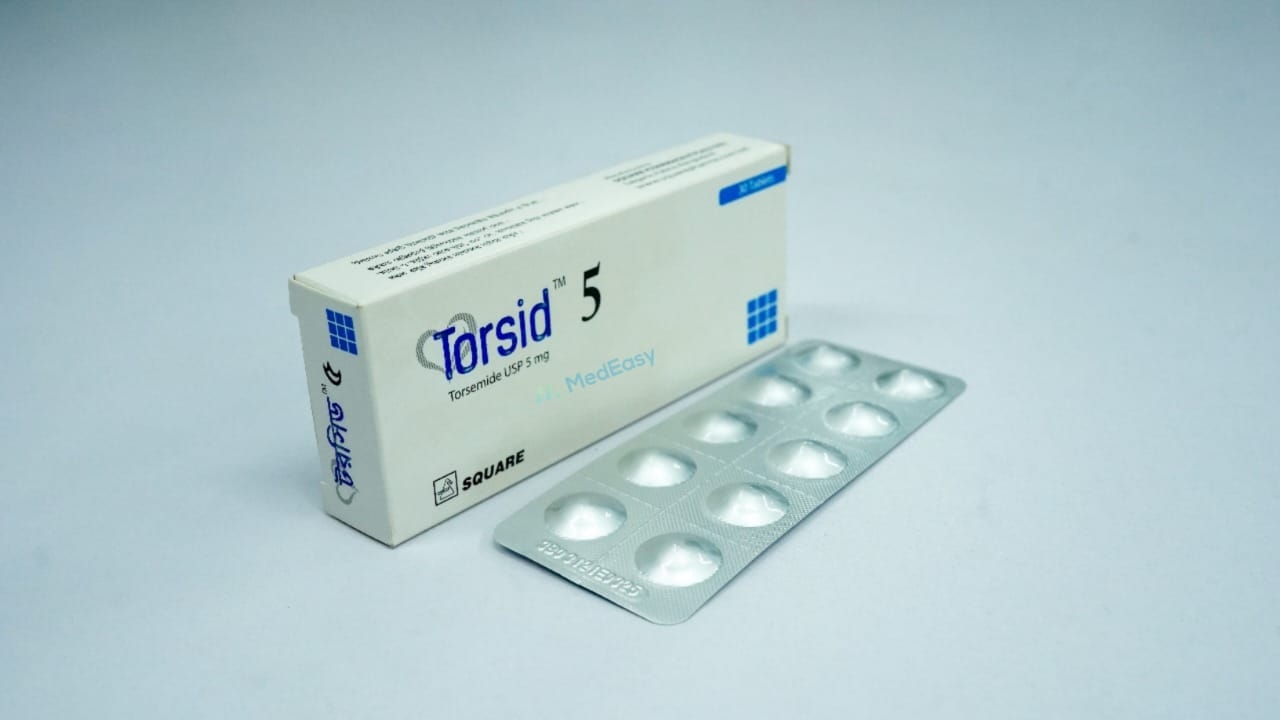
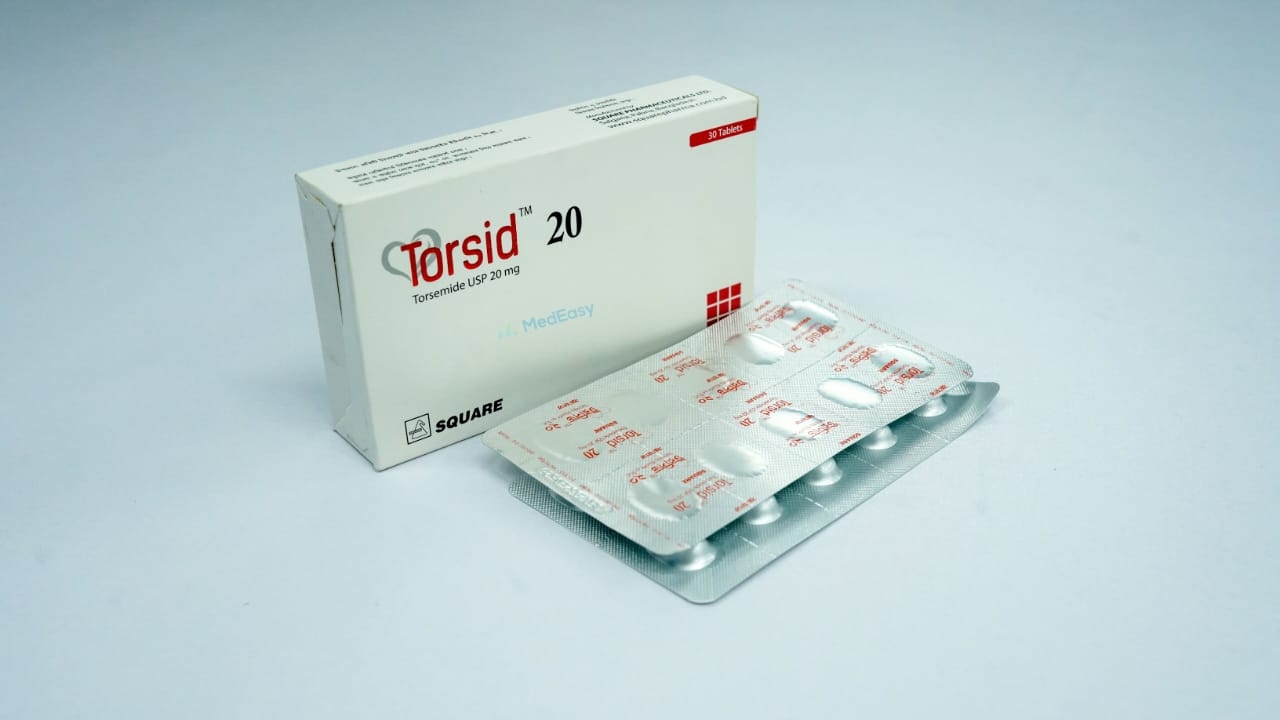
Generic medicine

Torsemide: Brands, Price & Uses in Bangladesh

Torsemide is a loop diuretic (water tablet) used in the following settings: Established / FDA-approved uses Edema associated with congestive heart failure, chronic renal (kidney) disease and more.

Forms:Tablet

About Torsemide

Indications of Torsemide

Torsemide is a loop diuretic (water tablet) used in the following settings:

Established / FDA-approved uses

  • Edema associated with congestive heart failure, chronic renal (kidney) disease, and hepatic (liver) cirrhosis.
  • Hypertension - to lower blood pressure, alone or in combination with other antihypertensive agents, to reduce the risk of fatal and non-fatal cardiovascular events such as stroke and myocardial infarction.

Notes on use

  • In hepatic cirrhosis, Torsemide is generally used together with an aldosterone antagonist or a potassium-sparing diuretic, as monotherapy in this setting can precipitate serious electrolyte disturbances.
  • Use for indications other than the above is not established and should not be undertaken without specialist guidance.

Dosage & Administration of Torsemide

Edema (heart failure, renal disease, hepatic cirrhosis)

IndicationStarting doseTitration
Heart failure10-20 mg once dailyDouble the dose as needed until desired diuretic response is achieved (doses above 200 mg have not been well studied)
Chronic renal disease20 mg once dailyDouble the dose as needed (doses above 200 mg have not been well studied)
Hepatic cirrhosis5-10 mg once daily, given with an aldosterone antagonist or potassium-sparing diureticDouble the dose as needed (doses above 40 mg have not been well studied)

Hypertension

Initial dose: 5 mg once daily. If blood pressure is not adequately controlled after 4-6 weeks, the dose may be increased to 10 mg once daily. If 10 mg once daily is not sufficient, an additional antihypertensive agent should generally be added rather than further increasing the Torsemide dose.

Renal/hepatic adjustment

No specific dose reduction is required for renal impairment, as total body clearance is not significantly altered, though higher doses may be needed to achieve adequate urine output; in severe hepatic impairment, initiate at the lowest recommended dose and titrate cautiously with close monitoring, preferably starting in a supervised/hospital setting (see Precautions).

Side Effects of Torsemide

The most common adverse effect of Torsemide is excessive or increased urination.

Common

  • Increased urination, dizziness, headache
  • Electrolyte disturbances (see Precautions and Warnings)

Less common / postmarketing

  • Gastrointestinal: nausea, diarrhea, constipation, abdominal pain, rarely pancreatitis
  • Nervous system: paresthesia, confusion, blurred vision
  • Ototoxicity: tinnitus and hearing loss, usually reversible (see Precautions)
  • Hematologic (rare): leukopenia, thrombocytopenia, anemia
  • Dermatologic (rare): photosensitivity, and very rare serious skin reactions such as Stevens-Johnson syndrome/toxic epidermal necrolysis
  • Urogenital: acute urinary retention (particularly in patients with bladder outlet obstruction)

Contraindications of Torsemide

Torsemide is contraindicated in:

  • Known hypersensitivity to Torsemide or to sulfonylureas (structurally related, sulfonamide-derived compound; cross-reactivity caution per class labeling).
  • Anuria (absence of urine production).
  • Hepatic coma or precoma associated with electrolyte depletion, in whom further diuresis without correction of electrolytes can be dangerous.

Frequently Asked Questions about Torsemide

What is Torsemide used for?

Torsemide is a loop diuretic ("water tablet") used to reduce fluid retention (edema) caused by heart failure, kidney disease, or liver cirrhosis, and to treat high blood pressure.

How should I take Torsemide?

Torsemide is usually taken once daily by mouth, with or without food, preferably in the morning so that increased urination does not disturb sleep. Take it exactly as prescribed by your physician and do not stop or change the dose without medical advice.

What are the common side effects of Torsemide?

The most common effect is increased urination. Other possible effects include dizziness, headache, electrolyte changes (low potassium, sodium, or magnesium), and, less commonly, hearing changes such as ringing in the ears (tinnitus) or hearing loss, which is usually reversible.

Who should not take Torsemide?

Torsemide should not be used by people with a known allergy to Torsemide or to sulfonylurea medicines, people who produce no urine (anuria), or people in hepatic coma or precoma with depleted electrolytes. Discuss your full medical history with your physician before starting treatment.

Can Torsemide be taken during pregnancy or breastfeeding?

There is limited human data on Torsemide use in pregnancy, so it should be used only if the potential benefit clearly outweighs the potential risk to the fetus, and only under a physician's supervision. It is not known if it passes into breast milk; consult your physician before breastfeeding while taking this medicine.

What should I do if I miss a dose or take too much Torsemide?

If you miss a dose, take it as soon as you remember unless it is close to your next dose; do not double up. If an overdose is suspected (leading to symptoms such as severe dehydration, dizziness, or very low blood pressure), seek immediate medical attention or contact a poison control center right away.

Disclaimer

The information provided is accurate to the best of our knowledge, but it does not replace professional medical advice. We cannot guarantee its completeness or accuracy, and the absence of specific information about a drug should not be taken as an endorsement. We are not responsible for any consequences arising from this information, so please consult a healthcare professional for any concerns or questions.
DoctorBlogArticles