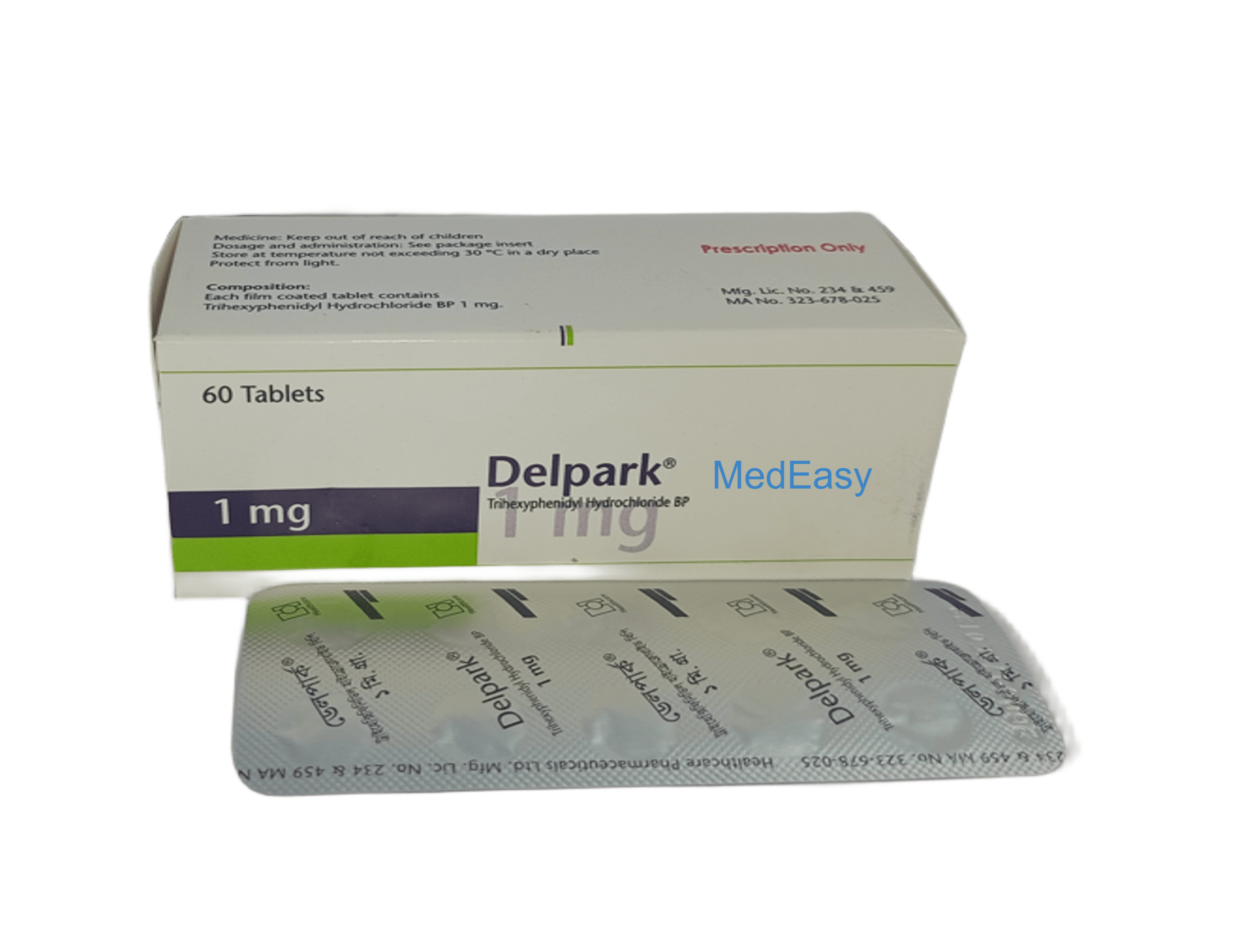
Generic medicine

Trihexyphenidyl Hydrochloride: Brands, Price & Uses in Bangladesh

Trihexyphenidyl Hydrochloride is an anticholinergic (antimuscarinic) medicine used for the following indications: Established / FDA-approved uses Idiopathic Parkinson's disease (including…

Forms:TabletSyrup

About Trihexyphenidyl Hydrochloride

Indications of Trihexyphenidyl Hydrochloride

Trihexyphenidyl Hydrochloride is an anticholinergic (antimuscarinic) medicine used for the following indications:

Established / FDA-approved uses

  • Idiopathic Parkinson's disease (including postencephalitic and arteriosclerotic forms of parkinsonism) - to help control tremor, rigidity, and muscle stiffness.
  • Adjunct therapy with levodopa in the management of all forms of parkinsonism - Trihexyphenidyl Hydrochloride may add further improvement when used together with levodopa.
  • Drug-induced extrapyramidal symptoms (EPS) caused by antipsychotic medicines such as phenothiazines, butyrophenones, thioxanthenes, and dibenzoxazepines (e.g. drug-induced parkinsonism, akathisia, and acute dystonic reactions).

Not recommended / off-label caution

Trihexyphenidyl Hydrochloride is generally not recommended as a sole treatment for tardive dyskinesia (a late-onset movement disorder from long-term antipsychotic use) unless the patient also has coexisting Parkinson's disease, since anticholinergics can sometimes worsen tardive dyskinesia.

Dosage & Administration of Trihexyphenidyl Hydrochloride

Dosing of Trihexyphenidyl Hydrochloride must be individualized, starting at a low dose with gradual increases according to response and tolerability. The total daily dose is usually divided into 3 doses given with meals; doses above 10 mg/day may be divided into 4 doses (3 at mealtimes and 1 at bedtime). If dry mouth is troublesome, the medicine may be taken after meals instead; if it causes excess salivation, it may be taken before meals.

IndicationTypical adult dosing
Idiopathic Parkinson's disease (initial therapy)Start at 1 mg on day 1; increase by 2 mg increments every 3-5 days until a total of 6-10 mg daily is reached (some patients, particularly postencephalitic parkinsonism, may require 12-15 mg/day) under physician supervision.
Parkinson's disease, as adjunct with levodopaUsually 3-6 mg daily in divided doses; doses of both levodopa and Trihexyphenidyl Hydrochloride are often reduced when combined, under physician guidance.
Drug-induced extrapyramidal symptomsUsually 5-15 mg daily (range 1-15 mg); start at 1 mg and increase gradually until symptoms are controlled. Most patients respond to 5-15 mg/day in divided doses. Concurrent antipsychotic dose may also be adjusted by the prescriber.

Discontinuation: Do not stop Trihexyphenidyl Hydrochloride abruptly after prolonged use; abrupt withdrawal can cause a sudden return/worsening of parkinsonian symptoms or, rarely, precipitate a neuroleptic malignant syndrome-like state. Dose reduction should be gradual and physician-guided.

See Use in Special Populations for pediatric and elderly dosing considerations, and Overdose Effects for management of excessive intake.

Side Effects of Trihexyphenidyl Hydrochloride

Side effects of Trihexyphenidyl Hydrochloride are mostly related to its anticholinergic action and are dose-dependent; they often lessen with continued use as tolerance develops.

Common (anticholinergic) effects

  • Dry mouth
  • Blurred vision
  • Dizziness or lightheadedness
  • Mild nausea
  • Nervousness
  • Constipation
  • Urinary hesitancy or retention
  • Drowsiness

Less common / serious effects

  • Confusion, memory impairment, hallucinations, delusions, or paranoia (more likely in elderly patients)
  • Tachycardia (fast heart rate)
  • Increased intraocular pressure/angle-closure glaucoma (see Contraindications)
  • Suppurative parotitis (severe salivary gland infection due to reduced saliva flow)
  • Paralytic ileus or abdominal distension
  • Skin rash; reduced sweating (anhidrosis), which can raise the risk of heatstroke in hot weather
  • Worsening of pre-existing tardive dyskinesia

Report any severe or persistent side effect to a physician promptly.

Contraindications of Trihexyphenidyl Hydrochloride

Trihexyphenidyl Hydrochloride is contraindicated in the following situations:

  • Known hypersensitivity to Trihexyphenidyl Hydrochloride or to any component of the formulation.
  • Narrow-angle (angle-closure) glaucoma - anticholinergic effects can precipitate acute angle closure and lead to blindness.
  • Myasthenia gravis - antimuscarinic action can worsen muscle weakness in this condition.
  • Mechanical gastrointestinal obstruction, such as paralytic ileus or pyloric/duodenal obstruction, where reduced GI motility from antimuscarinic action can be harmful.

Frequently Asked Questions about Trihexyphenidyl Hydrochloride

What is Trihexyphenidyl Hydrochloride used for?

Trihexyphenidyl Hydrochloride is used to help manage tremor, rigidity, and muscle stiffness in Parkinson's disease (alone or together with levodopa) and to treat extrapyramidal side effects (such as stiffness, tremor, or restlessness) caused by certain antipsychotic medicines.

Can I stop taking Trihexyphenidyl Hydrochloride suddenly if I feel better?

No. Do not stop Trihexyphenidyl Hydrochloride abruptly after taking it for a while, as sudden discontinuation can cause your parkinsonian or extrapyramidal symptoms to suddenly worsen, and in rare cases can contribute to a serious reaction called neuroleptic malignant syndrome. Always reduce the dose gradually under your physician's guidance.

Who should not take Trihexyphenidyl Hydrochloride?

Trihexyphenidyl Hydrochloride should not be used by people who are hypersensitive/allergic to it, who have narrow-angle (angle-closure) glaucoma, myasthenia gravis, or a mechanical bowel obstruction such as paralytic ileus or pyloric/duodenal obstruction, because its anticholinergic action can seriously worsen these conditions.

What are the common side effects of Trihexyphenidyl Hydrochloride?

Common side effects of Trihexyphenidyl Hydrochloride include dry mouth, blurred vision, dizziness, mild nausea, nervousness, constipation, urinary hesitancy, and drowsiness. These effects are related to its anticholinergic action and often lessen somewhat with continued use. More serious effects such as confusion, hallucinations, fast heartbeat, or eye pain (possible glaucoma) should be reported to a physician immediately.

Is Trihexyphenidyl Hydrochloride safe during pregnancy or breastfeeding?

Safety data on Trihexyphenidyl Hydrochloride in pregnancy and breastfeeding are limited. It should be used during pregnancy only if clearly needed and the potential benefit justifies the potential risk to the fetus, and during breastfeeding only if the benefit to the mother outweighs the possible risk to the infant. Always consult a physician before use in these situations.

Can Trihexyphenidyl Hydrochloride be misused?

Yes. At doses higher than prescribed, Trihexyphenidyl Hydrochloride has stimulant and euphoriant properties and has been reported to be misused for its hallucinogenic or euphoric effects. It should only be taken exactly as prescribed by a physician, and never in higher-than-prescribed amounts.

Disclaimer

The information provided is accurate to the best of our knowledge, but it does not replace professional medical advice. We cannot guarantee its completeness or accuracy, and the absence of specific information about a drug should not be taken as an endorsement. We are not responsible for any consequences arising from this information, so please consult a healthcare professional for any concerns or questions.

DoctorBlogArticles