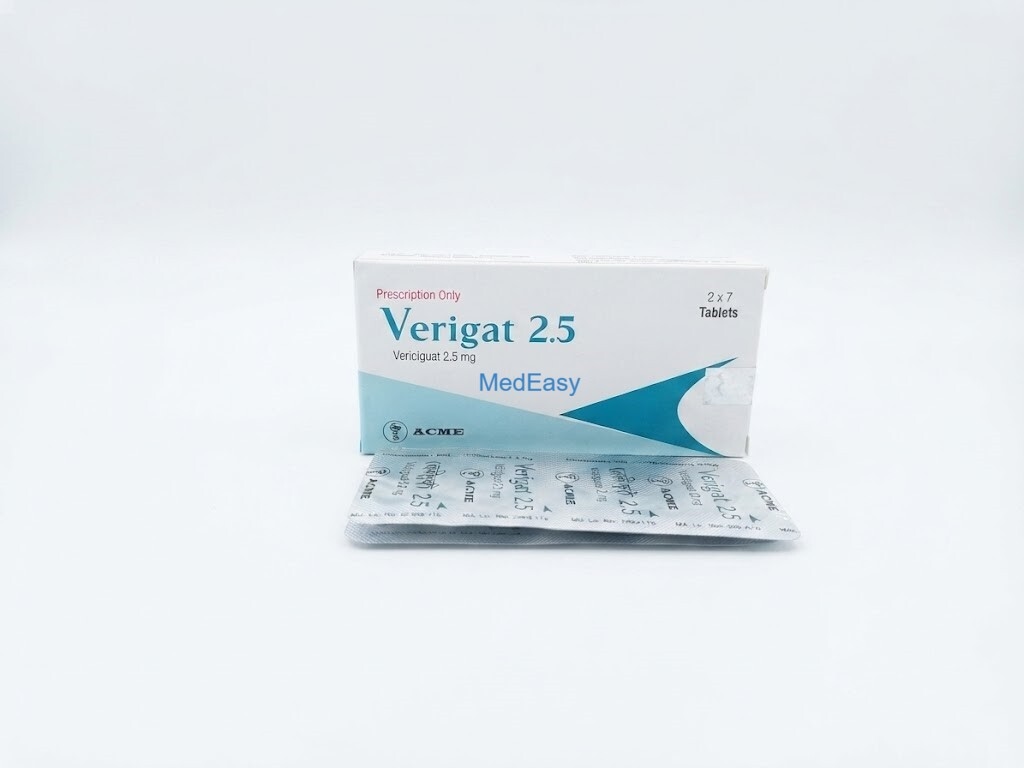
Generic medicine

Vericiguat: Brands, Price & Uses in Bangladesh

Vericiguat is indicated, in combination with other heart failure therapies, to reduce the risk of cardiovascular death and heart failure hospitalization in adults with symptomatic chronic heart…

Forms:Tablet

About Vericiguat

Indications of Vericiguat

Vericiguat is indicated, in combination with other heart failure therapies, to reduce the risk of cardiovascular death and heart failure hospitalization in adults with symptomatic chronic heart failure and an ejection fraction below 45%, following a recent episode of decompensation requiring hospitalization or outpatient intravenous diuretic treatment.

Evidence Classification

  • FDA-approved, guideline-supported use: Add-on therapy for symptomatic chronic heart failure with reduced ejection fraction (HFrEF, EF <45%) after a recent decompensation event, used together with standard guideline-directed medical therapy (e.g., beta-blockers, ACE inhibitors/ARNI, mineralocorticoid receptor antagonists, SGLT2 inhibitors).
  • Requires combination therapy: Vericiguat is not intended as monotherapy; it is added to existing standard-of-care heart failure treatment, not used as a substitute.
  • Not established: Use in acutely decompensated heart failure requiring IV therapy, or in hemodynamically unstable patients, has not been studied and is not recommended.

Dosage & Administration of Vericiguat

The dose of Vericiguat is individualized and titrated gradually to minimize the risk of symptomatic hypotension.

StepDoseDuration
Starting dose2.5 mg once daily (with food)Approximately 2 weeks
First titration step5 mg once daily, if the previous dose is toleratedApproximately 2 weeks
Target maintenance dose10 mg once daily, if the previous dose is toleratedLong-term, as advised by physician

If a patient does not tolerate a dose increase due to symptomatic hypotension, the physician may delay titration or temporarily reduce the dose of Vericiguat. It should be taken at approximately the same time each day, with food, to enhance and maintain consistent absorption.

Renal and Hepatic Considerations

  • Renal impairment: No dose adjustment is required in mild-to-moderate renal impairment; use Vericiguat with caution in patients with an eGFR less than 15 mL/min/1.73m² or those on dialysis, as data are limited.
  • Hepatic impairment: No dose adjustment is needed in mild-to-moderate hepatic impairment; use in severe hepatic impairment has not been studied and is not recommended.

Side Effects of Vericiguat

The most commonly reported side effects of Vericiguat include:

  • Hypotension (low blood pressure) — most common, generally manageable with gradual dose titration.
  • Anemia (reduced red blood cell count) — periodic monitoring may be advised.
  • Dizziness, related to blood pressure changes.
  • Gastrointestinal symptoms such as nausea.

Patients taking Vericiguat should contact their physician if they experience persistent dizziness, fainting, unusual fatigue, or symptoms suggestive of low blood pressure.

Contraindications of Vericiguat

Vericiguat is contraindicated in the following situations:

  • Known hypersensitivity to Vericiguat or any component of the formulation.
  • Concurrent use with other soluble guanylate cyclase (sGC) stimulators (e.g., riociguat), due to the risk of additive hypotension.
  • Concurrent use with phosphodiesterase type 5 (PDE5) inhibitors (e.g., sildenafil, tadalafil), due to the risk of significant hypotension.
  • Pregnancy, due to the potential for embryo-fetal toxicity based on animal reproduction data (see Pregnancy and Lactation).

Frequently Asked Questions about Vericiguat

What is Vericiguat used for?

Vericiguat is used, together with other standard heart failure medicines, to reduce the risk of cardiovascular death and hospitalization in adults with chronic heart failure with reduced ejection fraction who have recently been hospitalized or needed IV diuretics for worsening heart failure.

How should I take Vericiguat?

Vericiguat should be taken once daily with food, at about the same time each day. Your doctor will start you on a low dose and gradually increase it over several weeks to help reduce the risk of low blood pressure.

Can Vericiguat be taken during pregnancy?

No. Vericiguat is contraindicated in pregnancy because it may harm the developing baby. A pregnancy test is recommended before starting treatment, and effective contraception should be used during treatment and for one month afterward. Tell your doctor immediately if you become pregnant while taking Vericiguat.

What are the most common side effects of Vericiguat?

The most common side effects of Vericiguat are low blood pressure (hypotension), which can cause dizziness or lightheadedness, and anemia (low red blood cell count). These are usually managed by starting at a low dose and increasing it slowly; your doctor may periodically check your blood pressure and blood counts.

Can I take Vericiguat with medicines for erectile dysfunction?

No. Vericiguat must not be taken with PDE5 inhibitors such as sildenafil or tadalafil, or with other soluble guanylate cyclase stimulators such as riociguat, because the combination can cause a significant and dangerous drop in blood pressure.

What should I do if I miss a dose or take too much Vericiguat?

If you miss a dose of Vericiguat, take it as soon as you remember that same day, but do not take two doses in one day to catch up. If you or someone else has taken too much Vericiguat, seek immediate medical attention or contact a poison control center, as overdose can cause severe low blood pressure.

Disclaimer

The information provided is accurate to the best of our knowledge, but it does not replace professional medical advice. We cannot guarantee its completeness or accuracy, and the absence of specific information about a drug should not be taken as an endorsement. We are not responsible for any consequences arising from this information, so please consult a healthcare professional for any concerns or questions.

DoctorBlogArticles