Generic medicine

Xylometazoline: Brands, Price & Uses in Bangladesh

Xylometazoline is a topical nasal decongestant indicated for: Established/OTC-approved use: Temporary relief of nasal congestion associated with the common cold, allergic rhinitis (hay fever) and more.

Forms:Nasal Drop

About Xylometazoline

Indications of Xylometazoline

Xylometazoline is a topical nasal decongestant indicated for:

  • Established/OTC-approved use: Temporary relief of nasal congestion associated with the common cold, allergic rhinitis (hay fever), and sinusitis.
  • Guideline-supported adjunct use: As a short-term adjunct, under medical supervision, to reduce nasal mucosal swelling before examination of the nasal passages, sinus drainage procedures, or to improve penetration of other intranasally administered medications (e.g., intranasal corticosteroids) in a blocked nose.
  • Off-label/limited-evidence use: Occasionally used briefly to relieve eustachian tube congestion associated with otitis media, or before air travel/diving in individuals prone to barotrauma; evidence for this use is limited and it is not an approved indication.

Xylometazoline is intended only for short-term, symptomatic relief and does not treat the underlying cause of nasal congestion.

Dosage & Administration of Xylometazoline

The dose of Xylometazoline depends on the patient's age and the strength of the formulation used. Xylometazoline should not be used for more than 3–5 consecutive days.

Indication / Age groupStrengthRecommended Dose
Nasal congestion (cold, allergic rhinitis, sinusitis) – Adults and children ≥ 12 years0.1%1–2 sprays or drops per nostril, once or twice daily (morning and evening); do not repeat more often than every 8–10 hours
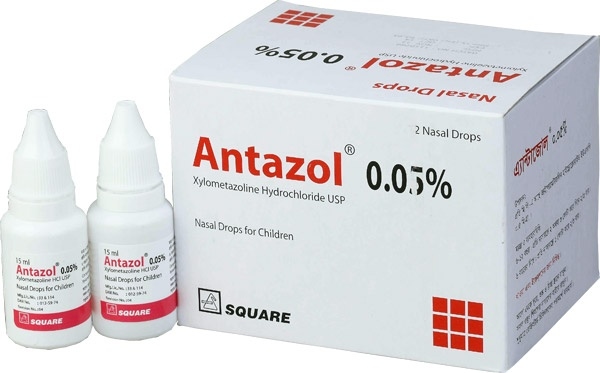
Nasal congestion – Children 2 to under 12 years0.05%1 spray or drop per nostril, once or twice daily, under adult supervision
Children under 2 yearsNot applicableNot recommended; safety and efficacy not established (see Contraindications)

Renal/hepatic impairment: No formal dose adjustment has been established for Xylometazoline because systemic absorption after intranasal use is normally minimal; caution is nonetheless advised (see Use in Special Populations).

Side Effects of Xylometazoline

Xylometazoline is generally well tolerated with short-term, correctly dosed use. Reported side effects include:

  • Common (local): Nasal irritation, burning or stinging sensation, dryness of the nasal mucosa, sneezing, and a transient increase in nasal discharge.
  • Rebound congestion (rhinitis medicamentosa): Worsening nasal congestion that recurs as the decongestant effect wears off, typically with use of Xylometazoline beyond the recommended 3–5 days; this is a well-established and clinically important limitation of this drug class (see Precautions and Warnings).
  • Uncommon/rare (systemic): Headache, palpitations, tachycardia, and elevated blood pressure, particularly with excessive or prolonged use, or in young children in whom systemic absorption is more likely.

Contraindications of Xylometazoline

Xylometazoline is contraindicated in:

  • Patients with known hypersensitivity to Xylometazoline or any component of the formulation.
  • Patients who are using, or have used within the past 14 days, a monoamine oxidase inhibitor (MAOI), because of the risk of a hypertensive crisis.
  • Children under 2 years of age, for whom safety and efficacy have not been established and serious systemic adverse effects have been reported (see Use in Special Populations).

Frequently Asked Questions about Xylometazoline

What is Xylometazoline used for?

Xylometazoline is a nasal decongestant used for short-term relief of nasal congestion caused by the common cold, allergic rhinitis (hay fever), or sinusitis. It works by narrowing the blood vessels in the nose to reduce swelling and open the airway.

How long can I use Xylometazoline?

Xylometazoline should not be used for more than 3–5 consecutive days. Using it for longer can cause rebound congestion (rhinitis medicamentosa), where the nose becomes more blocked once the medicine wears off, sometimes leading to a cycle of dependence on the spray. If congestion has not improved after this time, stop use and see a doctor.

Can children use Xylometazoline?

Yes, but the strength and dose depend on age. Children 2 to under 12 years should use the lower-strength (0.05%) formulation, while those 12 years and older can use the adult (0.1%) strength. Xylometazoline is not recommended for children under 2 years old because of a higher risk of serious side effects such as excessive sleepiness, slow heart rate, and low blood pressure.

Is it safe to use Xylometazoline during pregnancy or while breastfeeding?

Xylometazoline should be used during pregnancy or breastfeeding only if clearly needed, at the lowest effective dose and for the shortest possible time, after talking to a physician, because safety data are limited and it works by narrowing blood vessels.

What should I do if too much Xylometazoline is used by mistake?

If too much Xylometazoline is used, or it is accidentally swallowed – especially by a child – seek immediate medical attention or contact a poison control center right away, since excessive amounts can cause serious effects such as drowsiness, a slow heart rate, or low blood pressure in children, or a fast heart rate and high blood pressure in adults.

Can Xylometazoline be used with other decongestants or medicines?

Xylometazoline must not be used with, or within 14 days of, a monoamine oxidase inhibitor (MAOI) medicine, as this combination can cause a dangerous rise in blood pressure. It should also be used cautiously with other decongestants, certain antidepressants, or blood pressure medicines, so tell a doctor or pharmacist about all medicines being taken before using Xylometazoline.

Disclaimer

The information provided is accurate to the best of our knowledge, but it does not replace professional medical advice. We cannot guarantee its completeness or accuracy, and the absence of specific information about a drug should not be taken as an endorsement. We are not responsible for any consequences arising from this information, so please consult a healthcare professional for any concerns or questions.

DoctorBlogArticles
