
10% Off
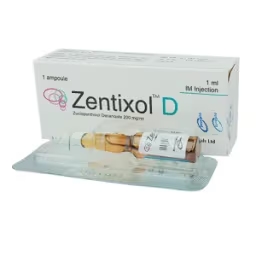
Zentixol D200 mg/ml
Incepta Pharmaceuticals Ltd.
৳360.00
Add to cart
Zuclopenthixol is a typical (first-generation) antipsychotic of the thioxanthene class.
Zuclopenthixol is a typical (first-generation) antipsychotic of the thioxanthene class. Its approved and evidence-supported uses differ by formulation and are classified below by strength of evidence.
Zuclopenthixol is not approved for the treatment of dementia-related behavioural disturbances in elderly patients (see Precautions and Warnings).
| Population | Dose |
|---|---|
| Adults – initial dose | 10–50 mg/day of Zuclopenthixol in divided doses, increased gradually according to response |
| Adults – usual therapeutic range | 20–60 mg/day of Zuclopenthixol (maximum 100 mg/day in more severe cases, under specialist supervision) |
| Adults – maintenance | 20–40 mg/day of Zuclopenthixol, titrated to the lowest effective dose |
| Elderly | Start at a fraction (e.g. one-quarter to one-half) of the usual adult dose of Zuclopenthixol and titrate cautiously (see Use in Special Populations) |
50–150 mg of Zuclopenthixol acuphase by deep intramuscular injection; may be repeated after 2–3 days if needed. Treatment with the acuphase form is generally limited to a maximum of around 2 weeks before switching to oral or depot Zuclopenthixol, and the cumulative course dose is typically capped by the prescriber's protocol.
For patients previously stabilised on oral Zuclopenthixol or being converted from another antipsychotic, a test dose of 100 mg of Zuclopenthixol decanoate is often given first. Maintenance doses of 200–500 mg by deep intramuscular injection every 2–4 weeks are typical; some patients require up to 600 mg per week under specialist supervision. Injection volumes greater than 2 mL should be divided between two injection sites (e.g. left and right gluteal muscle).
There are no formally established dose tables for renal or hepatic impairment; because Zuclopenthixol is predominantly hepatically metabolised, patients with hepatic impairment should be started on a lower dose with slower titration and close monitoring. In renal impairment, caution and clinical monitoring are advised. Specialist guidance should be sought in both situations.
Safety and efficacy of Zuclopenthixol have not been established in children and adolescents; it is not recommended for use in this age group (see Pediatric Uses).
Common side effects of Zuclopenthixol include:
Serious but less common effects of Zuclopenthixol include:
With the depot forms of Zuclopenthixol, adverse effects may take longer to appear and longer to resolve after stopping treatment compared with the oral form, because the drug continues to be released from the injection site for days to weeks.
Zuclopenthixol is contraindicated in the following situations (true absolute contraindications only):
Disclaimer
The information provided is accurate to the best of our knowledge, but it does not replace professional medical advice. We cannot guarantee its completeness or accuracy, and the absence of specific information about a drug should not be taken as an endorsement. We are not responsible for any consequences arising from this information, so please consult a healthcare professional for any concerns or questions.