Quick answer: Most knee and joint pain after 45 is osteoarthritis, a slow wearing of the joint cushion. Rest does not fix it; movement does. The best-proven home steps are daily thigh-strengthening exercises, weight loss if overweight, and diclofenac gel on the knee. Balms and sprays give short comfort only. See a doctor for a hot swollen joint, fever, a fall, locking, or pain lasting over 6 weeks.
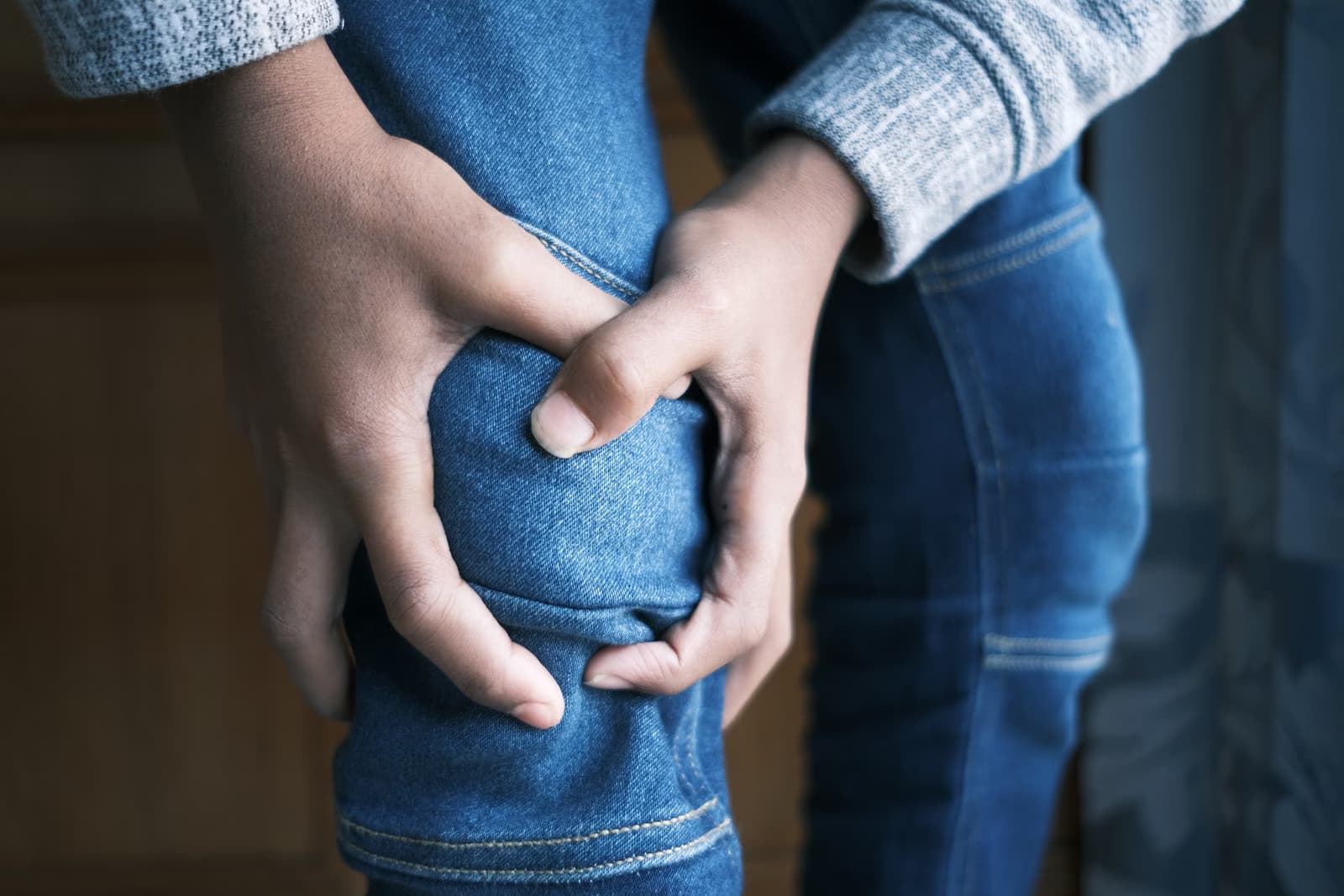
What is osteoarthritis, and why does my knee hurt?
Inside a joint, the bone ends are covered by a smooth cushion called cartilage. In osteoarthritis (OA), this cushion slowly gets thinner and rougher, and the muscles around it weaken. The result is pain, stiffness and sometimes a grating feeling, most often in the knees, hips and hands, says the NHS.
OA is more common after 45, in women, after injury, and in overweight people. NICE says a doctor can usually diagnose it without an X-ray if you are 45 or over, pain is worse with activity, and morning stiffness lasts under 30 minutes.
Does walking make knee pain worse?
Stopping all walking when the knee hurts is the most common mistake. Cartilage has no blood supply; it is fed when the joint moves. Strong thigh muscles act as shock absorbers; weeks of rest shrink them and make pain worse.
NICE tells doctors to offer exercise to everyone with OA; pain may rise a little at first, then steady practice brings the benefit. A Cochrane review found exercise reduces knee OA pain and improves daily function. A mild ache is fine; sharp pain or swelling over 2 hours means do less.
What works best for knee pain at home?
| Option | Evidence | What to expect |
|---|---|---|
| Exercise and thigh strengthening | Good (NICE, Cochrane) | Less pain, easier walking in 6 to 12 weeks |
| Weight loss if overweight | Good (NICE) | Any loss helps; 10% of body weight beats 5% |
| Diclofenac gel (topical NSAID) | Good (NICE first choice; Cochrane) | 6 in 10 get good relief, vs 5 in 10 with dummy gel |
| Paracetamol; capsaicin (chilli) cream | Limited | Occasional help; capsaicin burns at first |
| Balms, oils, sprays | Limited, short-term | Warm or cool feeling for a while |
| Glucosamine, “joint” supplements | No strong evidence (NICE: do not offer) | Unlikely to change pain |
1. Five simple knee exercises (from Versus Arthritis)
- Sitting leg raise. Sit upright on a chair. Straighten one knee, lift the foot, hold for a slow count of 10. 10 times each leg.
- Knee press. Sit with legs straight, a rolled towel under one knee. Press the knee down, toes pulled towards you, for 5 seconds. 10 times each leg.
- Lying leg raise. Lie on your back, one knee bent. Lift the straight leg just off the bed for 5 seconds. 5 times each leg, twice a day.
- Sit to stand. Stand up from a chair and sit down slowly without using your hands. Repeat until tired; 3 sets.
- Step-ups. Step onto the bottom stair, bring the other foot up, step down. Hold the rail. Until tired; 3 sets.
Do these slowly every day, plus a 20 to 30 minute walk on most days; cycling and swimming are gentler still.
2. Diclofenac gel first, not tablets
NICE says: offer a topical NSAID (anti-inflammatory gel) for knee OA; tablets only if the gel fails. A Cochrane review found diclofenac gel helps about 1 extra person in 10 compared with a dummy gel, with far less drug reaching the blood. Voligel and Clofenac gel contain diclofenac sodium.
- Rub a thin layer into the knee 3 to 4 times a day, as the pack says. Wash your hands. Give it 6 to 12 weeks.
- Not on broken skin, no tight bandage, never heat the area. Stop if you get a rash.
- Ask a doctor before adding NSAID tablets, and before use if pregnant, allergic to aspirin or NSAIDs, or you have asthma, kidney disease or ulcers.
3. Paracetamol: limited help
NICE says there is no strong evidence that paracetamol helps OA, so keep it for a bad day. Adults: 500 mg to 1 g up to 4 times a day, never over 4 g in 24 hours (3 g if small or with liver disease).
4. Walking stick, shoes, heat and cold
NICE says consider a walking stick; hold it in the hand opposite the painful knee. Wear shoes with thick, cushioned soles. Use a warm towel for 15 to 20 minutes for morning stiffness, and a wrapped cold pack for 15 to 20 minutes when the knee is hot and puffy after activity. Never heat a new injury or skin with balm on it.
Where do balms, creams and sprays like Moov or Zandu fit?
Balms contain menthol, wintergreen oil (methyl salicylate), eucalyptus, camphor, turpentine or capsaicin. They are counterirritants: the cool or warm feeling on the skin distracts the nerves from the deeper pain. They do not repair cartilage, and evidence for lasting relief is limited.
- Zandu Ultra Power Balm. The pack says: menthol, oil of wintergreen, clove oil and capsaicin extract; 2 to 3 times a day, maximum 4; adults and children over 5; not on open wounds.
- Moov Cream. The pack says: wintergreen oil, mint extract, turpentine oil and eucalyptus oil; massage 3 to 4 times a day; avoid eyes and broken skin; ask a doctor in pregnancy. Check the pack.
- Moov Spray. The pack says: wintergreen oil, eucalyptus oil, turpentine oil and menthol; 2 to 3 times daily; not near eyes, mouth or nose; flammable.
- Tiger Balm Red. The MedEasy page gives no ingredient or direction details; check the pack.
Safe use of any balm or spray
- Never put a heating pad, hot water bag or hot towel over a balm, or bandage tightly over it: this can burn the skin and push more drug into the blood (FDA warning).
- Not on broken skin or for children under 2. Keep away from eyes, nose and mouth; camphor and menthol are poisonous if swallowed. Stop if a rash appears.
- Methyl salicylate is absorbed through the skin: avoid large areas and frequent use, and ask a doctor first if allergic to aspirin, on warfarin or pregnant.
Browse the Pain and Cold Relief page and the balms, oils and sprays section.
What should I avoid or be careful with?
- NSAID tablets for weeks without a doctor. They can cause stomach bleeding, kidney damage and high blood pressure, especially in older people. Avoid in kidney disease, ulcers, pregnancy and dengue fever.
- Injections from unqualified people. A doctor may give an occasional steroid injection (NICE: relief lasts 2 to 10 weeks). Repeated injections at a pharmacy counter, including quick diclofenac shots, risk infection and damage.
- “Miracle” joint supplements. NICE finds no strong evidence for glucosamine. Unlikely to harm, but no substitute for exercise.
- Floor sitting, deep squatting and squat toilets if they hurt. Use a chair or low stool and a commode toilet; praying on a chair is permitted.
- Calcium and vitamin D tablets only if deficient. They strengthen bone, not cartilage; see our article on calcium and bone health.
When should I see a doctor?
See a doctor soon if:
- The joint is hot, red and swollen, or you have fever: possible infection or gout, same-day care.
- You cannot put weight on the leg after a fall. Call 999 if the knee looks deformed.
- The knee locks, gives way or clicks painfully.
- Morning stiffness over 30 to 60 minutes in several small joints of both hands or feet: a sign of rheumatoid arthritis, which needs early treatment.
- Pain wakes you at night, you are losing weight, or there is no improvement after 6 weeks.
Talk to a doctor online through MedEasy doctor consultation; go to a hospital for urgent signs.
What can a doctor offer?
A physiotherapy exercise plan; an X-ray only if the picture is unusual (NICE); blood tests for rheumatoid arthritis or gout; tablets with stomach protection; a steroid injection if other options fail; and for severe OA, knee replacement, which NICE says age or weight alone should not block.
Common beliefs and questions in Bangladesh
“Knee pain means I must rest and stop walking.”
A day or two of rest after a flare is fine. Beyond that, rest weakens the thigh muscles and worsens the knee. Walking and exercise are the treatment.
“Climbing stairs and walking wear out the joint.”
Normal walking and stairs keep the knee nourished and strong. Going up, lead with the good leg; coming down, with the painful one.
“A balm that heats strongly repairs the cartilage.”
No balm reaches the cartilage. The heat is a skin sensation that distracts from pain for a while; stronger heat only risks burns.
“Joint pain is just old age, nothing helps.”
Age raises the risk, but exercise, weight loss and diclofenac gel help at any age, and surgery helps severe cases.
“Calcium tablets fix knee pain.”
Calcium strengthens bone and helps prevent osteoporosis (thin bones). It does not rebuild cartilage or ease OA pain.
References
- Osteoarthritis in over 16s: diagnosis and management (NG226) - NICE
- Osteoarthritis - NHS
- Knee pain - NHS
- Exercises for the knees - Versus Arthritis
- Topical NSAIDs for chronic musculoskeletal pain in adults - Cochrane
- Exercise for osteoarthritis of the knee - Cochrane
This article is for general awareness and is not a substitute for advice from a doctor. Balms, gels and sprays relieve symptoms only and do not treat the cause of joint pain. See a doctor for the warning signs above or if pain does not improve.