
10% Off
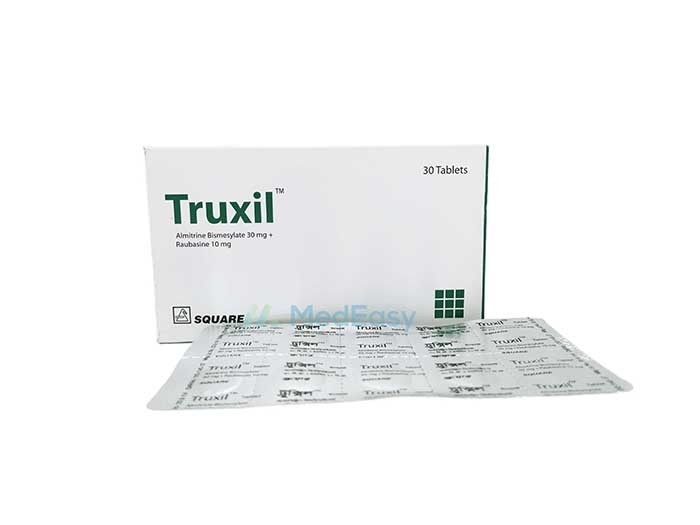
Truxil30 mg+10 m
Square Pharmaceuticals PLC.
৳9.90
Add to cart
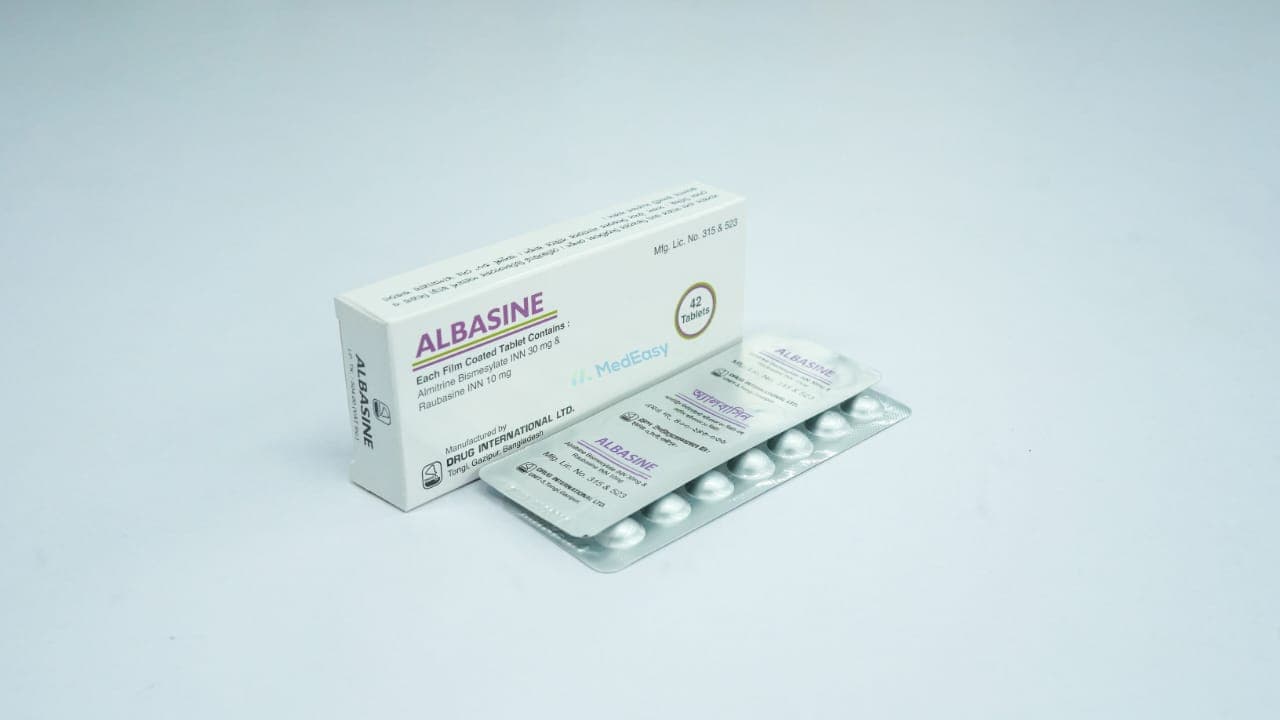

Albasine is a combination product that has historically been marketed (mainly in parts of Europe, Asia, and other regions, including Bangladesh) for a limited set of circulatory and neurosensory complaints, mostly in older adults. Evidence for meaningful clinical benefit from modern controlled trials is limited, and the product has been withdrawn in some countries on safety grounds; it should be regarded as an adjunctive or symptomatic therapy rather than a disease-modifying treatment.
Modern systematic reviews have found the quality and quantity of trial evidence for Albasine in these indications to be limited, and regulatory agencies in some countries have restricted or withdrawn oral almitrine-containing products due to safety concerns (see Precautions and Warnings). Albasine should only be used under a physician's guidance, with the treatment goal and duration reassessed periodically.
Almitrine Bismesylate + Raubasine is a fixed-dose combination tablet typically containing almitrine bismesylate 30 mg and raubasine 10 mg per tablet, corresponding to their respective base equivalents. Exact strength and excipients (including lactose) can vary by manufacturer; patients with lactose intolerance or galactosemia should check the product leaflet.
Albasine combines two pharmacologically distinct agents in one tablet: almitrine bismesylate, a peripheral chemoreceptor agonist and respiratory stimulant, and raubasine, a rauwolfia-derived alkaloid with vasoactive and rheologic (blood-flow-improving) properties. The combination was developed with the rationale of simultaneously improving oxygen delivery to tissue (via almitrine's effect on ventilation-perfusion matching) and cerebral/peripheral microcirculation (via raubasine's vasoactive effects), for use in circulatory-related neurosensory complaints of aging and post-stroke recovery.
Use of Albasine has declined in many markets over recent decades because of safety concerns — most notably a well-documented association between oral almitrine and peripheral neuropathy and unintended weight loss — together with modest efficacy data by current evidence standards. It remains available in some countries, including Bangladesh, but should be prescribed conservatively and monitored closely.
Cerebral vasodilator and neurosensory oxygenator — a fixed-dose combination of a respiratory stimulant/peripheral chemoreceptor agonist (almitrine) and a vasoactive rauwolfia alkaloid (raubasine). Albasine is classified among cerebro-active/circulatory agents used in age-related and post-stroke neurosensory complaints.
Almitrine Bismesylate + Raubasine acts through the complementary mechanisms of its two components:
Together, the two components are proposed to improve tissue oxygen delivery and microcirculatory flow in the brain, retina, and inner ear, which is the pharmacological rationale for the indications of Almitrine Bismesylate + Raubasine. Clinical correlation between these pharmacological effects and durable patient-important outcomes is limited by modern evidence standards.
| Indication | Typical dose |
|---|---|
| Post-stroke recovery / age-related neurosensory complaints / chorioretinal or cochleo-vestibular circulatory disorders | 1 tablet once daily, or 1 tablet twice daily (morning and midday/afternoon, spaced several hours apart), taken with meals. Maximum 2 tablets per day. |
Treatment should be initiated and supervised by a physician, and the response reassessed periodically (typically every few months) to confirm continued benefit, since evidence for long-term benefit of Albasine is limited.
Not established; Albasine is not indicated for use in children (see Pediatric Uses).
Albasine is contraindicated in severe hepatic impairment (see Contraindications). No well-established dose adjustment for renal impairment has been defined; use with caution and close monitoring in patients with significant renal impairment.
Albasine tablets should be swallowed whole with a glass of water, preferably taken with or after meals to reduce gastrointestinal discomfort. If twice-daily dosing is prescribed, the two doses should be spaced several hours apart (e.g., morning and midday/afternoon) rather than taken close together. Do not crush or chew the tablet unless advised by a physician or pharmacist.
Clinically significant interactions with Albasine include:
Patients should inform their physician of all other medicines, supplements, and herbal products they are taking before starting Albasine.
Almitrine Bismesylate + Raubasine is contraindicated in patients with:
Reported adverse effects of Albasine include:
The safety of Albasine in human pregnancy has not been well established. As a general precaution, Albasine is not recommended during pregnancy and should be used only if clearly needed and the potential benefit to the mother justifies the potential risk to the fetus, after consulting a physician.
It is not known whether the components of Albasine pass into breast milk. Because of insufficient safety data, use during breastfeeding is not recommended; a physician should be consulted to weigh the benefits of treatment against potential risk to the nursing infant.
Peripheral neuropathy and weight loss: Long-term regulatory review has identified a clear association between oral almitrine-containing products (such as Albasine) and potentially serious, sometimes long-lasting, peripheral neuropathy, as well as significant weight loss; this safety signal led to withdrawal of oral almitrine-containing products in some countries. Patients on Albasine should be monitored periodically for numbness, tingling, burning sensation, or weakness in the extremities, and for unexplained weight loss. Treatment should be stopped promptly if peripheral neuropathy is suspected, and the patient referred for neurological evaluation.
Risk factors for neuropathy: Patients with diabetes mellitus, chronic alcohol use, or other pre-existing risk factors for peripheral nerve damage may be at increased risk and require closer monitoring.
Limited evidence base: Modern controlled trial evidence supporting durable clinical benefit of Albasine is limited. Treatment duration should be kept as short as clinically justified, with periodic reassessment of continued need.
Hepatic impairment: Use with caution in mild-to-moderate hepatic impairment; contraindicated in severe hepatic impairment (see Contraindications).
Lactose content: Some formulations of Albasine contain lactose; patients with galactosemia, glucose-galactose malabsorption, or severe lactase deficiency should avoid this product.
Do not exceed the recommended dose. Albasine should be taken exactly as prescribed and not shared with others, and any new or unusual symptoms should be reported to a physician promptly.
Reported features of Albasine overdose include rapid heart rate (tachycardia), low blood pressure (hypotension), rapid breathing (tachypnoea), and respiratory alkalosis. There is no specific antidote. If overdose of Albasine is suspected, seek immediate medical attention or contact a poison control center/emergency services; treatment is supportive and symptomatic under medical supervision. Do not attempt specific home treatment for a suspected overdose.
Store at room temperature (below 30°C), away from light and moisture. Keep out of reach of children.
Elderly: Albasine is commonly used in the elderly population for age-related neurosensory complaints; however, this group may also be at higher risk of peripheral neuropathy and should be monitored closely for early signs (see Precautions and Warnings).
Patients with diabetes or chronic alcohol use: increased baseline risk of peripheral neuropathy; use Albasine with added caution and closer monitoring in these patients.
Hepatic impairment: contraindicated in severe impairment; use with caution and physician supervision in mild-to-moderate impairment.
Renal impairment: no well-established dose adjustment; use with caution and monitor closely.
Pregnancy and breastfeeding: see Pregnancy and Lactation.
Children: not indicated; see Pediatric Uses.
There is no universally fixed duration of treatment for Albasine; because evidence for long-term benefit is limited and because peripheral neuropathy risk with almitrine has been associated with prolonged use, treatment should be given for the shortest period consistent with clinical need, with the physician reassessing continued benefit and monitoring for neuropathy symptoms at regular intervals (e.g., every few months), and discontinuing promptly if no clear benefit is seen or if neuropathy symptoms develop.
Almitrine Bismesylate + Raubasine belongs to the combination class of cerebral vasodilators / neurosensory oxygenators, comprising: (1) a peripheral chemoreceptor agonist and respiratory stimulant (almitrine bismesylate), and (2) a vasoactive rauwolfia (indole) alkaloid with alpha-adrenolytic properties (raubasine).
Almitrine Bismesylate + Raubasine works through two complementary mechanisms: almitrine bismesylate stimulates peripheral (carotid body) chemoreceptors to improve ventilation-perfusion matching and raise arterial oxygen tension in hypoxaemic states, while raubasine exerts alpha-adrenolytic and vasoactive effects that are believed to improve cerebral and peripheral microcirculatory blood flow and rheology. The combined effect is intended to improve oxygen and blood delivery to the brain, retina, and inner ear in circulatory-related neurosensory conditions.
The safety and efficacy of Albasine have not been established in children and adolescents. Albasine is not indicated for pediatric use, and it should not be given to children outside of a physician's explicit direction in an exceptional clinical circumstance.
Q: What is Albasine 30 mg+10 mg Tablet used for?
A: Albasine 30 mg+10 mg Tablet is used mainly in adults for supportive recovery after ischaemic stroke, and for age-related neurosensory complaints (memory/concentration difficulty, dizziness) as well as circulatory-related visual and hearing/balance disturbances. It is an adjunctive therapy, and modern evidence for its benefit is limited, so it should be used under a physician's guidance.
Q: How should I take Albasine 30 mg+10 mg Tablet?
A: The usual dose is 1 tablet once or twice daily (doses spaced several hours apart), not exceeding 2 tablets per day, taken with meals. Follow your physician's specific instructions and do not increase the dose on your own.
Q: What are the most important side effects to watch for?
A: Along with common effects like nausea, dizziness, insomnia, and weight loss, the most important concern with Albasine 30 mg+10 mg Tablet is peripheral neuropathy — numbness, tingling, or weakness in the hands or feet — which has been specifically linked to almitrine, one of its components, especially with prolonged use. Tell your doctor immediately if you notice these symptoms, since Albasine 30 mg+10 mg Tablet may need to be stopped.
Q: Can Albasine 30 mg+10 mg Tablet be used during pregnancy or breastfeeding?
A: Albasine 30 mg+10 mg Tablet is not recommended during pregnancy or breastfeeding because safety has not been well established. It should only be used if a physician determines the potential benefit clearly outweighs the potential risk to the baby.
Q: Who should not take Albasine 30 mg+10 mg Tablet?
A: Albasine 30 mg+10 mg Tablet should not be used by people who are hypersensitive to either component, those with severe liver impairment, those with significant existing peripheral neuropathy, or those with severe respiratory failure without close specialist supervision.
Q: What should I do if I take too much Albasine 30 mg+10 mg Tablet?
A: An overdose of Albasine 30 mg+10 mg Tablet can cause a fast heartbeat, low blood pressure, fast breathing, and respiratory alkalosis. If you suspect an overdose, seek immediate medical attention or contact emergency services/poison control right away rather than trying to manage it at home.
Disclaimer
The information provided is accurate to the best of our knowledge, but it does not replace professional medical advice. We cannot guarantee its completeness or accuracy, and the absence of specific information about a drug should not be taken as an endorsement. We are not responsible for any consequences arising from this information, so please consult a healthcare professional for any concerns or questions.

