
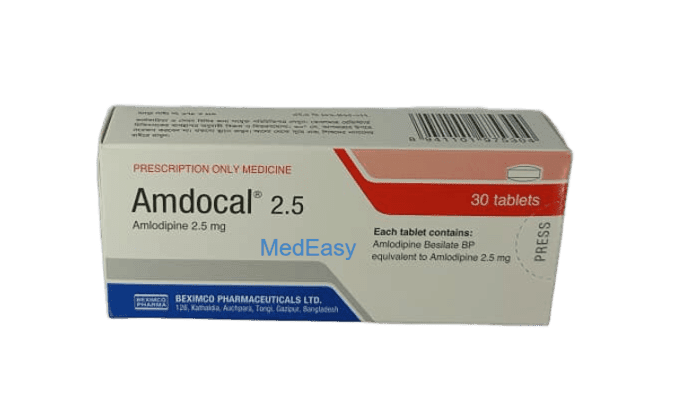

Medicine overview
Indications of Amdocal
Amdocal is a long-acting dihydropyridine calcium channel blocker indicated for the following:
Established/FDA-approved uses
- Hypertension: Indicated alone or in combination with other antihypertensive agents for the treatment of high blood pressure in adults and children 6 years of age and older, to lower blood pressure and reduce the risk of fatal and non-fatal cardiovascular events, primarily strokes and myocardial infarctions.
- Chronic Stable Angina: Indicated for the management of chronic stable angina, either as monotherapy or in combination with other antianginal agents.
- Vasospastic (Prinzmetal's or Variant) Angina: Indicated for the treatment of confirmed or suspected vasospastic angina.
- Coronary Artery Disease (CAD): Indicated to reduce the risk of hospitalization for angina and the need for revascularization procedures in patients with recently documented CAD by angiography and without heart failure or an ejection fraction less than 40%.
Adjunct/combination use
- Often combined with an ACE inhibitor, ARB, diuretic, or statin (as fixed-dose combinations) for comprehensive management of hypertension and cardiovascular risk reduction.
Note: This medicine does not stop chest pain once it starts; other prescribed medicines should be used for acute anginal attacks as directed by a physician.
Composition
Each tablet contains Amlodipine Besilate equivalent to Amlodipine (2.5 mg, 5 mg, or 10 mg), as commonly marketed. The besilate (besylate) salt form is used to improve the stability and manufacturability of amlodipine.
Description
Amdocal is a long-acting calcium channel blocker of the dihydropyridine class. It is chemically distinct from non-dihydropyridine calcium channel blockers (such as verapamil or diltiazem) and acts predominantly on vascular smooth muscle rather than cardiac muscle. Amdocal has a slow onset of action and a long elimination half-life (approximately 30-50 hours), allowing for once-daily dosing and providing smooth, sustained blood pressure control with minimal reflex sympathetic activation compared to shorter-acting dihydropyridines.
Therapeutic Class
Amdocal belongs to the dihydropyridine calcium channel blocker (CCB) class of antihypertensive and antianginal medicines.
Pharmacology
Mechanism of Action
Amlodipine Besilate inhibits the transmembrane influx of calcium ions into vascular smooth muscle and cardiac muscle by blocking L-type calcium channels. It acts primarily on vascular smooth muscle, producing a direct relaxant (vasodilatory) effect that reduces peripheral vascular resistance and lowers blood pressure. In angina, Amlodipine Besilate dilates coronary arteries and arterioles, increasing myocardial oxygen delivery, and also reduces total peripheral resistance (afterload), decreasing myocardial oxygen demand.
Pharmacokinetics
| Parameter | Value |
|---|---|
| Absorption | Slowly and well absorbed orally; peak plasma levels in 6-12 hours; bioavailability ~64-90%, unaffected by food |
| Protein binding | ~93% |
| Metabolism | Extensively hepatic (mainly via CYP3A4) to inactive metabolites |
| Half-life | Approximately 30-50 hours (prolonged in hepatic impairment and the elderly) |
| Excretion | ~10% as unchanged drug and ~60% as metabolites in urine; remainder in feces |
Dosage & Administration of Amdocal
Hypertension - Adult Dose
Initial dose: 5 mg once daily; may be increased to a maximum of 10 mg once daily. In small, fragile, elderly patients or those with hepatic insufficiency, an initial dose of 2.5 mg once daily may be used. Dose titration should generally occur over 7-14 days.
Hypertension - Pediatric Dose (6-17 years)
Usual initial dose is 2.5 mg to 5 mg once daily; doses above 5 mg daily have not been studied in pediatric patients.
Chronic Stable or Vasospastic Angina - Adult Dose
Usual dose is 5-10 mg once daily; most patients require 10 mg. In elderly patients or those with hepatic insufficiency, start at 5 mg once daily.
Coronary Artery Disease
Dose range of 5-10 mg once daily, titrated as tolerated.
Administration
Take Amdocal by mouth once daily, with or without food, at approximately the same time each day. Swallow the tablet whole; do not crush or chew unless directed by a physician. If a dose is missed, take it as soon as remembered unless it is almost time for the next dose.
Renal Impairment
No dosage adjustment is required in patients with renal impairment, as amlodipine is not significantly removed by dialysis.
Hepatic Impairment
Since amlodipine is extensively metabolized by the liver, a lower starting dose (2.5 mg once daily) and slower titration are recommended in patients with hepatic impairment.
Administration of Amdocal
Oral use only, once daily, with or without food, swallowed whole with water.
Interaction of Amdocal
Clinically Significant Interactions
- Strong CYP3A4 inhibitors (e.g., ketoconazole, itraconazole, clarithromycin, ritonavir): May significantly increase amlodipine plasma concentrations, increasing risk of hypotension and edema; dose reduction of Amdocal may be needed, particularly in elderly patients.
- Strong CYP3A4 inducers (e.g., rifampin, carbamazepine, phenytoin, St. John's Wort): May reduce plasma concentrations of Amdocal, reducing efficacy; blood pressure should be monitored.
- Simvastatin: Co-administration increases simvastatin systemic exposure; limit simvastatin dose to 20 mg daily when used with Amdocal.
- Other antihypertensives, diuretics, or nitrates: Additive blood pressure-lowering effect; may increase risk of symptomatic hypotension, particularly with initial doses.
- Cyclosporine or tacrolimus: Amlodipine may increase plasma levels of these agents; monitoring of drug levels is recommended.
- Grapefruit juice: May modestly increase amlodipine plasma levels; not usually clinically significant but caution is reasonable.
Contraindications
Amlodipine Besilate is contraindicated in patients with:
- Known hypersensitivity to amlodipine or other dihydropyridine calcium channel blockers.
Severe aortic stenosis and cardiogenic shock are situations requiring caution rather than true absolute contraindications for all dihydropyridines, but vasodilation from Amlodipine Besilate can worsen hemodynamics in severe fixed left ventricular outflow obstruction or shock states; use in these settings should be avoided unless specifically directed by a specialist. See Precautions and Warnings for further detail.
Side Effects of Amdocal
Common Side Effects
- Peripheral edema (ankle/leg swelling) - the most common reason for discontinuation, typically dose-dependent
- Headache
- Flushing
- Dizziness
- Palpitations
- Fatigue/somnolence
- Nausea, abdominal pain
Less Common but Notable
- Reflex tachycardia, especially at treatment initiation
- Gingival hyperplasia (gum overgrowth) with long-term use, reported with the dihydropyridine class
- Rarely, worsening of angina or myocardial infarction can occur on initiation or dose increase, particularly in patients with severe obstructive coronary artery disease (see Precautions and Warnings)
Pregnancy & Lactation
Pregnancy: Data on the use of Amdocal in pregnant women are limited. Animal reproduction studies have not shown clear evidence of harm at clinically relevant doses, but human data are insufficient to establish safety. Amdocal should be used during pregnancy only if the potential benefit justifies the potential risk to the fetus, and only under the direct supervision of a physician.
Lactation: Amlodipine is present in human breast milk in small amounts. There is no well-controlled information on effects on the breastfed infant or on milk production. A decision on breastfeeding during use of Amdocal should weigh the developmental and health benefits of breastfeeding against the mother's clinical need for the medicine and any potential adverse effects on the infant, in consultation with a physician.
Precautions & Warnings
General Precautions
- Symptomatic hypotension: May occur, particularly in patients with severe aortic stenosis, or when combined with other antihypertensive agents; monitor closely at initiation.
- Increased angina or myocardial infarction: Rarely, patients (particularly those with severe obstructive coronary artery disease) may develop increased frequency, duration, or severity of angina or acute myocardial infarction on starting Amdocal or at the time of dose increase; the mechanism is not established.
- Peripheral edema: Common and dose-related; usually mild-to-moderate and does not typically indicate fluid retention or worsening heart failure, but should be evaluated if severe or accompanied by other symptoms.
- Hepatic impairment: Since Amdocal is extensively metabolized by the liver, patients with hepatic impairment may have prolonged half-life and higher plasma levels; use a lower starting dose and titrate slowly.
- Heart failure: Use with caution; while amlodipine has not been shown to increase mortality risk in heart failure, other dihydropyridines have been associated with increased cardiovascular events in severe heart failure.
- Abrupt discontinuation in angina patients: Discontinuation should be done under medical guidance; although amlodipine's long half-life makes rebound effects less likely than with shorter-acting antianginals, abrupt withdrawal is not recommended without physician advice.
- Gingival hyperplasia: Rare, reported with long-term use of dihydropyridine calcium channel blockers; maintain good oral hygiene and report gum swelling to a physician or dentist.
Overdose Effects of Amdocal
Overdosage with Amdocal may cause excessive peripheral vasodilation leading to marked and potentially prolonged systemic hypotension, reflex tachycardia, and shock. If overdose is suspected, seek immediate medical attention or contact emergency services/a poison control center right away. Do not attempt to manage an overdose at home. Hospital management may include cardiovascular monitoring, supportive measures for blood pressure and cardiac function, and other treatment as directed by a physician; because of amlodipine's slow absorption and long half-life, close monitoring for an extended period is generally warranted.
Storage Conditions
Store at room temperature (below 30°C), away from light and moisture. Keep out of reach of children.
Use In Special Populations
Pediatric Use
Safety and effectiveness for hypertension have been established in children 6 years of age and older; use in children under 6 years has not been established. Doses above 5 mg daily have not been studied in this population. Effectiveness for angina or coronary artery disease has not been established in children.
Geriatric Use
Elderly patients may have reduced clearance of Amdocal, with a longer half-life and higher plasma concentrations; a lower starting dose (2.5 mg once daily) and slower titration are recommended, along with closer monitoring for hypotension and edema.
Hepatic Impairment
Use a lower starting dose and titrate slowly (see Dosage and Administration).
Renal Impairment
No dose adjustment generally required; Amdocal is not removed by dialysis.
Duration Of Treatment
Amdocal is typically used long-term for chronic conditions such as hypertension and angina. Duration of treatment should be determined by a physician based on blood pressure control, symptom response, and tolerability; it is not intended for short-term or as-needed use.
Drug Classes
Calcium Channel Blocker (Dihydropyridine class); Antihypertensive; Antianginal agent.
Mode Of Action
Amlodipine Besilate selectively inhibits calcium ion influx across cell membranes of vascular smooth muscle via L-type calcium channels, with a greater effect on vascular smooth muscle than cardiac muscle, resulting in direct arterial vasodilation, reduced peripheral vascular resistance, and lowered blood pressure, along with dilation of coronary arteries that increases myocardial oxygen supply in angina.
Pregnancy
Category C
Pediatric Uses
Amdocal is approved for the treatment of hypertension in children 6 years of age and older, at doses of 2.5-5 mg once daily; doses above 5 mg daily have not been studied in pediatric patients. Safety and efficacy have not been established for children under 6 years of age, or for angina/coronary artery disease indications in any pediatric age group. Pediatric use should be supervised by a physician experienced in managing pediatric hypertension.
Frequently Asked Questions
Q: What is Amdocal 2.5 mg Tablet used for?
A: Amdocal 2.5 mg Tablet is mainly used to treat high blood pressure (hypertension) and certain types of chest pain (angina), including chronic stable angina and vasospastic (Prinzmetal's) angina. It works by relaxing blood vessels, which lowers blood pressure and improves blood flow to the heart.
Q: How should I take Amdocal 2.5 mg Tablet?
A: Take Amdocal 2.5 mg Tablet once daily by mouth, with or without food, at about the same time each day, exactly as prescribed by your physician. Do not stop taking it suddenly without consulting your doctor, especially if you are being treated for angina.
Q: What are the common side effects of Amdocal 2.5 mg Tablet?
A: The most common side effects are swelling of the ankles or legs (peripheral edema), headache, flushing, dizziness, and fatigue. These are often mild but should be reported to your doctor if bothersome or severe.
Q: Can Amdocal 2.5 mg Tablet be taken during pregnancy or breastfeeding?
A: Data on Amdocal 2.5 mg Tablet use in pregnancy are limited, so it should only be used if the potential benefit clearly justifies the potential risk to the fetus, under a physician's supervision. Small amounts pass into breast milk, so breastfeeding mothers should discuss the risks and benefits with their doctor before use.
Q: Who should not take Amdocal 2.5 mg Tablet?
A: People with a known hypersensitivity (allergic reaction) to amlodipine or other dihydropyridine calcium channel blockers should not take Amdocal 2.5 mg Tablet. Caution is also needed in severe aortic stenosis, cardiogenic shock, and severe liver impairment - your doctor will assess whether it is safe for you.
Q: What should I do if I miss a dose or take too much Amdocal 2.5 mg Tablet?
A: If you miss a dose, take it as soon as you remember unless it is almost time for your next dose - do not double up. If you or someone else has taken too much Amdocal 2.5 mg Tablet and shows signs of severe dizziness, fainting, or very low blood pressure, seek immediate medical attention or contact emergency services/poison control right away.
Disclaimer
The information provided is accurate to the best of our knowledge, but it does not replace professional medical advice. We cannot guarantee its completeness or accuracy, and the absence of specific information about a drug should not be taken as an endorsement. We are not responsible for any consequences arising from this information, so please consult a healthcare professional for any concerns or questions.
