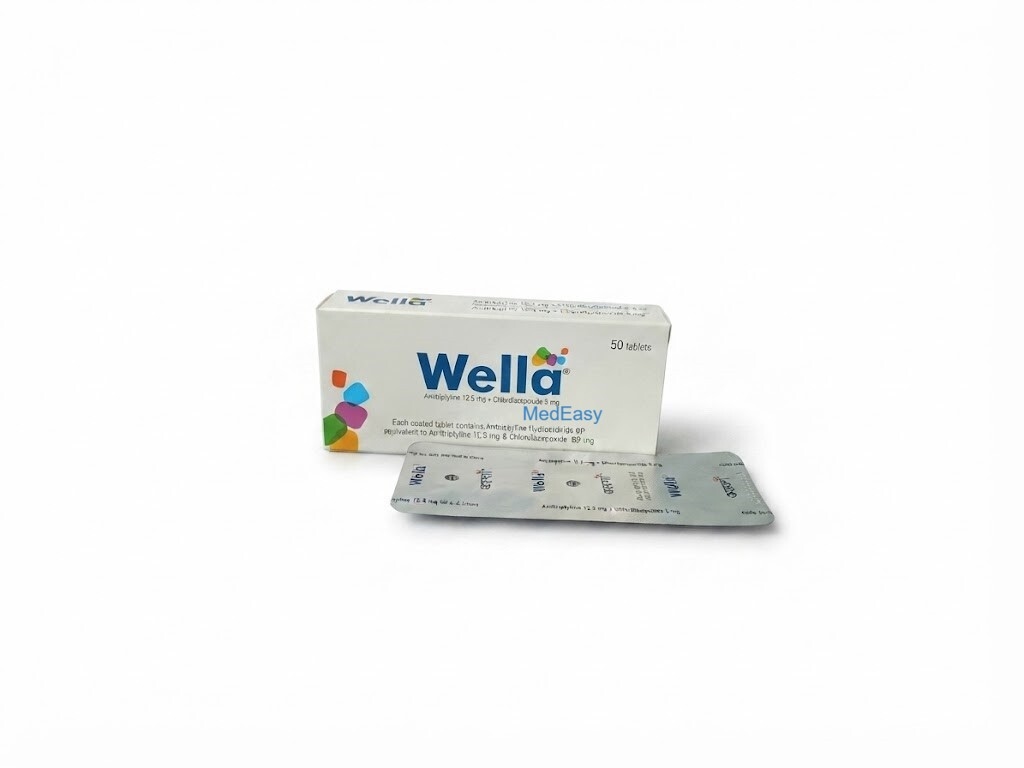
10% Off
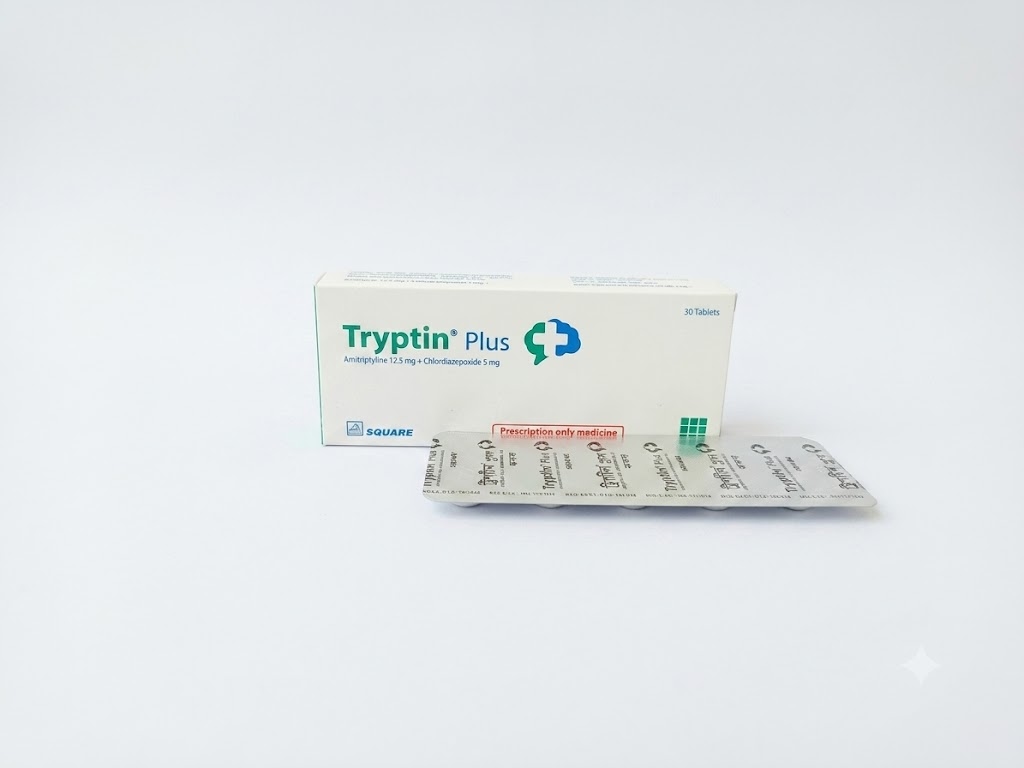
Tryptin Plus12.5 mg+5
Square Pharmaceuticals PLC.
৳72.00
Add to cart
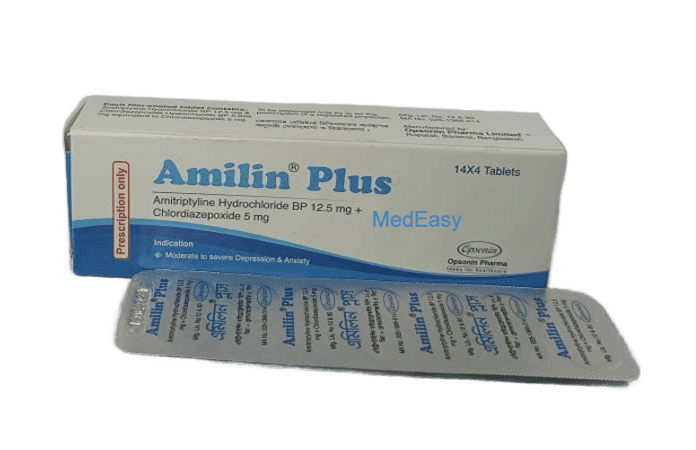

Amilin Plus is a fixed-dose combination of a tricyclic antidepressant (amitriptyline) and a benzodiazepine anxiolytic (chlordiazepoxide). It is indicated for:
Amilin Plus is not indicated for mild depression, uncomplicated anxiety without depression, or as a first-line agent given the availability of antidepressants with more favorable safety profiles; it should be reserved for patients who specifically require combined treatment of depression with prominent anxiety.
Each tablet of Amitriptyline Hydrochloride + Chlordiazepoxide typically contains Amitriptyline Hydrochloride (commonly 12.5 mg or 25 mg) and Chlordiazepoxide (commonly 5 mg or 10 mg) as the active ingredients, along with pharmaceutically acceptable excipients. Strength combinations vary by manufacturer; the prescribed product's label should always be checked for the exact strength.
Amilin Plus combines two pharmacologically distinct agents in a single tablet. Amitriptyline is a tricyclic antidepressant (TCA) that increases synaptic availability of serotonin and norepinephrine by inhibiting their reuptake, and also has notable anticholinergic and antihistaminic properties. Chlordiazepoxide is a long-acting benzodiazepine that enhances the inhibitory effect of gamma-aminobutyric acid (GABA) at the GABA-A receptor, producing anxiolytic, sedative, and muscle-relaxant effects.
The rationale for combining these two agents is to treat depressive illness in which anxiety is a prominent early feature, using the benzodiazepine to provide rapid symptomatic relief of anxiety and insomnia while the slower-onset antidepressant effect of amitriptyline takes hold.
Amilin Plus belongs to the therapeutic class of tricyclic antidepressant + benzodiazepine combination agents, used in psychiatry for depressive disorders complicated by anxiety.
Amitriptyline is a tricyclic antidepressant that non-selectively inhibits the reuptake of serotonin and norepinephrine at presynaptic nerve terminals, increasing their concentration in the synaptic cleft. It also has significant antagonist activity at muscarinic (anticholinergic effects), histamine H1 (sedation, weight gain), and alpha-1 adrenergic receptors (orthostatic hypotension). It has quinidine-like membrane-stabilizing effects on cardiac tissue that can slow cardiac conduction.
Chlordiazepoxide is a benzodiazepine that binds to a specific site on the GABA-A receptor complex, enhancing the affinity of GABA for its receptor and increasing chloride ion influx, resulting in neuronal hyperpolarization and central nervous system depression. This produces anxiolytic, sedative-hypnotic, muscle-relaxant, and anticonvulsant effects.
In Amitriptyline Hydrochloride + Chlordiazepoxide, these complementary mechanisms are combined so that anxiolytic relief begins within hours of the first dose, while the antidepressant effect of amitriptyline typically requires 2-4 weeks of continued therapy to become apparent.
| Indication | Population | Typical Dosing |
|---|---|---|
| Depression with moderate-to-severe anxiety | Adults | Usually 1 tablet 3-4 times daily; may be increased gradually as needed and tolerated, up to a maximum guided by the physician. A larger proportion of the daily dose may be given at bedtime because of the sedative effect. |
| Maintenance therapy | Adults | Once symptoms are controlled, the dose is reduced gradually to the lowest effective maintenance dose, often taken predominantly at night. |
| Elderly patients | Adults >65 years | Lower starting doses are used because of increased sensitivity to anticholinergic, sedative, and cardiac effects; dose titration should be slower and more cautious. |
Amilin Plus should be taken orally, with or without food, exactly as prescribed. Treatment should not be stopped abruptly after prolonged use because of the risk of withdrawal symptoms from the benzodiazepine component (see Precautions and Warnings); the dose should be tapered gradually under medical supervision when discontinuing.
Amilin Plus tablets should be swallowed whole with water and not crushed or chewed unless the product labeling specifically permits it. Because of its sedative effect, a larger share of the total daily dose is often taken in the evening or at bedtime, on the advice of the physician. Alcohol should be avoided during treatment.
Amilin Plus has several clinically significant drug interactions:
Amitriptyline Hydrochloride + Chlordiazepoxide is contraindicated in:
Side effects of Amilin Plus arise from both components and are generally dose-related:
Patients should seek prompt medical attention for chest pain, fainting, severe confusion, or signs of an allergic reaction.
Amilin Plus should be used in pregnancy only if clearly needed and if the potential benefit justifies the potential risk to the fetus. Tricyclic antidepressants and benzodiazepines used late in pregnancy have been associated with neonatal adaptation difficulties (irritability, feeding difficulties, respiratory problems, or withdrawal-type symptoms in the newborn). It should not be used during pregnancy without consulting a physician, and any use should be under close medical supervision with careful weighing of risks and benefits.
Both amitriptyline and chlordiazepoxide pass into breast milk; because of the risk of sedation and adverse effects in the nursing infant, breastfeeding is generally not recommended during treatment unless a physician determines the benefit outweighs the risk. A physician should always be consulted before use in pregnancy or during breastfeeding.
Amilin Plus requires caution in the following situations:
Overdose with Amilin Plus is potentially life-threatening, chiefly because of the cardiotoxic effects of the tricyclic antidepressant component, which can cause severe cardiac arrhythmias, conduction block, seizures, and profound central nervous system and respiratory depression, especially when combined with the sedative effects of chlordiazepoxide. Symptoms may include severe drowsiness or coma, confusion, dilated pupils, low blood pressure, irregular heartbeat, seizures, and respiratory failure.
Suspected overdose of Amilin Plus is a medical emergency. Seek immediate medical attention or contact emergency services/poison control without delay; do not attempt home treatment. Hospital management with cardiac monitoring and supportive care is generally required, and effects can be delayed and prolonged, so continued observation is essential even if initial symptoms appear mild.
Store at room temperature (below 30°C), away from light and moisture. Keep out of reach of children.
Elderly: Increased sensitivity to anticholinergic, sedative, hypotensive, and cardiac effects of Amilin Plus; lower doses and slower titration are recommended, with monitoring for confusion and falls.
Hepatic impairment: Use with caution and reduced dosing in mild-to-moderate impairment; contraindicated in severe hepatic impairment due to risk of drug accumulation.
Renal impairment: Use with caution; dose reduction may be required, particularly in significant renal impairment.
Cardiac disease: Use with caution given the cardiac conduction effects of amitriptyline (see Precautions and Warnings).
Pediatric population: Not recommended for use in children (see Pediatric Uses).
Treatment duration for Amilin Plus is individualized. An initial course is typically continued for several weeks to allow the antidepressant effect to develop, with response reassessed regularly by the physician. Because of the benzodiazepine component, continuous use is generally limited to the shortest duration consistent with clinical need, with periodic reassessment of the need for continued anxiolytic therapy. Discontinuation should always be by gradual dose tapering rather than abrupt stoppage.
Tricyclic antidepressant (amitriptyline) combined with a benzodiazepine anxiolytic (chlordiazepoxide).
Amitriptyline Hydrochloride + Chlordiazepoxide acts through two complementary mechanisms: amitriptyline inhibits presynaptic reuptake of serotonin and norepinephrine, increasing their availability at central synapses to relieve depressive symptoms, while chlordiazepoxide potentiates GABA-mediated inhibitory neurotransmission at the GABA-A receptor to produce rapid anxiolytic and sedative effects. Together, this addresses both the underlying depressive illness and the accompanying anxiety.
The safety and efficacy of Amilin Plus in children and adolescents (under 18 years) have not been established. It is generally not recommended for use in this population, and its use in pediatric patients should only be considered if specifically directed by a specialist physician after weighing risks and benefits, given known concerns with tricyclic antidepressants and benzodiazepines in younger patients, including increased risk of behavioral changes and, with antidepressants generally, suicidal ideation.
Q: What is Amilin Plus 12.5 mg+5 mg Tablet used for?
A: Amilin Plus 12.5 mg+5 mg Tablet is used to treat moderate-to-severe depression that is accompanied by significant anxiety, combining an antidepressant with an anti-anxiety medicine in one tablet.
Q: How long does it take for Amilin Plus 12.5 mg+5 mg Tablet to work?
A: The anxiolytic (chlordiazepoxide) component can relieve anxiety and improve sleep within hours to days, but the antidepressant (amitriptyline) effect of Amilin Plus 12.5 mg+5 mg Tablet usually takes 2 to 4 weeks of regular use to become apparent. Do not stop the medicine early just because you do not feel better right away; discuss with your physician.
Q: Can I stop taking Amilin Plus 12.5 mg+5 mg Tablet suddenly?
A: No. Stopping Amilin Plus 12.5 mg+5 mg Tablet abruptly after prolonged use can cause withdrawal symptoms such as anxiety, insomnia, tremor, or, rarely, seizures, because of the benzodiazepine component. Always taper the dose gradually under your physician's guidance.
Q: Can I drive or drink alcohol while taking Amilin Plus 12.5 mg+5 mg Tablet?
A: Amilin Plus 12.5 mg+5 mg Tablet commonly causes drowsiness and can impair alertness and coordination. You should avoid driving or operating machinery until you know how it affects you, and you should avoid alcohol, as it can dangerously increase sedation.
Q: Is Amilin Plus 12.5 mg+5 mg Tablet safe during pregnancy?
A: Amilin Plus 12.5 mg+5 mg Tablet should be used in pregnancy only if clearly needed and if your physician determines the benefit outweighs the potential risk to the baby, since use late in pregnancy has been linked to withdrawal-type symptoms in newborns. Always consult your physician before use if you are pregnant, planning pregnancy, or breastfeeding.
Q: What should I do if someone takes too much Amilin Plus 12.5 mg+5 mg Tablet?
A: An overdose of Amilin Plus 12.5 mg+5 mg Tablet can be life-threatening due to effects on the heart and severe sedation. Seek immediate medical attention or contact emergency services/poison control right away; do not wait for symptoms to appear or attempt to treat it at home.
Disclaimer
The information provided is accurate to the best of our knowledge, but it does not replace professional medical advice. We cannot guarantee its completeness or accuracy, and the absence of specific information about a drug should not be taken as an endorsement. We are not responsible for any consequences arising from this information, so please consult a healthcare professional for any concerns or questions.