
10% Off
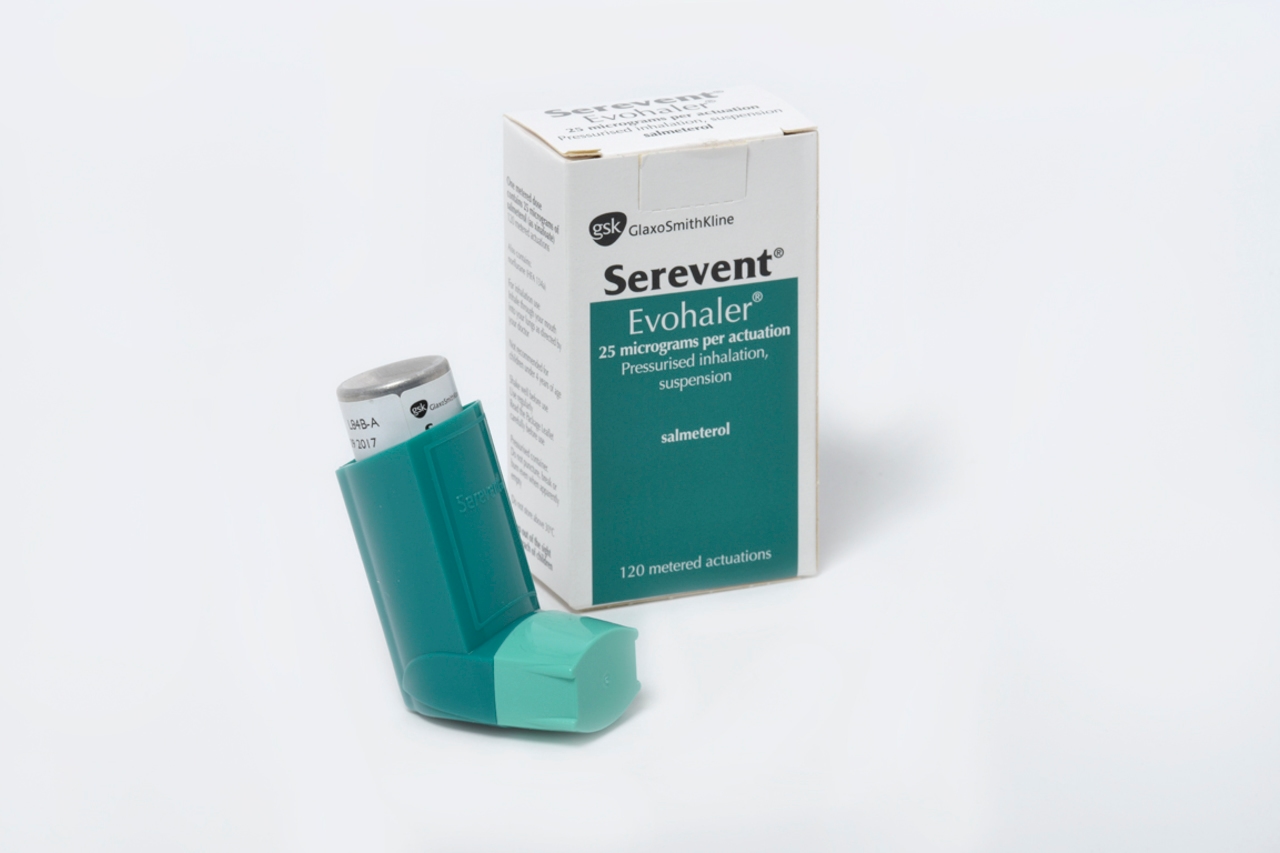
Seravent25 mcg/puf
Drug International Ltd.
৳180.00
Add to cart


Axinat is not a rescue medicine. It does not relieve acute asthma or COPD symptoms and must not be used to treat acute bronchospasm or status asthmaticus. A separate fast-acting (short-acting beta-agonist) inhaler must always be available for acute symptoms.
Salmeterol Xinafoate is available as a metered-dose inhaler (MDI) or dry powder inhaler (DPI). Each actuation/blister delivers a fixed microgram dose of salmeterol base (as the xinafoate salt), commonly 25 mcg/puff (MDI) or 50 mcg/blister (DPI), depending on the marketed brand and device. It is also available combined with an inhaled corticosteroid (fluticasone propionate) in fixed-dose combination products, which are considered separately from single-ingredient Salmeterol Xinafoate.
Axinat is the xinafoate (1-hydroxy-2-naphthoic acid) salt of salmeterol, a selective, long-acting beta-2 adrenergic receptor agonist (LABA). It is delivered by oral inhalation for the long-term, twice-daily maintenance treatment of asthma and chronic obstructive pulmonary disease (COPD). Unlike short-acting bronchodilators, Axinat has a slow onset of action (about 10-20 minutes) but a prolonged bronchodilator effect lasting approximately 12 hours, which is why it is dosed twice daily rather than used for immediate symptom relief.
Long-acting beta-2 adrenergic agonist (LABA) bronchodilator
Salmeterol Xinafoate selectively stimulates beta-2 adrenergic receptors on bronchial smooth muscle, producing bronchodilation. Its long lipophilic side chain anchors it near the receptor, giving a sustained duration of bronchodilator action of approximately 12 hours per dose, in contrast to short-acting beta-agonists.
| Indication | Population | Dose |
|---|---|---|
| Asthma (always with an ICS) | Adults and children 4 years and older | 1 inhalation twice daily (morning and evening), about 12 hours apart |
| Exercise-induced bronchospasm | Adults and children 4 years and older not already on a twice-daily LABA | 1 inhalation at least 30 minutes before exercise; do not repeat within 12 hours |
| COPD maintenance | Adults | 1 inhalation twice daily, about 12 hours apart |
Do not increase the frequency or number of inhalations beyond the prescribed dose. Maximum recommended dosing is twice daily; more frequent administration does not provide additional benefit and increases the risk of adverse effects. See Administration for device-specific technique.
Headache, influenza-like symptoms, nasal and sinus congestion, pharyngitis, rhinitis, tracheitis/bronchitis.
Cough, headache, musculoskeletal pain, throat irritation, viral upper respiratory infection.
Data on Axinat use in human pregnancy are limited. As with other medicines, Axinat should be used during pregnancy only if the potential benefit to the mother (maintaining asthma/COPD control) justifies the potential risk to the fetus, and only under a physician's guidance. Uncontrolled asthma during pregnancy itself carries risks to both mother and fetus, so treatment should generally not be stopped without medical advice.
It is not known whether salmeterol passes into human breast milk in clinically significant amounts. Because systemic absorption after inhalation is very low, risk to a breastfed infant is expected to be minimal, but a physician should be consulted before using Axinat while breastfeeding, weighing the mother's clinical need against any potential infant exposure.
Long-acting beta-2 adrenergic agonists, including Axinat, increase the risk of asthma-related death when used as monotherapy for asthma. Axinat must always be used together with an inhaled corticosteroid for asthma; it must never be used alone for this indication.
Overdose with Axinat is expected to produce exaggerated beta-adrenergic effects, which may include tachycardia, palpitations, tremor, headache, muscle cramps, dry mouth, hypertension or hypotension, seizures, hypokalemia, hyperglycemia, and, rarely, serious arrhythmias or cardiac arrest.
If an overdose is suspected, seek immediate medical attention or contact emergency services/a poison control center. Treatment is supportive; the drug should be discontinued and cardiac monitoring performed as directed by a physician. Do not attempt to manage a suspected overdose at home with additional inhaler doses.
Store at room temperature (below 30°C), away from direct sunlight, heat, and freezing temperatures. Do not puncture, break, crush, or burn the canister/inhaler, even when it appears empty. Keep out of reach of children.
Axinat is intended for long-term, regular maintenance use, not short-term or as-needed treatment. It should be continued at the prescribed twice-daily schedule for as long as the treating physician determines it is needed to control asthma or COPD symptoms, with periodic reassessment of asthma control, and, when appropriate, stepping down of the inhaled corticosteroid/LABA combination once control is well maintained, under medical supervision. Do not stop treatment abruptly without consulting a physician.
Bronchodilators; Long-acting beta-2 adrenergic agonists (LABA); Anti-asthmatic and anti-COPD agents
Salmeterol Xinafoate acts by selectively binding to and stimulating beta-2 adrenergic receptors located on airway smooth muscle. Receptor activation stimulates adenylyl cyclase, raising intracellular cyclic AMP (cAMP), which activates protein kinase A and leads to relaxation of bronchial smooth muscle and bronchodilation. The long lipophilic side chain of the salmeterol molecule allows it to remain anchored near the beta-2 receptor, producing a sustained bronchodilator effect of about 12 hours, distinguishing it from short-acting beta-agonists.
C
Axinat is approved for the maintenance treatment of asthma (with a concurrent inhaled corticosteroid) and for prevention of exercise-induced bronchospasm in children 4 years of age and older. Safety and efficacy in children younger than 4 years have not been established, and Axinat should not be used in this age group. In pediatric and adolescent patients, a fixed-dose combination inhaler containing both an inhaled corticosteroid and salmeterol is generally preferred over separate inhalers to help ensure salmeterol is not used without concurrent corticosteroid therapy.
Q: What is Axinat 25 mcg/puff Inhaler used for?
A: Axinat 25 mcg/puff Inhaler is a long-acting inhaled bronchodilator used for the twice-daily maintenance treatment of asthma (always together with an inhaled corticosteroid) and chronic obstructive pulmonary disease (COPD), and to prevent exercise-induced bronchospasm. It is not for relieving sudden asthma or COPD attacks.
Q: Can I use Axinat 25 mcg/puff Inhaler alone for my asthma, without a steroid inhaler?
A: No. Axinat 25 mcg/puff Inhaler carries a boxed warning that using it alone (without an inhaled corticosteroid) for asthma increases the risk of asthma-related death. It must always be used together with an inhaled corticosteroid prescribed by your physician.
Q: Can I use Axinat 25 mcg/puff Inhaler to treat a sudden asthma attack?
A: No. Axinat 25 mcg/puff Inhaler has a slow onset of action and is not a rescue medicine. You must keep a separate fast-acting (short-acting beta-agonist) inhaler on hand for sudden symptoms, and seek medical help if symptoms do not improve.
Q: What are the common side effects of Axinat 25 mcg/puff Inhaler?
A: Common side effects include headache, throat irritation, nasal or sinus congestion, and, in COPD patients, cough and musculoskeletal pain. Less commonly it can cause a fast or pounding heartbeat, tremor, or low blood potassium, especially if used more often than prescribed.
Q: Is Axinat 25 mcg/puff Inhaler safe during pregnancy or breastfeeding?
A: Axinat 25 mcg/puff Inhaler should be used during pregnancy or breastfeeding only if your physician determines that the benefit of controlling your asthma or COPD outweighs any potential risk, since uncontrolled asthma itself can be harmful. Do not start or stop Axinat 25 mcg/puff Inhaler during pregnancy or breastfeeding without medical advice.
Q: What should I do if I think I have used too much Axinat 25 mcg/puff Inhaler?
A: Symptoms of overdose can include a fast heartbeat, tremor, chest pain, or seizures. If you suspect an overdose, seek immediate medical attention or contact emergency services or a poison control center right away; do not try to manage it at home.
Disclaimer
The information provided is accurate to the best of our knowledge, but it does not replace professional medical advice. We cannot guarantee its completeness or accuracy, and the absence of specific information about a drug should not be taken as an endorsement. We are not responsible for any consequences arising from this information, so please consult a healthcare professional for any concerns or questions.
