

10% Off
Aritone Z200 ml
Incepta Pharmaceuticals Ltd.
৳99.00
Add to cart
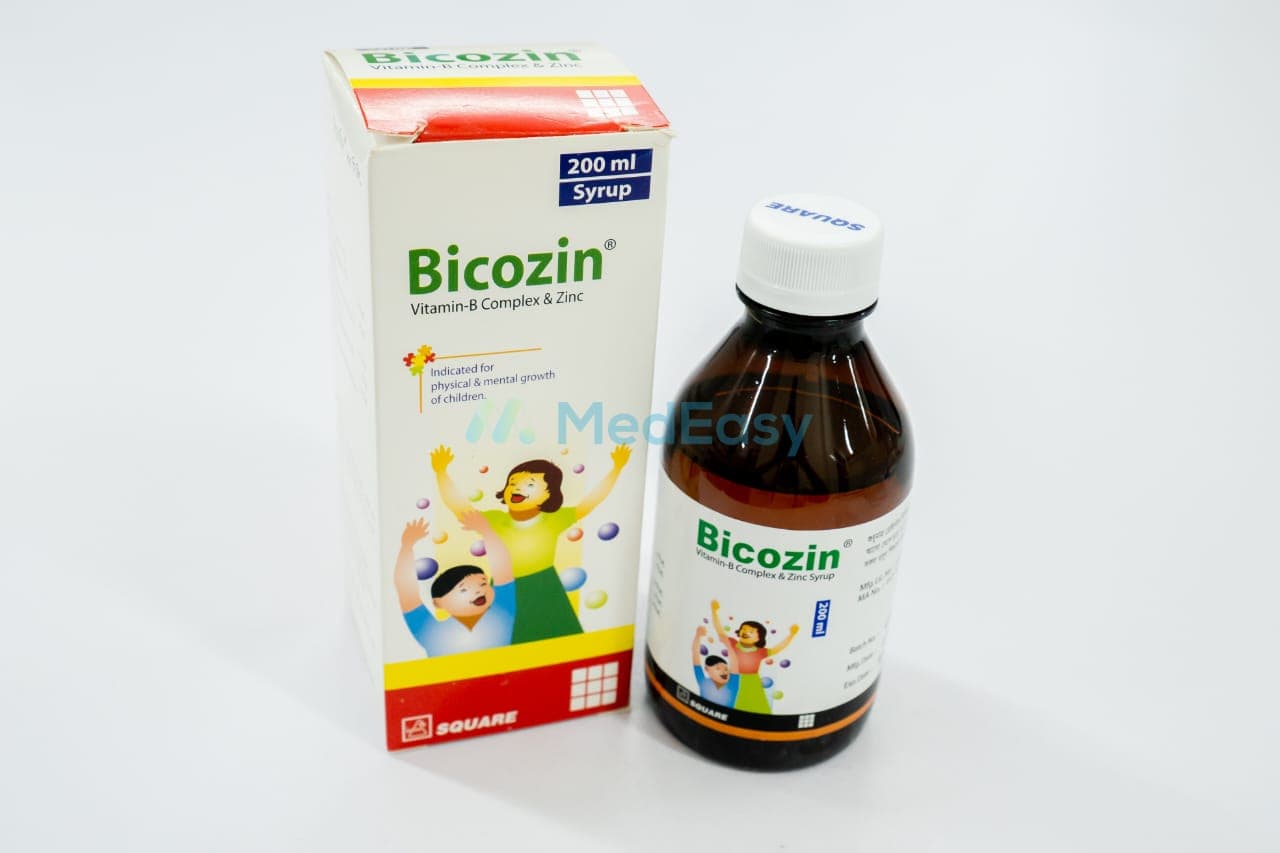

Bicozin 200 ml is a combined mineral and multivitamin preparation indicated for the treatment and prevention of zinc and vitamin B deficiencies. This supplement supports overall nutritional health and is commonly recommended in the following situations:
Always take this medication as directed by a registered physician.
Each Bicozin 200 ml 5 ml Syrup contains- Thiamine Hydrochloride BP 5 mg Riboflavin-5-Phosphate Sodium BP 2.74 mg equivalent to Riboflavin 2 mg Pyridoxine Hydrochloride BP 2 mg Nicotinamide BP 20 mg and Zinc Sulfate Monohydrate USP 27.45 mg equivalent to elemental Zinc 10 mg.
Each Bicozin 200 ml Tablet contains- Thiamine Hydrochloride BP 5 mg Riboflavin-5-Phosphate Sodium BP 2.74 mg equivalent to Riboflavin 2 mg Pyridoxine Hydrochloride BP 2 mg Nicotinamide BP 20 mg and Zinc Sulfate Monohydrate USP 27.45 mg equivalent to elemental Zinc 10 mg.
Bicozin 200 ml belongs to the class of specific mineral and vitamin combined preparations.
Bicozin 200 ml combines essential B-group vitamins with elemental zinc to correct nutritional deficiencies and support a wide range of physiological functions.
Each 5 ml syrup / each tablet contains:
Zinc is an essential trace mineral vital for numerous biological functions, including immune enhancement, wound healing, digestion, reproduction, physical growth, and mental development. It supports normal growth and development throughout pregnancy, childhood, and adolescence, and also exhibits antioxidant properties. Zinc has been used in the management of Attention Deficit Hyperactivity Disorder (ADHD) in children.
In adults, zinc deficiency may manifest as loss of appetite, an impaired sense of taste and smell, a tendency toward depression, white marks on the fingernails, frequent infections, reduced fertility, prostate problems, poor wound healing, a weakened immune system, diarrhoea, mental lethargy, rough skin, and unexplained weight loss.
B-vitamins are required to release energy from food and play a central role in maintaining healthy brain and nerve function, as well as the formation of healthy red blood cells in both children and adults. They are especially important for the healthy growth and development of children.
In adults, B-vitamin deficiency can cause profound fatigue and a variety of neurological manifestations, including weakness, poor balance, confusion, irritability, memory loss, nervousness, tingling of the limbs, and loss of coordination. Additional symptoms may include sleep disturbances, nausea, poor appetite, frequent infections, and skin lesions.
The dose should be individualised according to age, body weight, and the severity of deficiency, or as recommended by a registered physician.
For best absorption, the preparation may be taken with or after meals. Complete the recommended course and do not exceed the prescribed dose without medical advice.
Always take this medication as directed by a registered physician.
Bicozin 200 ml may interact with several medications, potentially affecting their absorption or efficacy. Notable interactions include:
To minimise the risk of reduced absorption, spacing zinc-containing supplements several hours apart from tetracycline or fluoroquinolone antibiotics is advisable. Inform your physician of all medications, supplements, and herbal products you are currently taking.
Bicozin 200 ml is contraindicated in patients with a known hypersensitivity to any of the ingredients contained in this product. It should not be used where any component of the formulation has previously caused an allergic reaction.
Bicozin 200 ml is generally well tolerated. However, a few side effects may occasionally occur, particularly with higher doses:
Side effects associated with individual vitamins have generally been reported only at levels substantially higher than the recommended doses. If any adverse effect persists or worsens, discontinue use and consult a physician.
Bicozin 200 ml is recommended for use during pregnancy and lactation, as zinc and B-vitamins support maternal health and the healthy growth and development of the baby. As with any supplement, it should be taken under the guidance of a registered physician to ensure the appropriate dose during these periods.
The following precautions should be observed when using Bicozin 200 ml:
In the case of overdosage, initial symptoms may include epigastric (upper abdominal) pain, diarrhoea, and vomiting. If an overdose is suspected, seek emergency medical attention immediately.
Management typically involves administering an emetic initially, followed by gastric lavage and general supportive measures as required. Bring the medication packaging with you to help medical staff identify the ingredients and dose taken.
Store in a cool, dry place, protected from light. Keep the container tightly closed when not in use. Keep all medicines out of the reach of children. Do not use the product after its expiry date.
Specific mineral & vitamin combined preparations
Zinc is vital for many biological functions such as immunity enhancement, wound healing, digestion, reproduction, physical growth and mental development. Zinc supports normal growth and development during pregnancy, childhood, and adolescence. Zinc also has some antioxidant properties. Zinc is used to treat ADHD (Attention Deficit Hyper-activity Disorder) in children. In adult, due to zinc deficiency loss of appetite, poor sense of taste and smell, tendency towards depression, white marks on fingernails, frequent infections, low fertility, prostate problems, mental problems, poor wound healing, a poor immune system, diarrhoea, mental lethargy, rough skin and weight loss may occur.B-Vitamins are needed to release energy from food. They play an important role in ensuring healthy brain and nerve function, healthy red blood cells formation in children & adults. They are specially needed for healthy growth and development of children. B-Vitamin deficiencies in adult cause profound fatigue and various types of neurologic manifestations, which may include weakness, poor balance, confusion, irritability, memory loss, nervousness, tingling of the limbs and loss of coordination. Additional symptoms of vitamin B deficiency are sleep disturbances, nausea, poor appetite, frequent infections, and skin lesions.
Bicozin 200 ml is recommended in pregnancy and lactation.
What is Bicozin 200 ml used for?
Bicozin 200 ml is a combined mineral and multivitamin preparation indicated for the treatment and prevention of zinc and vitamin B deficiencies . This supplement supports overall nutritional health and is commonly recommended in the following situations: Prevention and correction of dietary zinc deficiency Management of vitamin B complex deficiency states Support for normal physical growth and men…
What is the dosage of Bicozin 200 ml?
The dose should be individualised according to age, body weight, and the severity of deficiency, or as recommended by a registered physician. Syrup Adults: 10 ml (2 teaspoonfuls) 2 to 3 times daily, or as recommended by the physician. Children: 10 ml (2 teaspoonfuls) 1 to 3 times daily, or as recommended by the physician. Infants: 5 ml (1 teaspoonful) 1 to 2 times daily, or as recommended by the p…
What are the side effects of Bicozin 200 ml?
Bicozin 200 ml is generally well tolerated. However, a few side effects may occasionally occur, particularly with higher doses: Nausea Vomiting Diarrhoea Stomach upset or mild gastrointestinal discomfort Side effects associated with individual vitamins have generally been reported only at levels substantially higher than the recommended doses. If any adverse effect persists or worsens, discontinue…
Who should not take Bicozin 200 ml?
Bicozin 200 ml is contraindicated in patients with a known hypersensitivity to any of the ingredients contained in this product. It should not be used where any component of the formulation has previously caused an allergic reaction.
What precautions should be taken with Bicozin 200 ml?
The following precautions should be observed when using Bicozin 200 ml: In patients with acute renal failure, zinc accumulation may occur; therefore, dosage adjustment is necessary. This preparation is not intended for the treatment of severe, specific nutritional deficiencies, which may require dedicated therapy. Do not exceed the recommended dose, as excessive intake of zinc or vitamins may lead…
Is Bicozin 200 ml safe during pregnancy and breastfeeding?
Bicozin 200 ml is recommended for use during pregnancy and lactation, as zinc and B-vitamins support maternal health and the healthy growth and development of the baby. As with any supplement, it should be taken under the guidance of a registered physician to ensure the appropriate dose during these periods.
The information provided is accurate to our best practices, but it does not replace professional medical advice. We cannot guarantee its completeness or accuracy. The absence of specific information about a drug should not be seen as an endorsement. We are not responsible for any consequences resulting from this information, so consult a healthcare professional for any concerns or questions.
